Highlighter is on. Drag to highlight text. Click a highlight to remove it.
ALL / Nephrology
Post-streptococcal glomerulonephritis
Post-streptococcal glomerulonephritis
Post-streptococcal glomerulonephritis typically occurs 7-14 days following a group A beta-haemolytic Streptococcus infection (usually Streptococcus pyogenes). It is caused by immune complex (IgG, IgM and C3) deposition in the glomeruli. Young children are most commonly affected.Features
- general
- headache
- malaise
- visible haematuria
- proteinuria
- this may result in oedema
- hypertension
- oliguria
- bloods:
- raised anti-streptolysin O titre are used to confirm the diagnosis of a recent streptococcal infection
- low C3
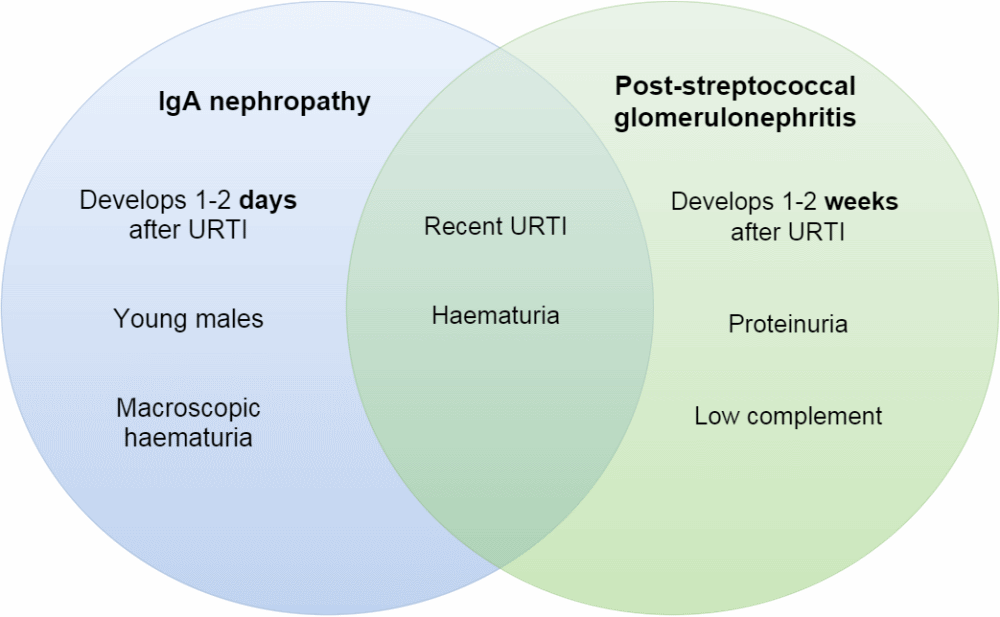
IgA nephropathy and post-streptococcal glomerulonephritis are often confused as they both can cause renal disease following an URTI
Renal biopsy features
- post-streptococcal glomerulonephritis causes acute, diffuse proliferative glomerulonephritis
- endothelial proliferation with neutrophils
- electron microscopy: subepithelial 'humps' caused by lumpy immune complex deposits
- immunofluorescence: granular or 'starry sky' appearance
Carries a good prognosis
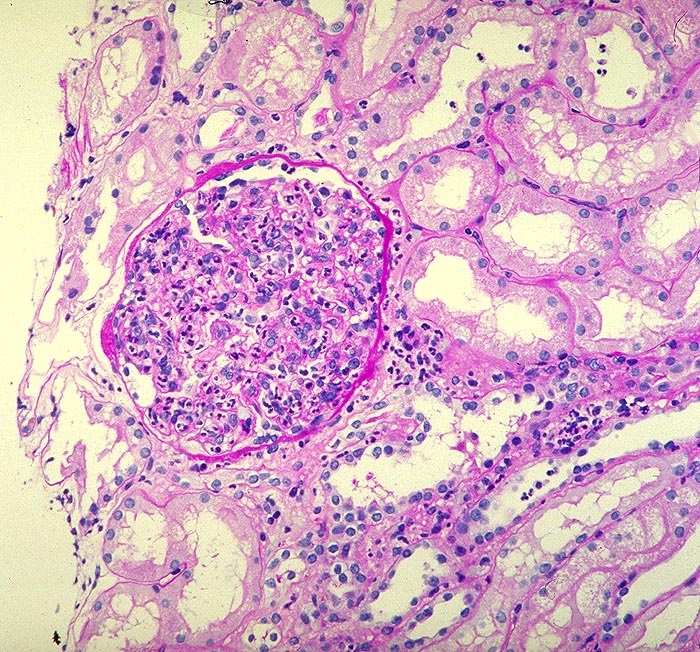
Proliferation of endothelium and mesangium with recruitment of neutrophils. Tubules are normal
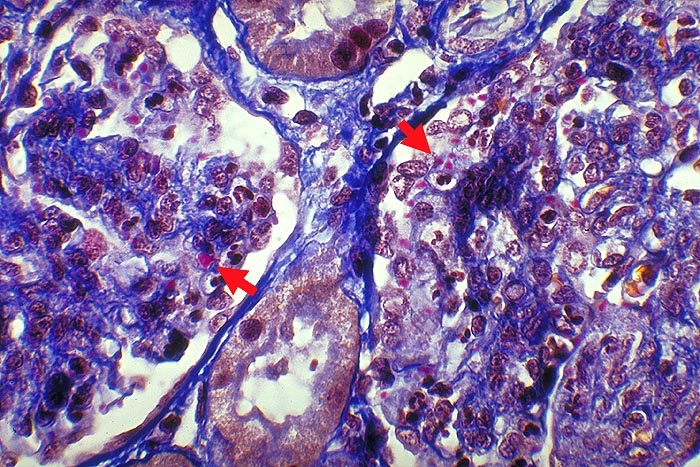
Subepithelial humps on the outside of the basal membrane
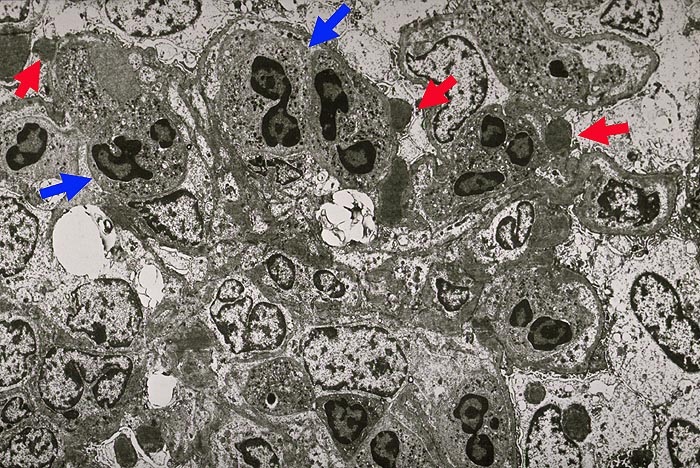
Electron microscopy. Numerous neutrophils (blue arrows) and subepithelial humps(red arrows)
+PassMedicine Notes
Post-streptococcal glomerulonephritis typically occurs 7-14 days following a group A beta-haemolytic Streptococcus infection (usually Streptococcus pyogenes). It is caused by immune complex (IgG, IgM and C3) deposition in the glomeruli. Young children are most commonly affected.
Features- general
- headache
- malaise
- visible haematuria
- proteinuria
- this may result in oedema
- hypertension
- oliguria
- bloods:
- raised anti-streptolysin O titre are used to confirm the diagnosis of a recent streptococcal infection
- low C3
- post-streptococcal glomerulonephritis causes acute, diffuse proliferative glomerulonephritis
- endothelial proliferation with neutrophils
- electron microscopy: subepithelial 'humps' caused by lumpy immune complex deposits
- immunofluorescence: granular or 'starry sky' appearance
Carries a good prognosis