Highlighter is on. Drag to highlight text. Click a highlight to remove it.
ALL / Pharmacology
Metformin
Metformin
Metformin is a biguanide used mainly in the treatment of type 2 diabetes mellitus. It has a number of actions which improves glucose tolerance (see below). Unlike sulphonylureas it does not cause hypoglycaemia and weight gain and is therefore first-line, particularly if the patient is overweight. Metformin is also used in polycystic ovarian syndrome and non-alcoholic fatty liver diseaseMechanism of action
- acts by activation of the AMP-activated protein kinase (AMPK)
- increases insulin sensitivity
- decreases hepatic gluconeogenesis
- may also reduce gastrointestinal absorption of carbohydrates
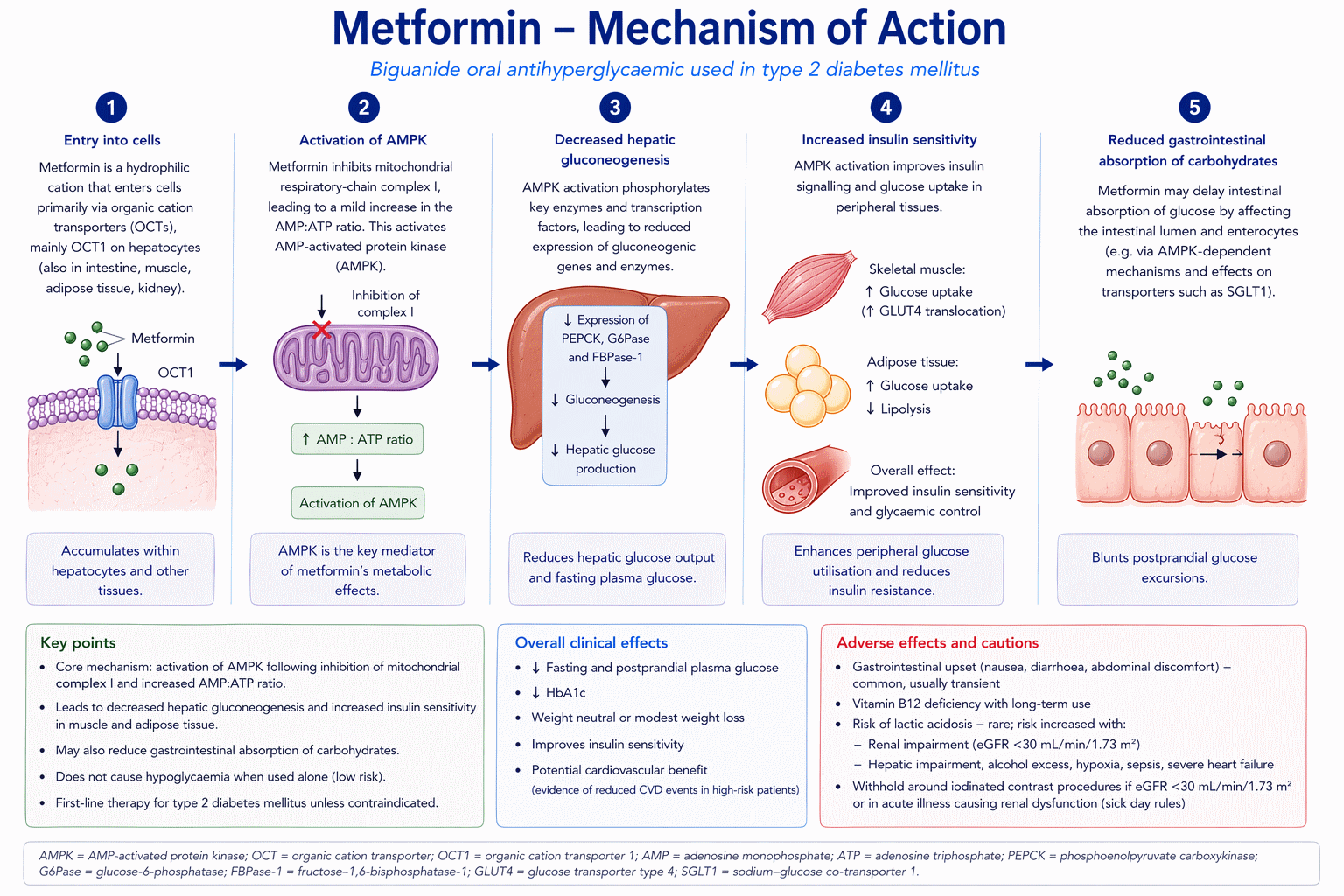
Mechanism of action of metformin
Adverse effects
- gastrointestinal upsets are common (nausea, anorexia, diarrhoea), intolerable in 20%
- reduced vitamin B12 absorption - rarely a clinical problem
- lactic acidosis with severe liver disease or renal failure
- it is now increasingly recognised that lactic acidosis secondary to metformin is rare, although it remains important in the context of exams
Contraindications
- chronic kidney disease: NICE recommend that the dose should be reviewed if the creatinine is > 130 µmol/l (or eGFR < 45 ml/min) and stopped if the creatinine is > 150 µmol/l (or eGFR < 30 ml/min)
- metformin may cause lactic acidosis if taken during a period where there is tissue hypoxia. Examples include a recent myocardial infarction, sepsis, acute kidney injury and severe dehydration
- iodine-containing x-ray contrast media:
- there is a theoretical increased risk of provoking renal impairment due to contrast nephropathy
- BNF guidance: metformin should be discontinued on the day of the procedure and for 48 hours thereafter
- Royal College Radiology guidance (reflects modern evidence and UK radiology practice): cease metformin 48h before contrast media only if eGFR <30 or patient has deteriorating renal function
- alcohol abuse is a relative contraindication
Starting metformin
- metformin should be titrated up slowly to reduce the incidence of gastrointestinal side-effects
- if patients develop unacceptable side-effects then modified-release metformin should be considered
+PassMedicine Notes
Metformin is a biguanide used mainly in the treatment of type 2 diabetes mellitus. It has a number of actions which improves glucose tolerance (see below). Unlike sulphonylureas it does not cause hypoglycaemia and weight gain and is therefore first-line, particularly if the patient is overweight. Metformin is also used in polycystic ovarian syndrome and non-alcoholic fatty liver disease
Mechanism of action- acts by activation of the AMP-activated protein kinase (AMPK)
- increases insulin sensitivity
- decreases hepatic gluconeogenesis
- may also reduce gastrointestinal absorption of carbohydrates
- gastrointestinal upsets are common (nausea, anorexia, diarrhoea), intolerable in 20%
- reduced vitamin B12 absorption - rarely a clinical problem
- lactic acidosis with severe liver disease or renal failure
- it is now increasingly recognised that lactic acidosis secondary to metformin is rare, although it remains important in the context of exams
- chronic kidney disease: NICE recommend that the dose should be reviewed if the creatinine is > 130 µmol/l (or eGFR < 45 ml/min) and stopped if the creatinine is > 150 µmol/l (or eGFR < 30 ml/min)
- metformin may cause lactic acidosis if taken during a period where there is tissue hypoxia. Examples include a recent myocardial infarction, sepsis, acute kidney injury and severe dehydration
- iodine-containing x-ray contrast media:
- there is a theoretical increased risk of provoking renal impairment due to contrast nephropathy
- BNF guidance: metformin should be discontinued on the day of the procedure and for 48 hours thereafter
- Royal College Radiology guidance (reflects modern evidence and UK radiology practice): cease metformin 48h before contrast media only if eGFR