Highlighter is on. Drag to highlight text. Click a highlight to remove it.
ALL / Gastroenterology
<i>Helicobacter pylori</i>
Helicobacter pylori
Helicobacter pylori is a Gram-negative bacteria associated with a variety of gastrointestinal problems, principally peptic ulcer disease.Pathophysiology
- Helicobacter pylori has 2 main mechanisms to survice in the acidic gastric environment:
- chemotaxis away from low pH areas, using its flagella to burrow into the mucous lining to reach the epithelial cells underneath
- secretes urease → urea converted to NH3 → alkalinization of acidic environment → increased bacterial survival
- pathogenesis mechanism:
- Helicobacter pylori releases bacterial cytotoxins (e.g. CagA toxin) → disruption of gastric mucosa
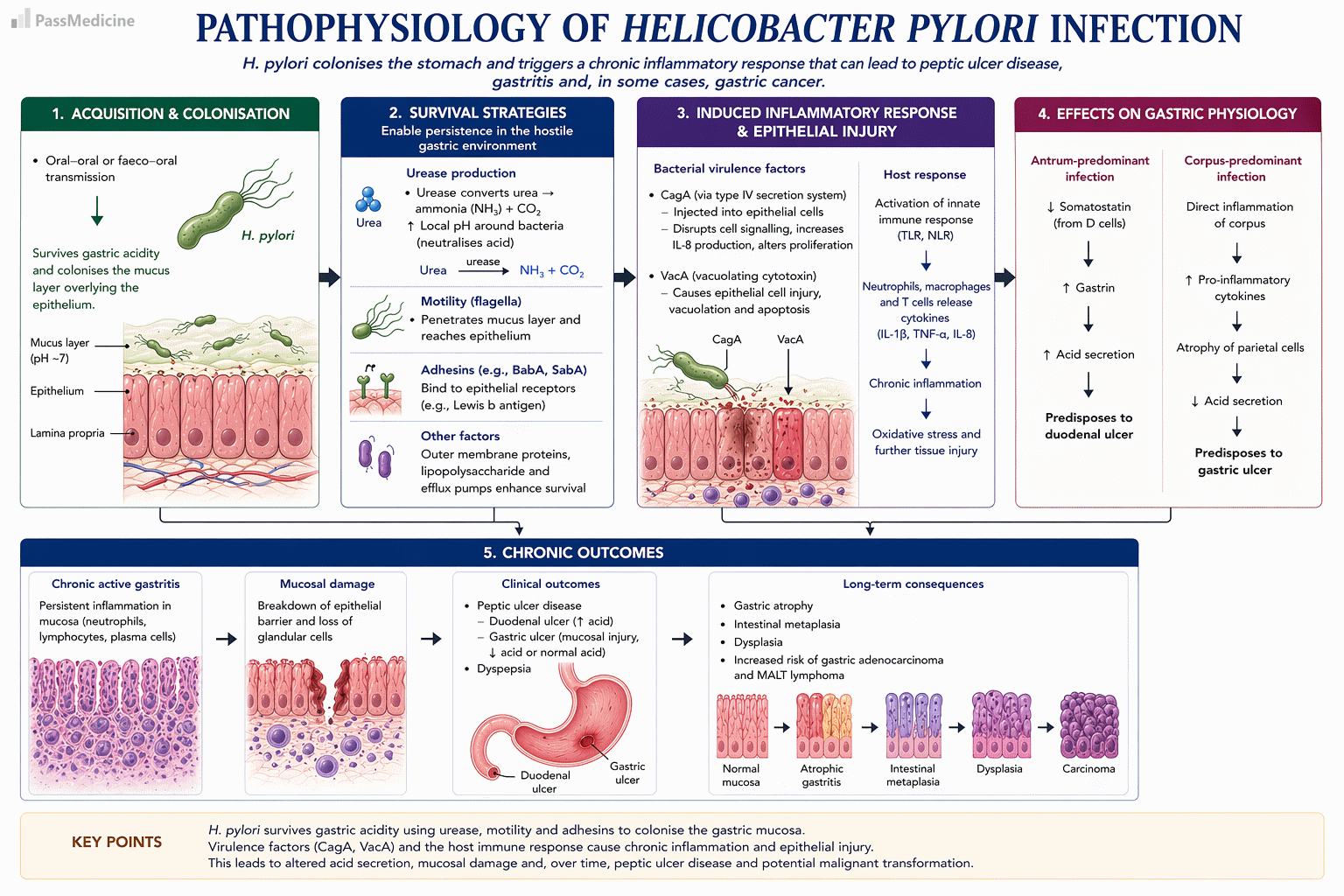
Pathophysiology of Helicobacter pylori
Associations
- peptic ulcer disease
- 95% of duodenal ulcers
- 75% of gastric ulcers
- gastric cancer
- B cell lymphoma of MALT tissue (eradication of H pylori results causes regression in 80% of patients)
- atrophic gastritis
The role of H pylori in Gastro-oesophageal reflux disease (GORD) is unclear - there is currently no role in GORD for the eradication of H pylori
Helicobacter pylori eradication may be achieved with a 7-day course of a proton pump inhibitor (PPI) + 2 antbiotics:
- first-line: PPI + amoxicillin + (clarithromycin OR metronidazole)
- if ongoing symptoms after first line treatment: PPI + amoxicillin+ (clarithromycin OR metronidazole, whichever was not used first line)
- if penicillin-allergic: a proton pump inhibitor + metronidazole + clarithromycin
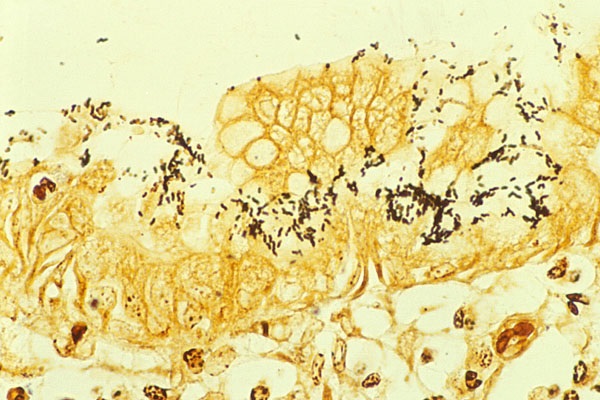
H. pylori colonized on the surface of regenerative epithelium (silver stain)
+PassMedicine Notes
Helicobacter pylori is a Gram-negative bacteria associated with a variety of gastrointestinal problems, principally peptic ulcer disease.
Pathophysiology- Helicobacter pylori has 2 main mechanisms to survice in the acidic gastric environment:
- chemotaxis away from low pH areas, using its flagella to burrow into the mucous lining to reach the epithelial cells underneath
- secretes urease --> urea converted to NH3 --> alkalinization of acidic environment --> increased bacterial survival
- pathogenesis mechanism:
- Helicobacter pylori releases bacterial cytotoxins (e.g. CagA toxin) --> disruption of gastric mucosa
- peptic ulcer disease
- 95% of duodenal ulcers
- 75% of gastric ulcers
- gastric cancer
- B cell lymphoma of MALT tissue (eradication of H pylori results causes regression in 80% of patients)
- atrophic gastritis
The role of H pylori in Gastro-oesophageal reflux disease (GORD) is unclear - there is currently no role in GORD for the eradication of H pylori
Helicobacter pylori eradication may be achieved with a 7-day course of a proton pump inhibitor (PPI) + 2 antbiotics:- first-line: PPI + amoxicillin + (clarithromycin OR metronidazole)
- if ongoing symptoms after first line treatment: PPI + amoxicillin+ (clarithromycin OR metronidazole, whichever was not used first line)
- if penicillin-allergic: a proton pump inhibitor + metronidazole + clarithromycin