Asbestos and the lung
Asbestos and the lung
Asbestos can cause a variety of lung diseases from benign pleural plaques to mesothelioma.Pleural plaques
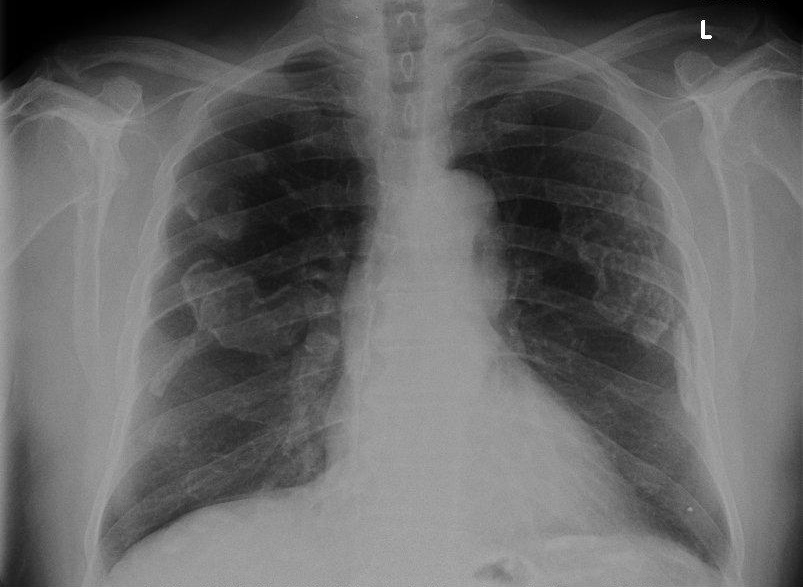
Pleural plaques are benign and do not undergo malignant change. They, therefore don't require any follow-up. They are the most common form of asbestos-related lung disease and generally occur after a latent period of 20-40 years.
Pleural thickening
Asbestos exposure may cause diffuse pleural thickening in a similar pattern to that seen following an empyema or haemothorax. The underlying pathophysiology is not fully understood.
Asbestosis
The severity of asbestosis is related to the length of exposure. This is in contrast to mesothelioma where even very limited exposure can cause disease. The latent period is typically 15-30 years. Asbestosis typically causes lower lobe fibrosis.
Features
- dyspnoea and reduced exercise tolerance
- clubbing
- bilateral end-inspiratory crackles
- lung function tests show a restrictive pattern with reduced gas transfer
It is treated conservatively - no interventions offer a significant benefit.
Mesothelioma
Mesothelioma is a malignant disease of the pleura. Crocidolite (blue) asbestos is the most dangerous form.
Possible features
- progressive shortness-of-breath
- chest pain
- pleural effusion
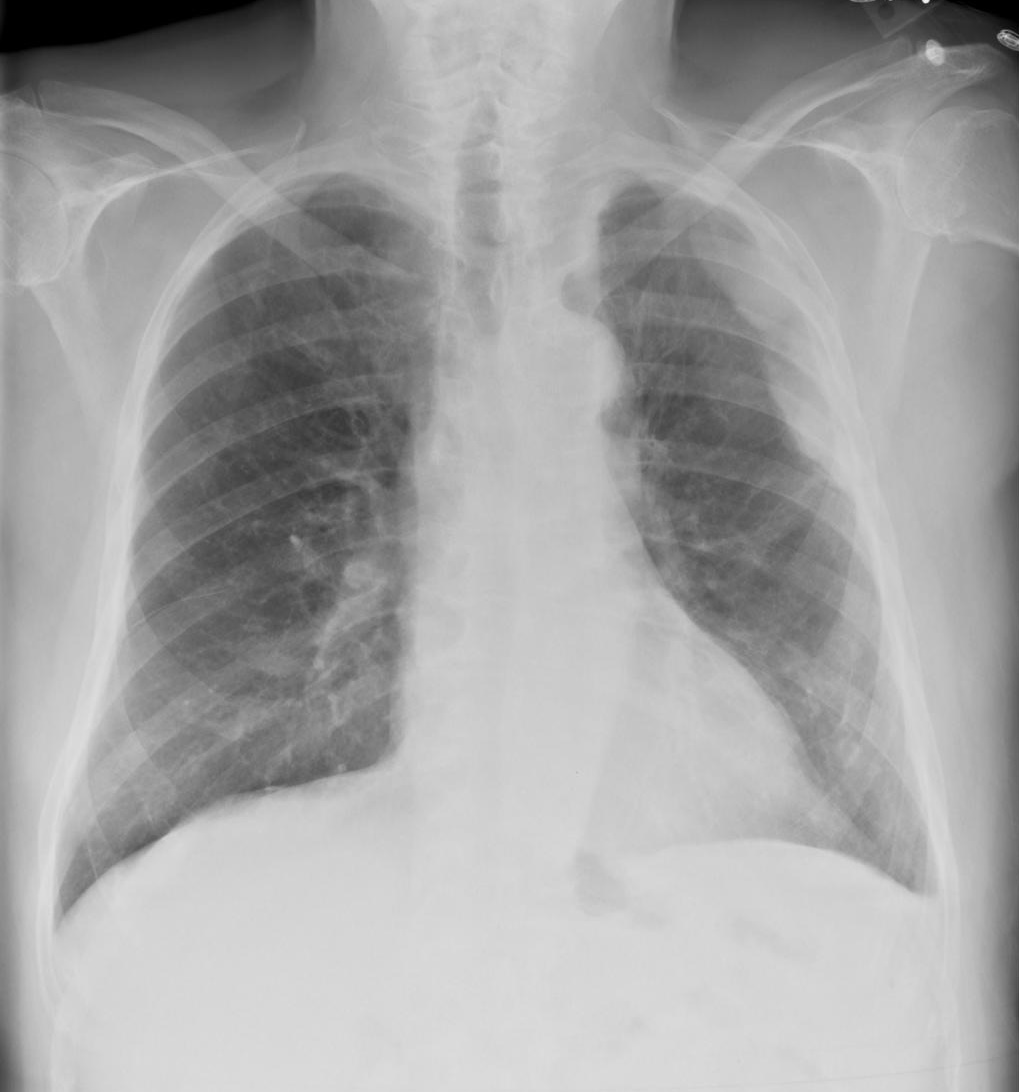
Patients are usually offered palliative chemotherapy and there is also a limited role for surgery and radiotherapy. Unfortunately, the prognosis is very poor, with a median survival from diagnosis of 8-14 months.
Lung cancer
Whilst mesothelioma is in some ways synonymous with asbestos, lung cancer is actually the most common form of cancer associated with asbestos exposure. It also has a synergistic effect with cigarette smoke in terms of the increased risk. Therefore, smoking cessation is very important as the risk of lung cancer in smokers who have a history of asbestos exposure is very high.
+PassMedicine Notes
Asbestos can cause a variety of lung diseases from benign pleural plaques to mesothelioma.
Pleural plaques
Pleural plaques are benign and do not undergo malignant change. They, therefore don't require any follow-up. They are the most common form of asbestos-related lung disease and generally occur after a latent period of 20-40 years.
Pleural thickening
Asbestos exposure may cause diffuse pleural thickening in a similar pattern to that seen following an empyema or haemothorax. The underlying pathophysiology is not fully understood.
Asbestosis
The severity of asbestosis is related to the length of exposure. This is in contrast to mesothelioma where even very limited exposure can cause disease. The latent period is typically 15-30 years. Asbestosis typically causes lower lobe fibrosis.
Features- dyspnoea and reduced exercise tolerance
- clubbing
- bilateral end-inspiratory crackles
- lung function tests show a restrictive pattern with reduced gas transfer
It is treated conservatively - no interventions offer a significant benefit.
Mesothelioma
Mesothelioma is a malignant disease of the pleura. Crocidolite (blue) asbestos is the most dangerous form.
Possible features- progressive shortness-of-breath
- chest pain
- pleural effusion
Patients are usually offered palliative chemotherapy and there is also a limited role for surgery and radiotherapy. Unfortunately, the prognosis is very poor, with a median survival from diagnosis of 8-14 months.
Lung cancer
Whilst mesothelioma is in some ways synonymous with asbestos, lung cancer is actually the most common form of cancer associated with asbestos exposure. It also has a synergistic effect with cigarette smoke in terms of the increased risk. Therefore, smoking cessation is very important as the risk of lung cancer in smokers who have a history of asbestos exposure is very high.