Highlighter is on. Drag to highlight text. Click a highlight to remove it.
ALL / Psychiatry
Lithium
Lithium
Lithium is mood stabilising drug used most commonly prophylactically in bipolar disorder but also as an adjunct in refractory depression. It has a very narrow therapeutic range (0.4-1.0 mmol/L) and a long plasma half-life being excreted primarily by the kidneys.Mechanism of action - not fully understood, two main theories:
- interferes with inositol triphosphate formation
- interferes with cAMP formation
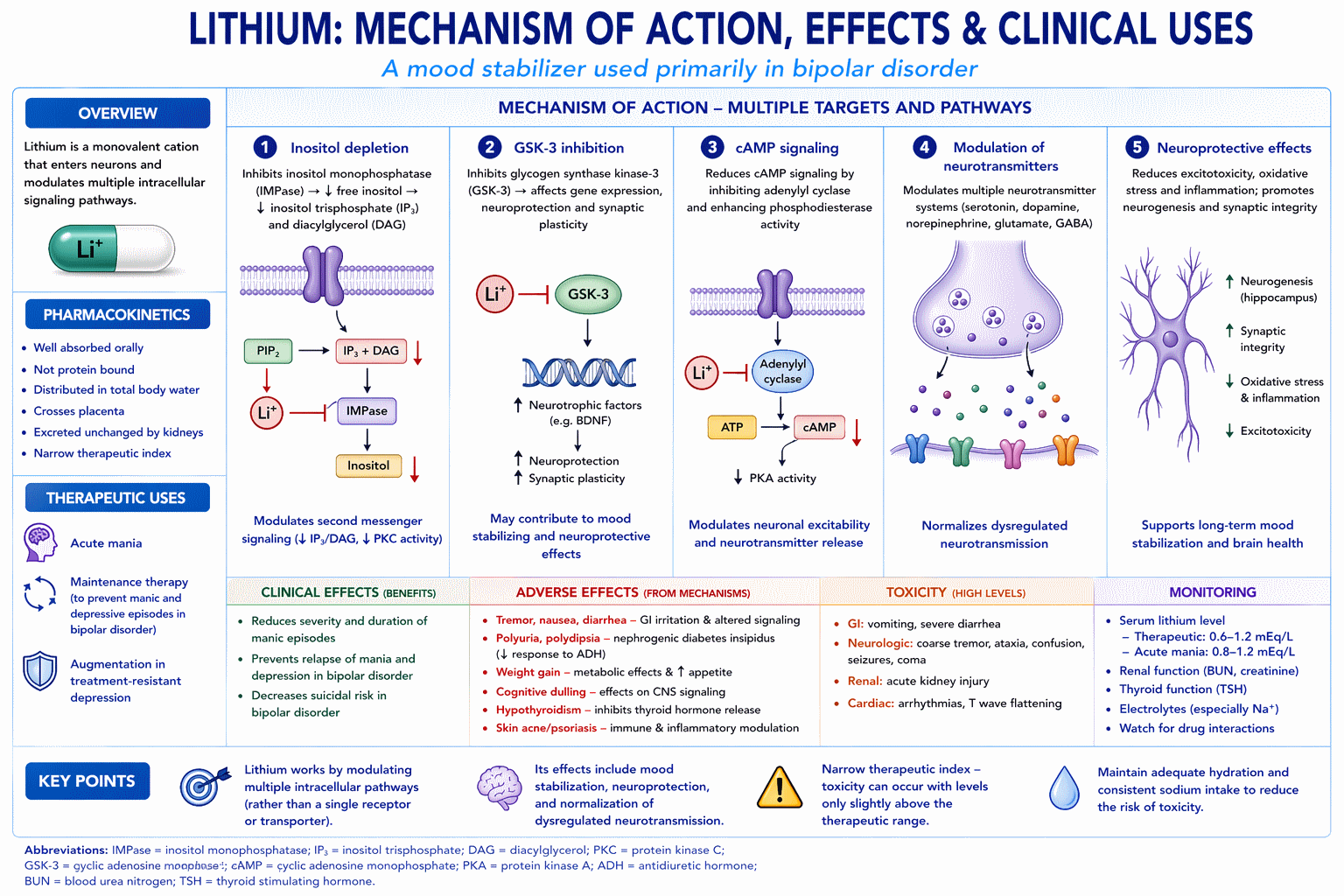
Mechanism of lithium
Adverse effects
- nausea/vomiting, diarrhoea
- fine tremor
- nephrotoxicity: polyuria, secondary to nephrogenic diabetes insipidus
- thyroid enlargement, may lead to hypothyroidism
- ECG: T wave flattening/inversion
- weight gain
- idiopathic intracranial hypertension
- leucocytosis
- hyperparathyroidism and resultant hypercalcaemia
Monitoring of patients on lithium therapy
- inadequate monitoring of patients taking lithium is common - NICE and the National Patient Safety Agency (NPSA) have issued guidance to try and address this. As a result it is often an exam hot topic
- when checking lithium levels, the sample should be taken 12 hours post-dose
- after starting lithium levels should be performed weekly and after each dose change until concentrations are stable
- once established, lithium blood level should 'normally' be checked every 3 months
- after a change in dose, lithium levels should be taken a week later and weekly until the levels are stable.
- thyroid and renal function should be checked every 6 months
- patients should be issued with an information booklet, alert card and record book
+PassMedicine Notes
Lithium is mood stabilising drug used most commonly prophylactically in bipolar disorder but also as an adjunct in refractory depression. It has a very narrow therapeutic range (0.4-1.0 mmol/L) and a long plasma half-life being excreted primarily by the kidneys.
Mechanism of action - not fully understood, two main theories:- interferes with inositol triphosphate formation
- interferes with cAMP formation
- nausea/vomiting, diarrhoea
- fine tremor
- nephrotoxicity: polyuria, secondary to nephrogenic diabetes insipidus
- thyroid enlargement, may lead to hypothyroidism
- ECG: T wave flattening/inversion
- weight gain
- idiopathic intracranial hypertension
- leucocytosis
- hyperparathyroidism and resultant hypercalcaemia
- inadequate monitoring of patients taking lithium is common - NICE and the National Patient Safety Agency (NPSA) have issued guidance to try and address this. As a result it is often an exam hot topic
- when checking lithium levels, the sample should be taken 12 hours post-dose
- after starting lithium levels should be performed weekly and after each dose change until concentrations are stable
- once established, lithium blood level should 'normally' be checked every 3 months
- after a change in dose, lithium levels should be taken a week later and weekly until the levels are stable.
- thyroid and renal function should be checked every 6 months
- patients should be issued with an information booklet, alert card and record book