Von Willebrand's disease
Von Willebrand's disease
Von Willebrand's disease is the most common inherited bleeding disorder. The majority of cases are inherited in an autosomal dominant fashion* and characteristically behaves like a platelet disorder i.e. epistaxis and menorrhagia are common whilst haemoarthroses and muscle haematomas are rareRole of von Willebrand factor
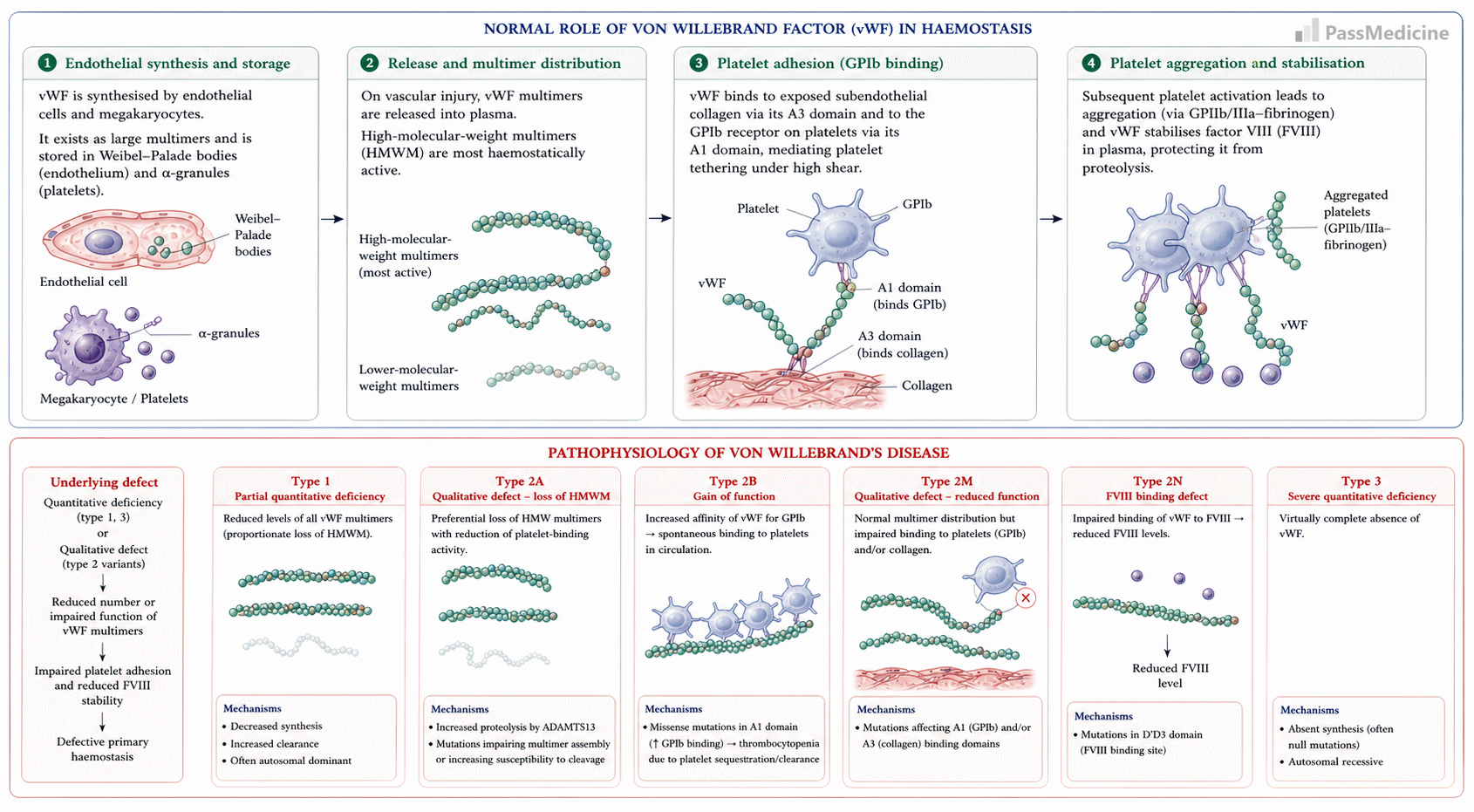
- large glycoprotein which forms massive multimers up to 1,000,000 Da in size
- promotes platelet adhesion to damaged endothelium
- carrier molecule for factor VIII
Types
- type 1: partial reduction in vWF (80% of patients)
- type 2*: abnormal form of vWF
- type 3**: total lack of vWF (autosomal recessive)
Investigation
- prolonged bleeding time
- APTT may be prolonged
- factor VIII levels may be moderately reduced
- defective platelet aggregation with ristocetin
Management
- tranexamic acid for mild bleeding
- desmopressin (DDAVP): raises levels of vWF by inducing release of vWF from Weibel-Palade bodies in endothelial cells
- factor VIII concentrate
*type 2A VWD is caused by defective platelet adhesion due to decreased high molecular weight VWF multimers (i.e. the VWF protein is too small). Type 2B is characterised by a pathological increase of VWF-platelet interaction. Type 2M is caused by a decrease in VWF-platelet interaction (not related to loss of high molecular weight multimers). Type 2N is caused by abnormal binding of the VWF to Factor VIII. There is no clear correlation between symptomatic presentation and type of VWD however common themes amongst patients include excessive mucocutaneous bleeding, bruising in the absence of trauma and menorrhagia in females.
**type 3 von Willebrand's disease (most severe form) is inherited as an autosomal recessive trait. Around 80% of patients have type 1 disease
+PassMedicine Notes
Von Willebrand's disease is the most common inherited bleeding disorder. The majority of cases are inherited in an autosomal dominant fashion* and characteristically behaves like a platelet disorder i.e. epistaxis and menorrhagia are common whilst haemoarthroses and muscle haematomas are rare
Role of von Willebrand factor- large glycoprotein which forms massive multimers up to 1,000,000 Da in size
- promotes platelet adhesion to damaged endothelium
- carrier molecule for factor VIII
- type 1: partial reduction in vWF (80% of patients)
- type 2*: abnormal form of vWF
- type 3**: total lack of vWF (autosomal recessive)
- prolonged bleeding time
- APTT may be prolonged
- factor VIII levels may be moderately reduced
- defective platelet aggregation with ristocetin
- tranexamic acid for mild bleeding
- desmopressin (DDAVP): raises levels of vWF by inducing release of vWF from Weibel-Palade bodies in endothelial cells
- factor VIII concentrate
*type 2A VWD is caused by defective platelet adhesion due to decreased high molecular weight VWF multimers (i.e. the VWF protein is too small). Type 2B is characterised by a pathological increase of VWF-platelet interaction. Type 2M is caused by a decrease in VWF-platelet interaction (not related to loss of high molecular weight multimers). Type 2N is caused by abnormal binding of the VWF to Factor VIII. There is no clear correlation between symptomatic presentation and type of VWD however common themes amongst patients include excessive mucocutaneous bleeding, bruising in the absence of trauma and menorrhagia in females.
**type 3 von Willebrand's disease (most severe form) is inherited as an autosomal recessive trait. Around 80% of patients have type 1 disease