Highlighter is on. Drag to highlight text. Click a highlight to remove it.
ALL / Infectious Diseases
Tuberculosis: types
Tuberculosis: types
Tuberculosis (TB) is an infection caused by Mycobacterium tuberculosis that most commonly affects the lungs. Understanding the pathophysiology of TB can be difficult - the key is to differentiate between primary and secondary disease.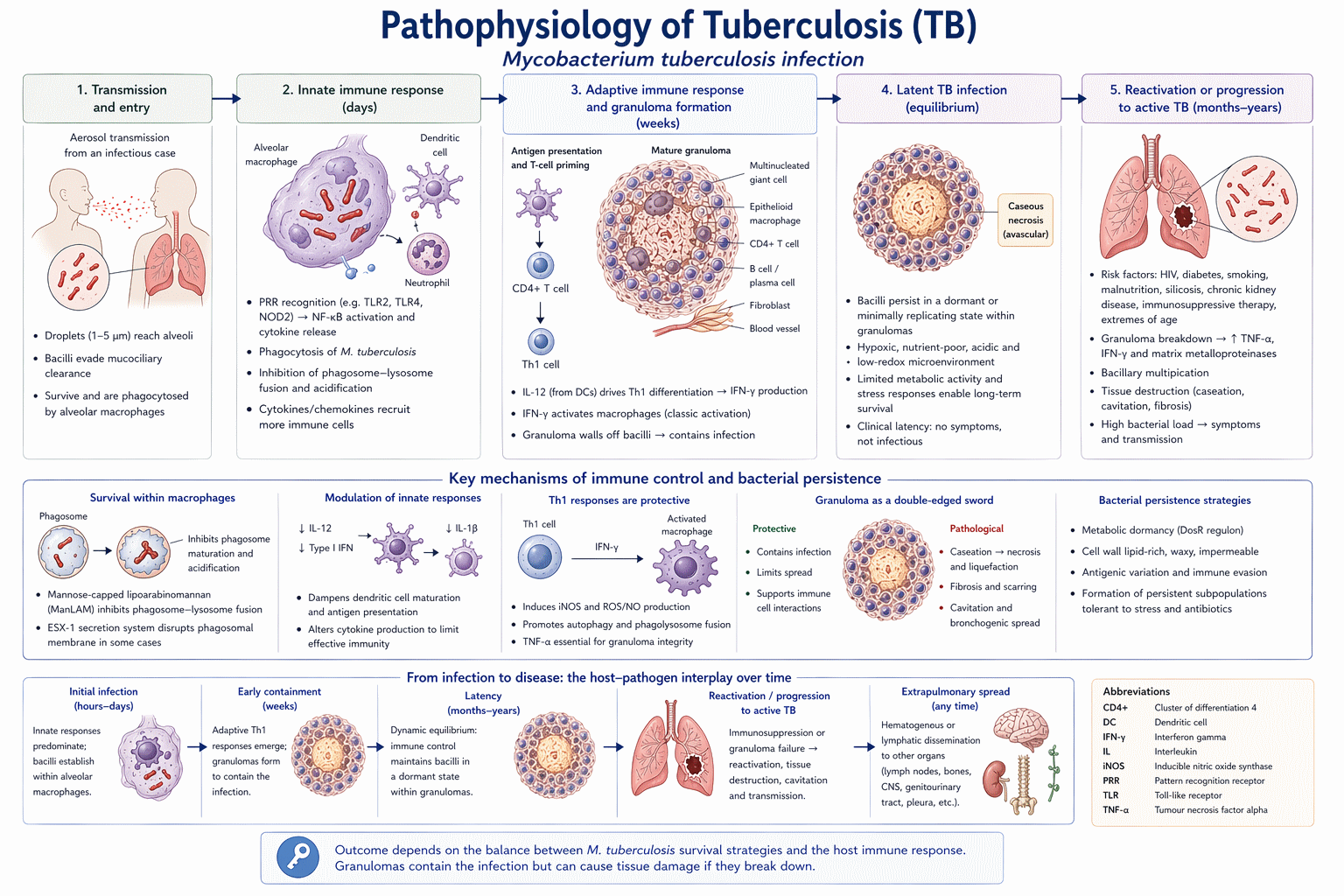
Pathophysiology of tuberculosis
Primary tuberculosis
A non-immune host who is exposed to M. tuberculosis may develop a primary infection of the lungs. A small lung lesion known as a Ghon focus develops. The Ghon focus is composed of tubercle-laden macrophages. The combination of a Ghon focus and hilar lymph nodes is known as a Ghon complex
In immunocompetent people, the initial lesion usually heals by fibrosis. Those who are immunocompromised may develop disseminated disease (miliary tuberculosis).
Secondary (post-primary) tuberculosis
If the host becomes immunocompromised the initial infection may become reactivated. Reactivation generally occurs in the apex of the lungs and may spread locally or to more distant sites. Possible causes of immunocompromise include:
- immunosuppressive drugs including steroids
- HIV
- malnutrition
The lungs remain the most common site for secondary tuberculosis. Extra-pulmonary infection may occur in the following areas:
- central nervous system (tuberculous meningitis - the most serious complication)
- vertebral bodies (Pott's disease)
- cervical lymph nodes (scrofuloderma)
- renal
- gastrointestinal tract
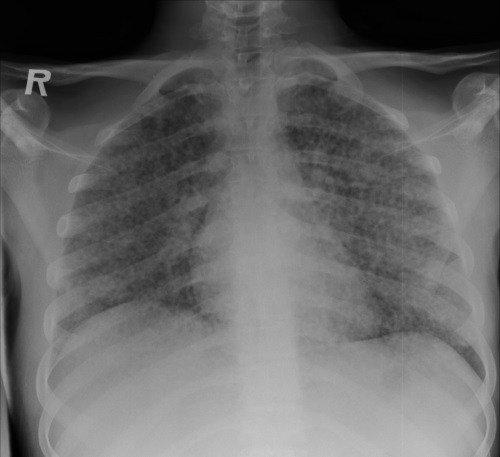
Miliary tuberculosis
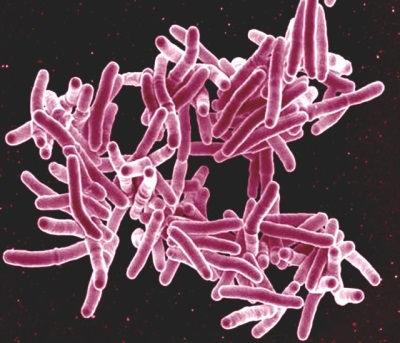
Scanning electron micrograph of Mycobacterium tuberculosis bacteria, which cause TB. Credit: NIAID
+PassMedicine Notes
Tuberculosis (TB) is an infection caused by Mycobacterium tuberculosis that most commonly affects the lungs. Understanding the pathophysiology of TB can be difficult - the key is to differentiate between primary and secondary disease.
Primary tuberculosis
A non-immune host who is exposed to M. tuberculosis may develop a primary infection of the lungs. A small lung lesion known as a Ghon focus develops. The Ghon focus is composed of tubercle-laden macrophages. The combination of a Ghon focus and hilar lymph nodes is known as a Ghon complex
In immunocompetent people, the initial lesion usually heals by fibrosis. Those who are immunocompromised may develop disseminated disease (miliary tuberculosis).
Secondary (post-primary) tuberculosis
If the host becomes immunocompromised the initial infection may become reactivated. Reactivation generally occurs in the apex of the lungs and may spread locally or to more distant sites. Possible causes of immunocompromise include:- immunosuppressive drugs including steroids
- HIV
- malnutrition
- central nervous system (tuberculous meningitis - the most serious complication)
- vertebral bodies (Pott's disease)
- cervical lymph nodes (scrofuloderma)
- renal
- gastrointestinal tract