Anaphylaxis
Anaphylaxis
Anaphylaxis may be defined as a severe, life-threatening, generalised or systemic hypersensitivity reaction.Common identified causes of anaphylaxis:
- food (e.g. nuts) - the most common cause in children
- drugs
- venom (e.g. wasp sting)
Features
The Resus Council UK define anaphylaxis as:
- the sudden onset and rapid progression of symptoms
- Airway and/or Breathing and/or Circulation problems
- Airway problems may include:
- swelling of the throat and tongue →hoarse voice and stridor
- Breathing problems may include:
- respiratory wheeze
- dyspnoea
- Circulation problems may include:
- hypotension
- tachycardia
This means that if there are no ABC problems then the patient is technically not having anaphylaxis.
Around 80-90% of patients also have skin and mucosal changes:
- generalised pruritus
- widespread erythematous or urticarial rash
Management
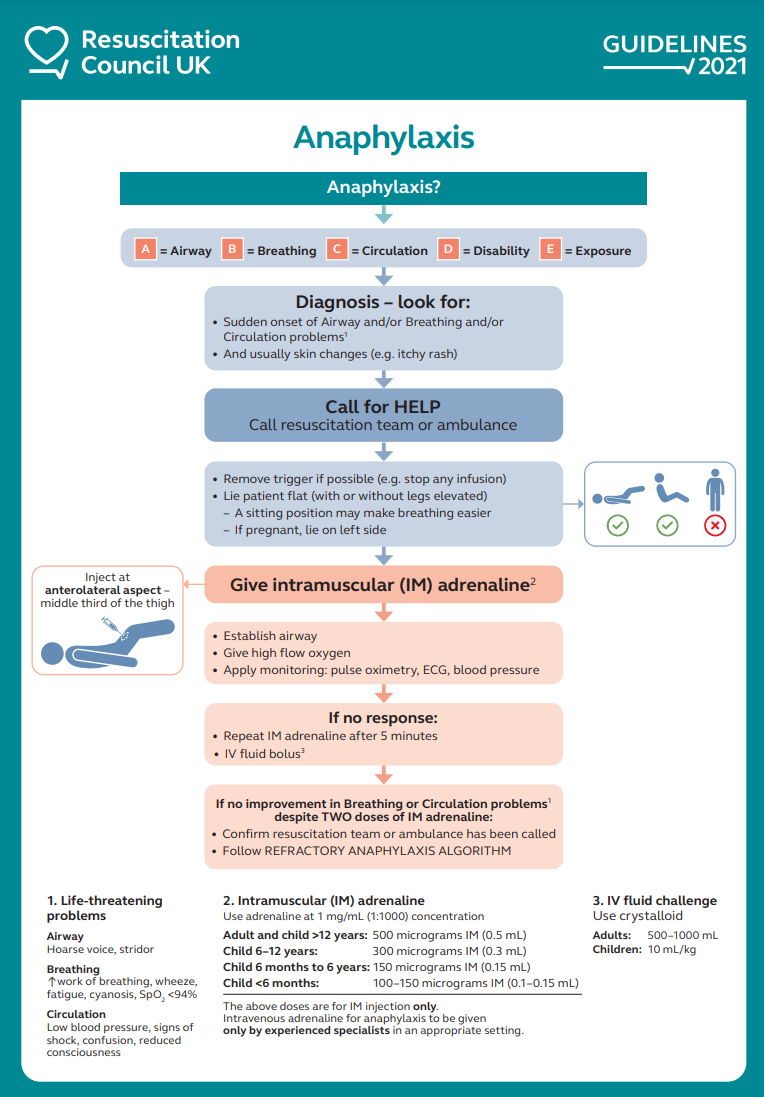
Anaphylaxis is one of the few times when you would not have time to look up the dose of a medication. The Resuscitation Council guidelines on anaphylaxis have recently been updated. Intramuscular adrenaline is by far the most important drug in anaphylaxis and should be given as soon as possible. Previously IV hydrocortisone was also recommended but the evidence base for this was poor and it was removed in the 2021 update.
The recommended doses for adrenaline are as follows: BNF
| Age | Adrenaline dose |
|---|---|
| < 6 months | 100 - 150 micrograms (0.1 - 0.15 ml 1 in 1,000) |
| 6 months - 6 years | 150 micrograms (0.15 ml 1 in 1,000) |
| 6-12 years | 300 micrograms (0.3ml 1 in 1,000) |
| Adult and child > 12 years | 500 micrograms (0.5ml 1 in 1,000) |
Adrenaline can be repeated every 5 minutes if necessary. The best site for IM injection is the anterolateral aspect of the middle third of the thigh.
Refractory anaphylaxis
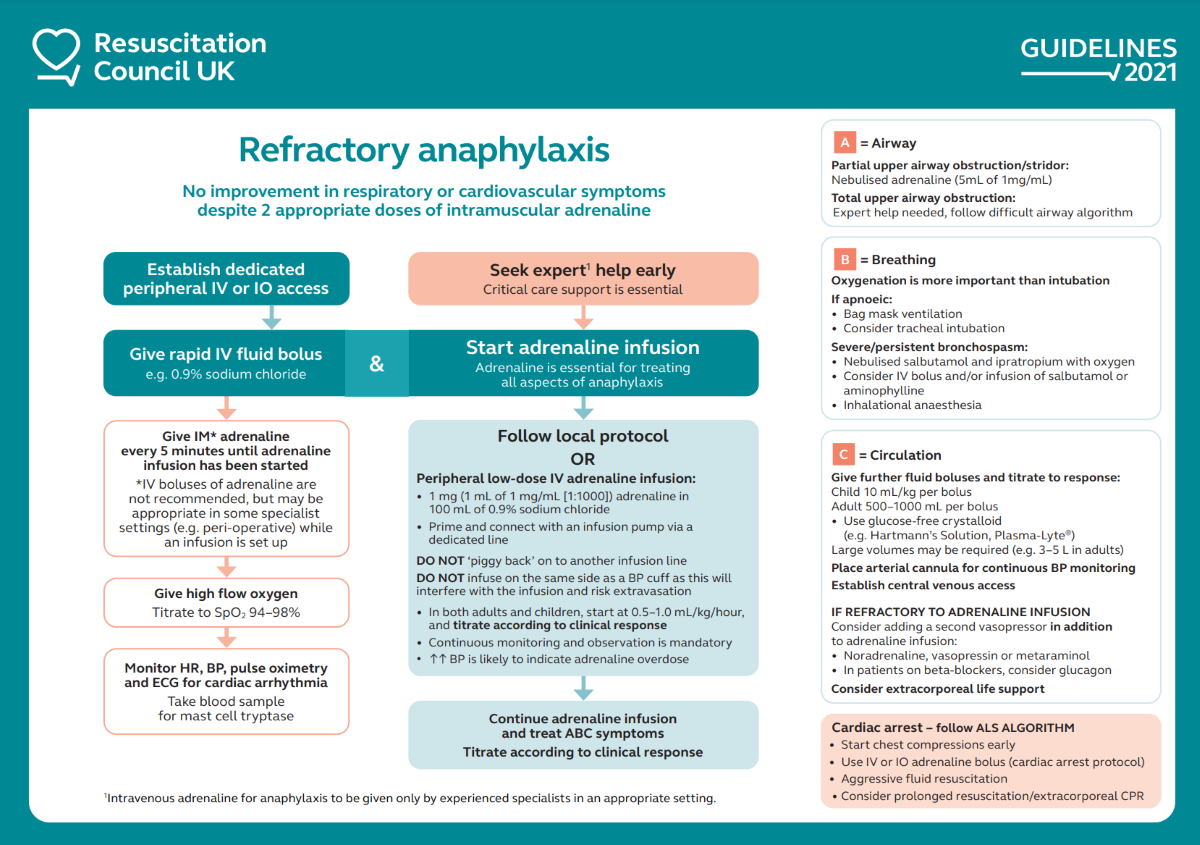
- defined as respiratory and/or cardiovascular problems persist despite 2 doses of IM adrenaline
- IV fluids should be given for shock
- expert help should be sought for consideration of an IV adrenaline infusion
Management following stabilisation:
- non-sedating oral antihistamines, in preference to chlorphenamine, may be given following initial stabilisation especially in patients with persisting skin symptoms (urticaria and/or angioedema)
- sometimes it can be difficult to establish whether a patient had a true episode of anaphylaxis. Serum tryptase levels are sometimes taken in such patients as they remain elevated for up to 12 hours following an acute episode of anaphylaxis
- all patients with a new diagnosis of anaphylaxis should be referred to a specialist allergy clinic
- an adrenaline injector should be givens an interim measure before the specialist allergy assessment (unless the reaction was drug-induced)
- patients should be prescribed 2 adrenaline auto-injectors
- training should be provided on how to use it
- a risk-stratified approach to discharge should be taken as biphasic reactions can occur in up to 20% of patients
The Resus Council UK recommend the following risk-stratified approach to discharge:
- fast-track discharge (after 2 hours of symptom resolution):
- good response to a single dose of adrenaline
- complete resolution of symptoms
- has been given an adrenaline auto-injector and trained how to use it
- adequate supervision following discharge
- minimum 6 hours after symptom resolution
- 2 doses of IM adrenaline needed, or
- previous biphasic reaction
- minimum 12 hours after symptom resolution
- severe reaction requiring > 2 doses of IM adrenaline
- patient has severe asthma
- possibility of an ongoing reaction (e.g. slow-release medication)
- patient presents late at night
- patient in areas where access to emergency access care may be difficult
- observation for at 12 hours following symptom resolution
+PassMedicine Notes
Anaphylaxis may be defined as a severe, life-threatening, generalised or systemic hypersensitivity reaction.
Common identified causes of anaphylaxis:- food (e.g. nuts) - the most common cause in children
- drugs
- venom (e.g. wasp sting)
Features
The Resus Council UK define anaphylaxis as:- the sudden onset and rapid progression of symptoms
- Airway and/or Breathing and/or Circulation problems
- Airway problems may include:
- swelling of the throat and tongue -->hoarse voice and stridor
- Breathing problems may include:
- respiratory wheeze
- dyspnoea
- Circulation problems may include:
- hypotension
- tachycardia
This means that if there are no ABC problems then the patient is technically not having anaphylaxis.
Around 80-90% of patients also have skin and mucosal changes:- generalised pruritus
- widespread erythematous or urticarial rash
Management
Anaphylaxis is one of the few times when you would not have time to look up the dose of a medication. The Resuscitation Council guidelines on anaphylaxis have recently been updated. Intramuscular adrenaline is by far the most important drug in anaphylaxis and should be given as soon as possible. Previously IV hydrocortisone was also recommended but the evidence base for this was poor and it was removed in the 2021 update.
The recommended doses for adrenaline are as follows: BNF
Age_Adrenaline dose| < 6 months _ 100 - 150 micrograms (0.1 - 0.15 ml 1 in 1,000) | 6 months - 6 years _ 150 micrograms (0.15 ml 1 in 1,000) | 6-12 years _ 300 micrograms (0.3ml 1 in 1,000) | Adult and child > 12 years _ 500 micrograms (0.5ml 1 in 1,000) |Adrenaline can be repeated every 5 minutes if necessary. The best site for IM injection is the anterolateral aspect of the middle third of the thigh.
Refractory anaphylaxis- defined as respiratory and/or cardiovascular problems persist despite 2 doses of IM adrenaline
- IV fluids should be given for shock
- expert help should be sought for consideration of an IV adrenaline infusion
- non-sedating oral antihistamines, in preference to chlorphenamine, may be given following initial stabilisation especially in patients with persisting skin symptoms (urticaria and/or angioedema)
- sometimes it can be difficult to establish whether a patient had a true episode of anaphylaxis. Serum tryptase levels are sometimes taken in such patients as they remain elevated for up to 12 hours following an acute episode of anaphylaxis
- all patients with a new diagnosis of anaphylaxis should be referred to a specialist allergy clinic
- an adrenaline injector should be givens an interim measure before the specialist allergy assessment (unless the reaction was drug-induced)
- patients should be prescribed 2 adrenaline auto-injectors
- training should be provided on how to use it
- a risk-stratified approach to discharge should be taken as biphasic reactions can occur in up to 20% of patients
- fast-track discharge (after 2 hours of symptom resolution):
- good response to a single dose of adrenaline
- complete resolution of symptoms
- has been given an adrenaline auto-injector and trained how to use it
- adequate supervision following discharge
- minimum 6 hours after symptom resolution
- 2 doses of IM adrenaline needed, or
- previous biphasic reaction
- minimum 12 hours after symptom resolution
- severe reaction requiring > 2 doses of IM adrenaline
- patient has severe asthma
- possibility of an ongoing reaction (e.g. slow-release medication)
- patient presents late at night
- patient in areas where access to emergency access care may be difficult
- observation for at 12 hours following symptom resolution