Highlighter is on. Drag to highlight text. Click a highlight to remove it.
ALL / Haematology
Porphyrias
Porphyrias
Overview- abnormality in enzymes responsible for the biosynthesis of haem
- results in overproduction of intermediate compounds (porphyrins)
- may be acute or non-acute
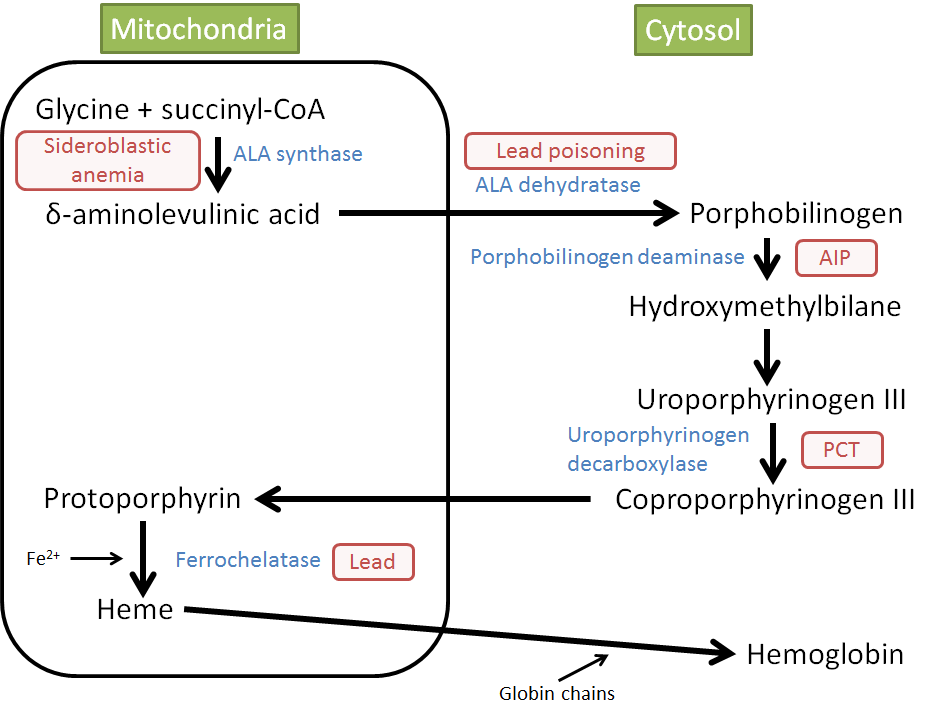
Acute intermittent porphyria (AIP)
- autosomal dominant
- defect in porphobilinogen deaminase
- female and 20-40 year olds more likely to be affected
- typically present with abdominal symptoms, neuropsychiatric symptoms
- hypertension and tachycardia common
- urine turns deep red on standing
Porphyria cutanea tarda (PCT)
- most common hepatic porphyria
- defect in uroporphyrinogen decarboxylase
- may be caused by hepatocyte damage e.g. alcohol, oestrogens
- classically photosensitive rash with bullae, skin fragility on face and dorsal aspect of hands
- urine: elevated uroporphyrinogen and pink fluorescence of urine under Wood's lamp
- manage with chloroquine
Variegate porphyria
- autosomal dominant
- defect in protoporphyrinogen oxidase
- photosensitive blistering rash
- abdominal and neurological symptoms
- more common in South Africans
+PassMedicine Notes
Overview
- abnormality in enzymes responsible for the biosynthesis of haem
- results in overproduction of intermediate compounds (porphyrins)
- may be acute or non-acute
pdd510.png#
Acute intermittent porphyria (AIP)- autosomal dominant
- defect in porphobilinogen deaminase
- female and 20-40 year olds more likely to be affected
- typically present with abdominal symptoms, neuropsychiatric symptoms
- hypertension and tachycardia common
- urine turns deep red on standing
- most common hepatic porphyria
- defect in uroporphyrinogen decarboxylase
- may be caused by hepatocyte damage e.g. alcohol, oestrogens
- classically photosensitive rash with bullae, skin fragility on face and dorsal aspect of hands
- urine: elevated uroporphyrinogen and pink fluorescence of urine under Wood's lamp
- manage with chloroquine
- autosomal dominant
- defect in protoporphyrinogen oxidase
- photosensitive blistering rash
- abdominal and neurological symptoms
- more common in South Africans