Highlighter is on. Drag to highlight text. Click a highlight to remove it.
ALL / Nephrology
Glomerulonephritides
Glomerulonephritides
Knowing a few key facts is the best way to approach the difficult subject of glomerulonephritis: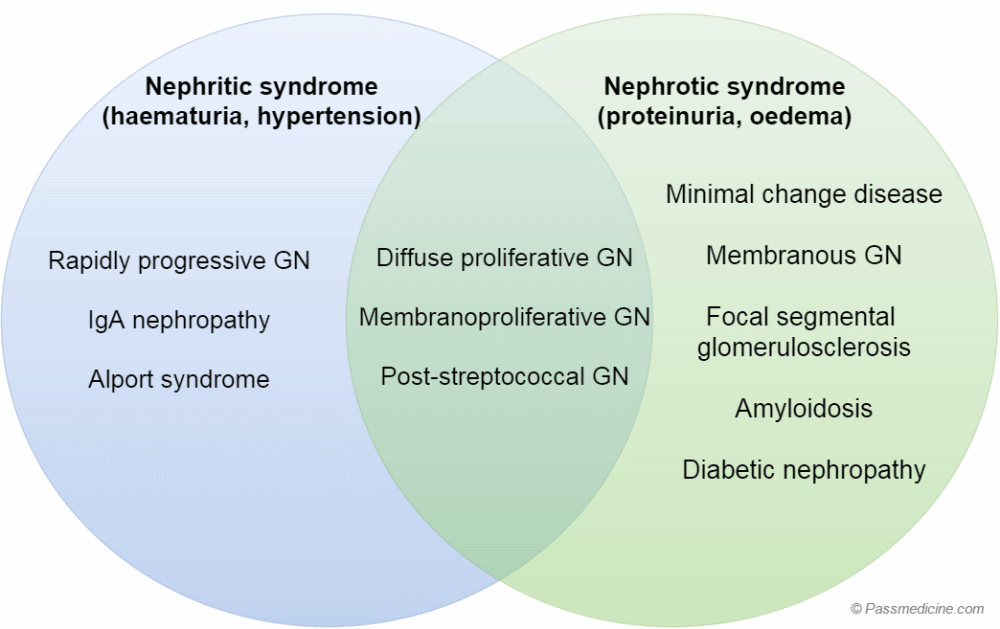
Diagram showing the glomerulonephritides and how they typically present
Typically presents with nephritic syndrome (haematuria, hypertension)
Rapidly progressive glomerulonephritis - aka crescentic glomerulonephritis
- rapid onset, often presenting as acute kidney injury
- causes include Goodpasture's, ANCA positive vasculitis
IgA nephropathy - aka Berger's disease, mesangioproliferative GN
- typically young adult with haematuria following an URTI
- there is considerable pathological overlap with Henoch-Schonlein purpura (HSP)
Mixed nephritic/nephrotic presentation
Diffuse proliferative glomerulonephritis
- classical post-streptococcal glomerulonephritis in child
- presents as nephritic syndrome / acute kidney injury
- most common form of renal disease in SLE
Membranoproliferative glomerulonephritis (mesangiocapillary)
- type 1: cryoglobulinaemia, hepatitis C
- type 2: partial lipodystrophy
Typically presents with nephrotic syndrome (proteinuria, oedema)
Minimal change disease
- typically a child with nephrotic syndrome (accounts for 80%)
- causes: Hodgkin's, NSAIDs
- good response to steroids
Membranous glomerulonephritis
- presentation: proteinuria / nephrotic syndrome / chronic kidney disease
- cause: infections, rheumatoid drugs, malignancy
- 1/3 resolve, 1/3 respond to cytotoxics, 1/3 develop chronic kidney disease
Focal segmental glomerulosclerosis
- may be idiopathic or secondary to HIV, heroin
- presentation: proteinuria / nephrotic syndrome / chronic kidney disease
+PassMedicine Notes
Knowing a few key facts is the best way to approach the difficult subject of glomerulonephritis:
pdd907.png Diagram showing the glomerulonephritides and how they typically presentTypically presents with nephritic syndrome (haematuria, hypertension)
Rapidly progressive glomerulonephritis - aka crescentic glomerulonephritis- rapid onset, often presenting as acute kidney injury
- causes include Goodpasture's, ANCA positive vasculitis
- typically young adult with haematuria following an URTI
- there is considerable pathological overlap with Henoch-Schonlein purpura (HSP)
Mixed nephritic/nephrotic presentation
Diffuse proliferative glomerulonephritis- classical post-streptococcal glomerulonephritis in child
- presents as nephritic syndrome / acute kidney injury
- most common form of renal disease in SLE
- type 1: cryoglobulinaemia, hepatitis C
- type 2: partial lipodystrophy
Typically presents with nephrotic syndrome (proteinuria, oedema)
Minimal change disease- typically a child with nephrotic syndrome (accounts for 80%)
- causes: Hodgkin's, NSAIDs
- good response to steroids
- presentation: proteinuria / nephrotic syndrome / chronic kidney disease
- cause: infections, rheumatoid drugs, malignancy
- 1/3 resolve, 1/3 respond to cytotoxics, 1/3 develop chronic kidney disease
- may be idiopathic or secondary to HIV, heroin
- presentation: proteinuria / nephrotic syndrome / chronic kidney disease