Lichen sclerosus
Lichen sclerosus
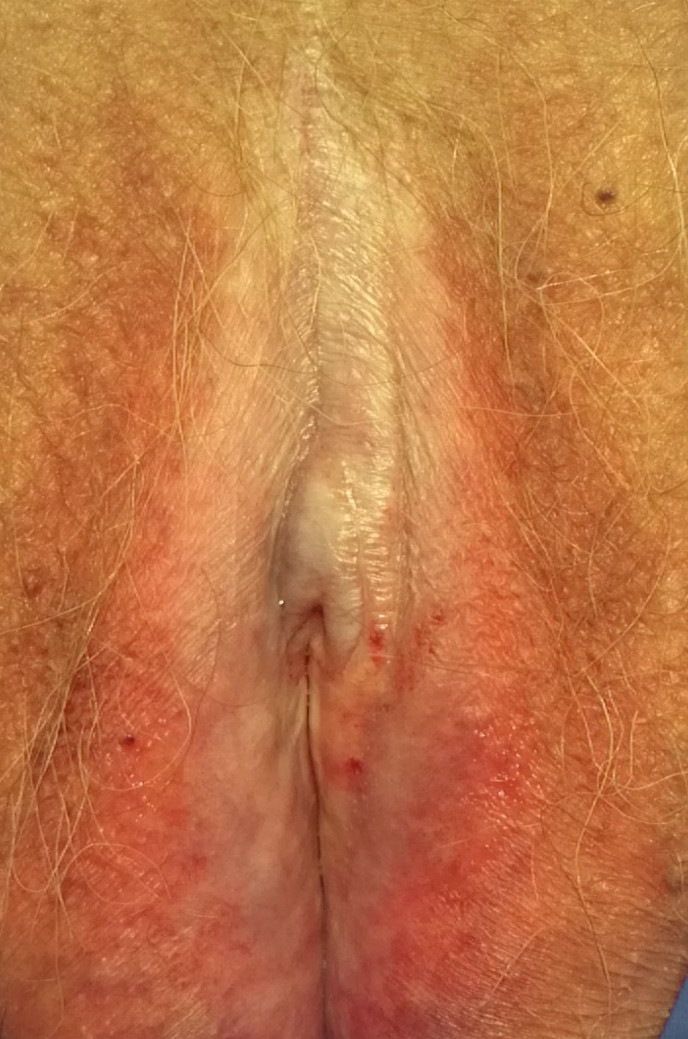
Lichen sclerosus was previously termed lichen sclerosus et atrophicus. It is an inflammatory condition that usually affects the genitalia and is more common in elderly females. Lichen sclerosus leads to atrophy of the epidermis with white plaques formingFeatures
- white patches that may scar
- itch is prominent
- may result in pain during intercourse or urination
The diagnosis is usually made on clinical grounds but a biopsy may be performed if atypical features are present*
Management
- topical very potent steroids (e.g. clobetasol propionate 0.05%) and emollients
Follow-up:
- increased risk of vulval cancer
Balanitis xerotica obliterans
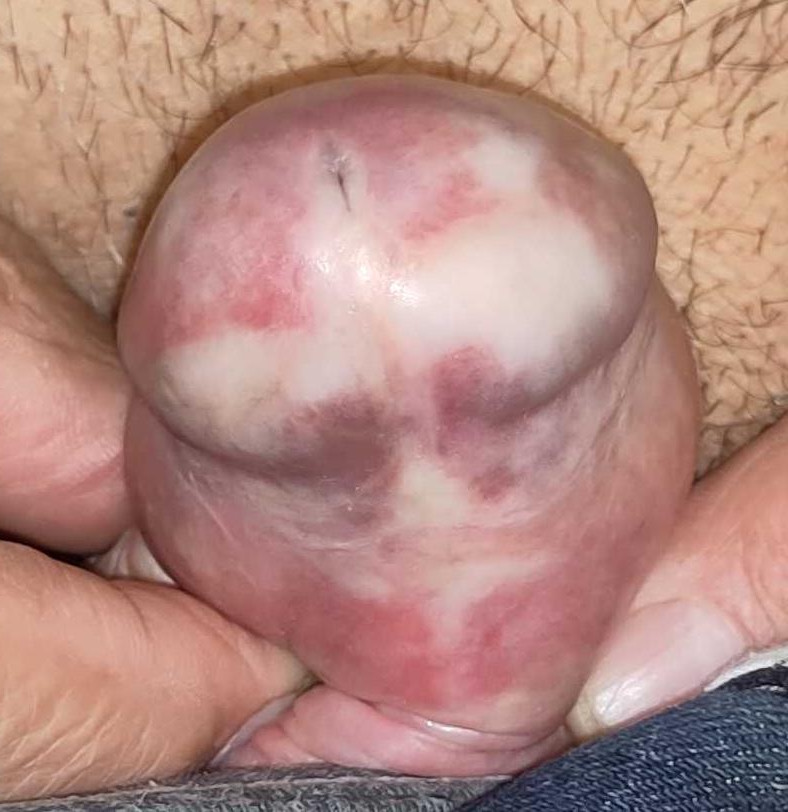
Balanitis xerotica obliterans (BXO) is a chronic, sclerosing inflammatory dermatosis affecting the foreskin, glans, and often the urethral meatus, considered the male equivalent of lichen sclerosus.
It typically presents in prepubertal boys and middle-aged men with symptoms such as phimosis, white atrophic plaques, and in severe cases, urinary outflow obstruction due to meatal or urethral involvement.
Histologically, BXO is characterised by hyperkeratosis, basal cell degeneration, and a dense lichenoid lymphocytic infiltrate with dermal fibrosis.
Management includes potent topical corticosteroids and circumcision, though urethral strictures may require surgical intervention, and long-term surveillance is important due to the small risk of malignant transformation.
*the RCOG advise the following
Skin biopsy is not necessary when a diagnosis can be made on clinical examination. Biopsy is required if the woman fails to respond to treatment or there is clinical suspicion of VIN or cancer.
and the British Association of Dermatologists state the following:
A confirmatory biopsy, although ideal, is not always practical, particularly in children. It is not always essential when the clinical features are typical. However, histological examination is advisable if there are atypical features or diagnostic uncertainty and is mandatory if there is any suspicion of neoplastic
change. Patients under routine follow-up will need a biopsy if:
- (i) there is a suspicion of neoplastic change, i.e. a persistent area of hyperkeratosis, erosion or erythema, or new warty or papular lesions;
- (ii) the disease fails to respond to adequate treatment;
- (iii) there is extragenital LS, with features suggesting an overlap with morphoea;
- (iv) there are pigmented areas, in order to exclude an abnormal melanocytic proliferation;
- (v) second-line therapy is to be used.
+PassMedicine Notes
Lichen sclerosus was previously termed lichen sclerosus et atrophicus. It is an inflammatory condition that usually affects the genitalia and is more common in elderly females. Lichen sclerosus leads to atrophy of the epidermis with white plaques forming
Features- white patches that may scar
- itch is prominent
- may result in pain during intercourse or urination
The diagnosis is usually made on clinical grounds but a biopsy may be performed if atypical features are present*
Management- topical very potent steroids (e.g. clobetasol propionate 0.05%) and emollients
- increased risk of vulval cancer
Balanitis xerotica obliterans
Balanitis xerotica obliterans (BXO) is a chronic, sclerosing inflammatory dermatosis affecting the foreskin, glans, and often the urethral meatus, considered the male equivalent of lichen sclerosus.
It typically presents in prepubertal boys and middle-aged men with symptoms such as phimosis, white atrophic plaques, and in severe cases, urinary outflow obstruction due to meatal or urethral involvement.
Histologically, BXO is characterised by hyperkeratosis, basal cell degeneration, and a dense lichenoid lymphocytic infiltrate with dermal fibrosis.
Management includes potent topical corticosteroids and circumcision, though urethral strictures may require surgical intervention, and long-term surveillance is important due to the small risk of malignant transformation.
*the RCOG advise the following
Skin biopsy is not necessary when a diagnosis can be made on clinical examination. Biopsy is required if the woman fails to respond to treatment or there is clinical suspicion of VIN or cancer.
and the British Association of Dermatologists state the following:
A confirmatory biopsy, although ideal, is not always practical, particularly in children. It is not always essential when the clinical features are typical. However, histological examination is advisable if there are atypical features or diagnostic uncertainty and is mandatory if there is any suspicion of neoplastic change. Patients under routine follow-up will need a biopsy if:- (i) there is a suspicion of neoplastic change, i.e. a persistent area of hyperkeratosis, erosion or erythema, or new warty or papular lesions;
- (ii) the disease fails to respond to adequate treatment;
- (iii) there is extragenital LS, with features suggesting an overlap with morphoea;
- (iv) there are pigmented areas, in order to exclude an abnormal melanocytic proliferation;
- (v) second-line therapy is to be used.