Highlighter is on. Drag to highlight text. Click a highlight to remove it.
ALL / Ophthalmology
Horner's syndrome
Horner's syndrome
Features- miosis (small pupil)
- ptosis
- 'enophthalmos' (sunken eye)
- in reality, the appearance is due to a narrow palpebral aperture rather than true enophthalmos - 'pseudoenophthalmos'
- anhidrosis (loss of sweating one side)
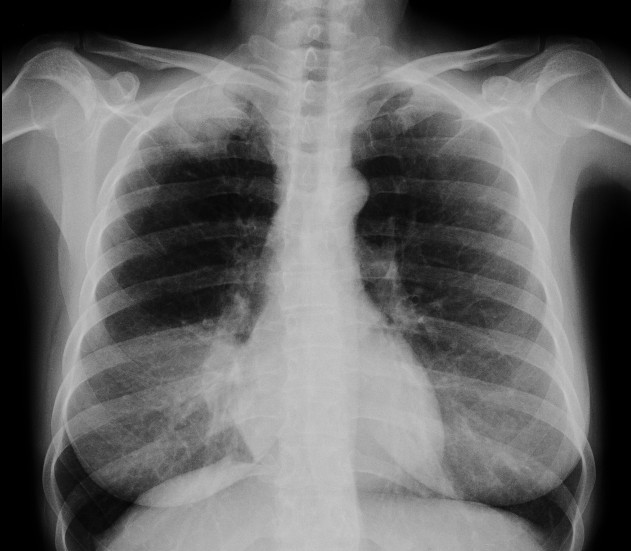
Chest x-ray showing a Pancoast tumour (non-small cell) in the right lung in a middle-aged woman - e Image used on license from Radiopaedia
Distinguishing between causes
- heterochromia (difference in iris colour) is seen in congenital Horner's
- anhidrosis: see below
- pharmacologic tests
- can be useful to confirm the diagnosis of Horner syndrome and localise the lesion
- apraclonidine drops (an alpha-adrenergic agonist) can be used: causes pupillary dilation in Horner's syndrome due to denervation supersensitivity but produces mild pupillary constriction in the normal pupil by down-regulating the norepinephrine release at the synaptic cleft
| Central lesions | Pre-ganglionic lesions | Post-ganglionic lesions |
|---|---|---|
| Anhidrosis of the face, arm and trunk | Anhidrosis of the face | No anhidrosis |
| Stroke Syringomyelia Multiple sclerosis Tumour Encephalitis | Pancoast's tumour Thyroidectomy Trauma Cervical rib | Carotid artery dissection Carotid aneurysm Cavernous sinus thrombosis Cluster headache |
+PassMedicine Notes
Features
- miosis (small pupil)
- ptosis
- 'enophthalmos' (sunken eye)
- in reality, the appearance is due to a narrow palpebral aperture rather than true enophthalmos - 'pseudoenophthalmos'
- anhidrosis (loss of sweating one side)
- heterochromia (difference in iris colour) is seen in congenital Horner's
- anhidrosis: see below
- pharmacologic tests
- can be useful to confirm the diagnosis of Horner syndrome and localise the lesion
- apraclonidine drops (an alpha-adrenergic agonist) can be used: causes pupillary dilation in Horner's syndrome due to denervation supersensitivity but produces mild pupillary constriction in the normal pupil by down-regulating the norepinephrine release at the synaptic cleft