Highlighter is on. Drag to highlight text. Click a highlight to remove it.
ALL / Respiratory Medicine
Pulmonary hypertension: causes and classification
Pulmonary hypertension: causes and classification
Pulmonary hypertension may be defined as a sustained elevation in mean pulmonary arterial pressure of greater than 20 mmHg at rest. It has recently been reclassified by the WHO: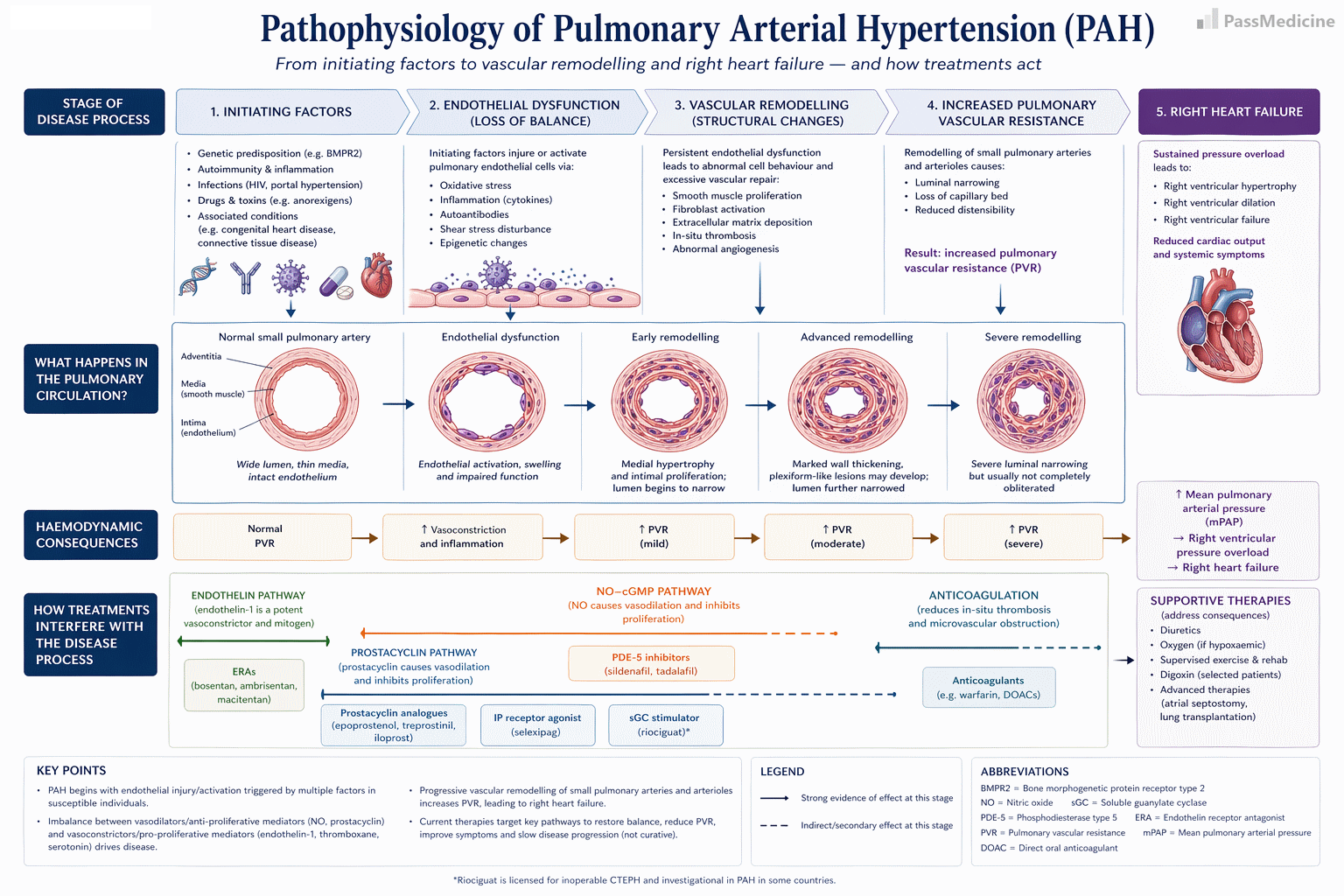
Pathophysiology of pulmonary arterial hypertension
Group 1: Pulmonary arterial hypertension (PAH)
- idiopathic*
- familial
- associated conditions: collagen vascular disease, congenital heart disease with systemic to pulmonary shunts, HIV**, drugs and toxins, sickle cell disease
- persistent pulmonary hypertension of the newborn
Group 2: Pulmonary hypertension with left heart disease
- left-sided atrial, ventricular or valvular disease such as left ventricular systolic and diastolic dysfunction, mitral stenosis and mitral regurgitation
Group 3: Pulmonary hypertension secondary to lung disease/hypoxia
- COPD
- interstitial lung disease
- sleep apnoea
- high altitude
Group 4: Pulmonary hypertension due to thromboembolic disease
Group 5: Miscellaneous conditions
- lymphangiomatosis e.g. secondary to carcinomatosis or sarcoidosis
*previously termed primary pulmonary hypertension
**the mechanism by which HIV infection produces pulmonary hypertension remains unknown
+PassMedicine Notes
Pulmonary hypertension may be defined as a sustained elevation in mean pulmonary arterial pressure of greater than 20 mmHg at rest. It has recently been reclassified by the WHO:
Group 1: Pulmonary arterial hypertension (PAH) - idiopathic* - familial - associated conditions: collagen vascular disease, congenital heart disease with systemic to pulmonary shunts, HIV**, drugs and toxins, sickle cell disease - persistent pulmonary hypertension of the newborn Group 2: Pulmonary hypertension with left heart disease - left-sided atrial, ventricular or valvular disease such as left ventricular systolic and diastolic dysfunction, mitral stenosis and mitral regurgitation Group 3: Pulmonary hypertension secondary to lung disease/hypoxia - COPD - interstitial lung disease - sleep apnoea - high altitudeGroup 4: Pulmonary hypertension due to thromboembolic disease
Group 5: Miscellaneous conditions - lymphangiomatosis e.g. secondary to carcinomatosis or sarcoidosis *previously termed primary pulmonary hypertension **the mechanism by which HIV infection produces pulmonary hypertension remains unknown