Highlighter is on. Drag to highlight text. Click a highlight to remove it.
ALL / Neurology
Herpes simplex encephalitis
Herpes simplex encephalitis
Herpes simplex (HSV) encephalitis is a common topic in the exam. The virus characteristically affects the temporal lobes - questions may give the result of imaging or describe temporal lobe signs e.g. aphasia.Features
- fever, headache, psychiatric symptoms, seizures, vomiting
- focal features e.g. aphasia
- peripheral lesions (e.g. cold sores) have no relation to the presence of HSV encephalitis
Pathophysiology
- HSV-1 is responsible for 95% of cases in adults
- typically affects temporal and inferior frontal lobes
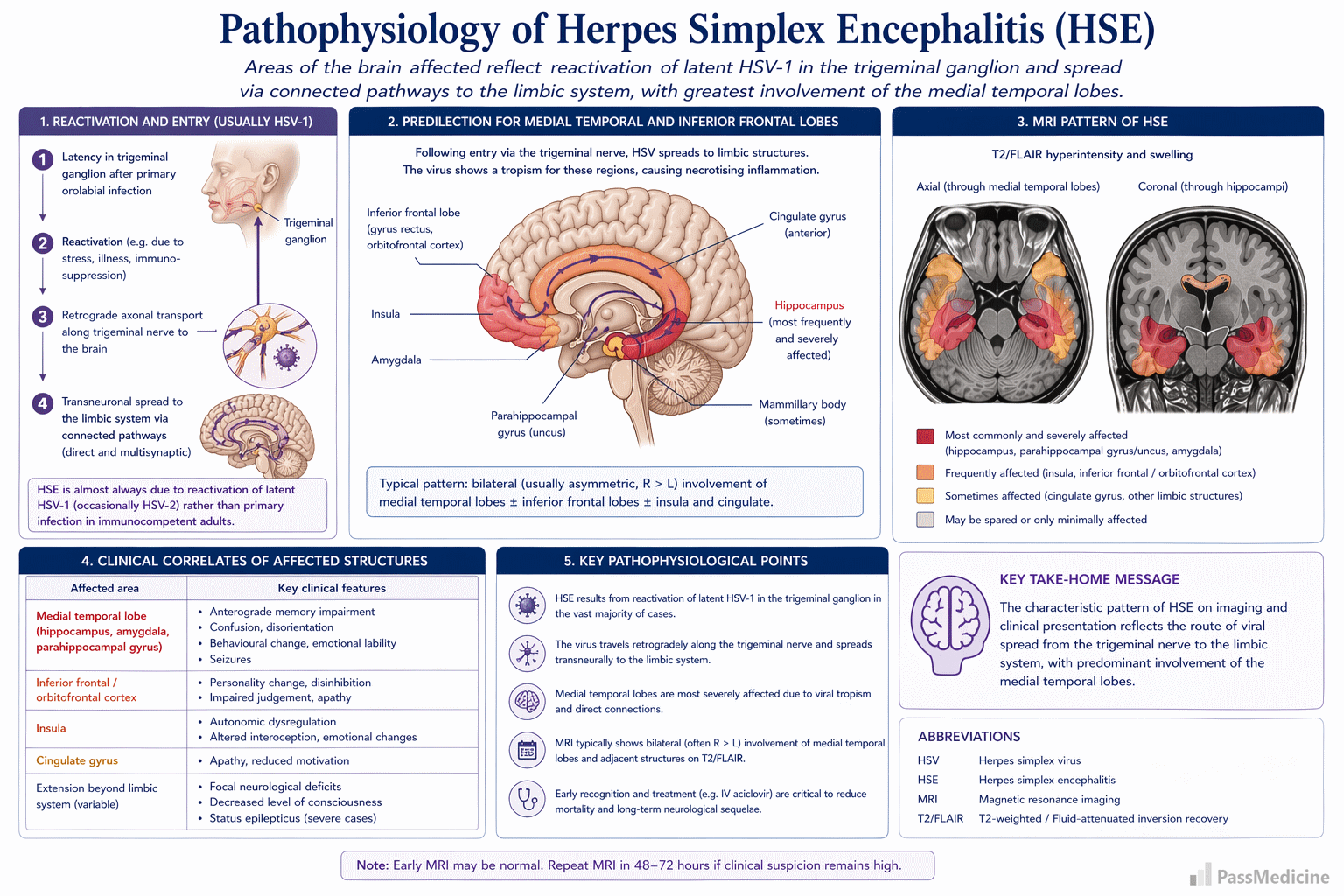
Pathophysiology of herpes simplex encephalitis
Investigation
- CSF: lymphocytosis, elevated protein
- PCR for HSV
- CT: medial temporal and inferior frontal changes (e.g. petechial haemorrhages) - normal in one-third of patients
- MRI is better
- EEG pattern
- unilateral or bilateral periodic sharp-and-slow-wave complexes at 2–3 Hz over the temporal lobes (periodic lateralised epileptiform discharges)
- seen in ~80% of cases
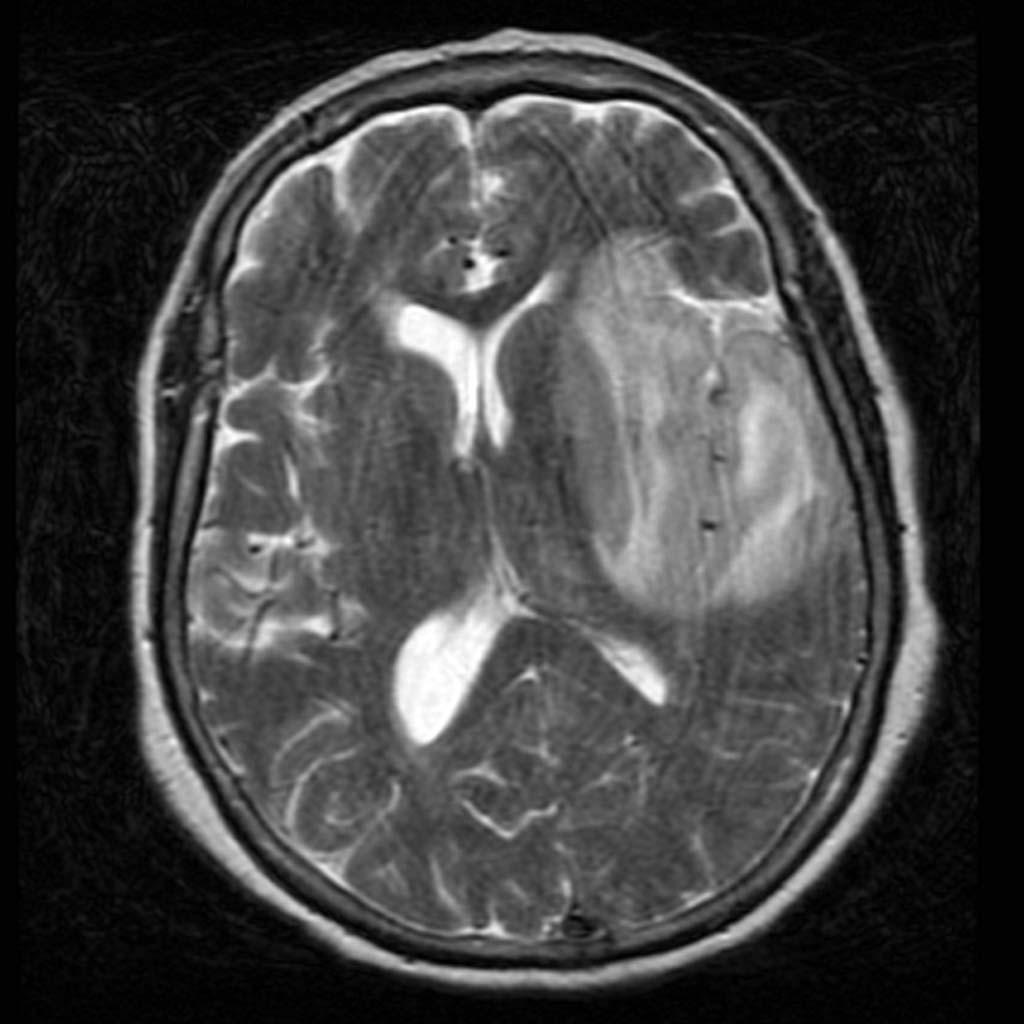
MRI of a patient with HSV encephalitis. There is hyperintensity of the affected white matter and cortex in the medial temporal lobes and insular cortex.
Treatment
- intravenous aciclovir
The prognosis is dependent on whether aciclovir is commenced early. If treatment is started promptly the mortality is 10-20%. Left untreated the mortality approaches 80%
Complications
- cognitive impairment and memory loss (due to hippocampal damage)
- personality and behavioural change
- seizures and development of chronic epilepsy
- focal neurological deficits (e.g. aphasia)
- raised intracranial pressure and cerebral oedema
- Klüver–Bucy syndrome (bilateral temporal lobe involvement)
- hyperorality and hypersexuality
- emotional blunting and docility
- due to bilateral damage to the amygdala and medial temporal structures
+PassMedicine Notes
Herpes simplex (HSV) encephalitis is a common topic in the exam. The virus characteristically affects the temporal lobes - questions may give the result of imaging or describe temporal lobe signs e.g. aphasia.
Features- fever, headache, psychiatric symptoms, seizures, vomiting
- focal features e.g. aphasia
- peripheral lesions (e.g. cold sores) have no relation to the presence of HSV encephalitis
- HSV-1 is responsible for 95% of cases in adults
- typically affects temporal and inferior frontal lobes
- CSF: lymphocytosis, elevated protein
- PCR for HSV
- CT: medial temporal and inferior frontal changes (e.g. petechial haemorrhages) - normal in one-third of patients
- MRI is better
- EEG pattern
- unilateral or bilateral periodic sharp-and-slow-wave complexes at 2–3 Hz over the temporal lobes (periodic lateralised epileptiform discharges)
- seen in ~80% of cases
- intravenous aciclovir
The prognosis is dependent on whether aciclovir is commenced early. If treatment is started promptly the mortality is 10-20%. Left untreated the mortality approaches 80%
Complications- cognitive impairment and memory loss (due to hippocampal damage)
- personality and behavioural change
- seizures and development of chronic epilepsy
- focal neurological deficits (e.g. aphasia)
- raised intracranial pressure and cerebral oedema
- Klüver–Bucy syndrome (bilateral temporal lobe involvement)
- hyperorality and hypersexuality
- emotional blunting and docility
- due to bilateral damage to the amygdala and medial temporal structures