Atrial fibrillation: a very basic introduction
Atrial fibrillation: a very basic introduction
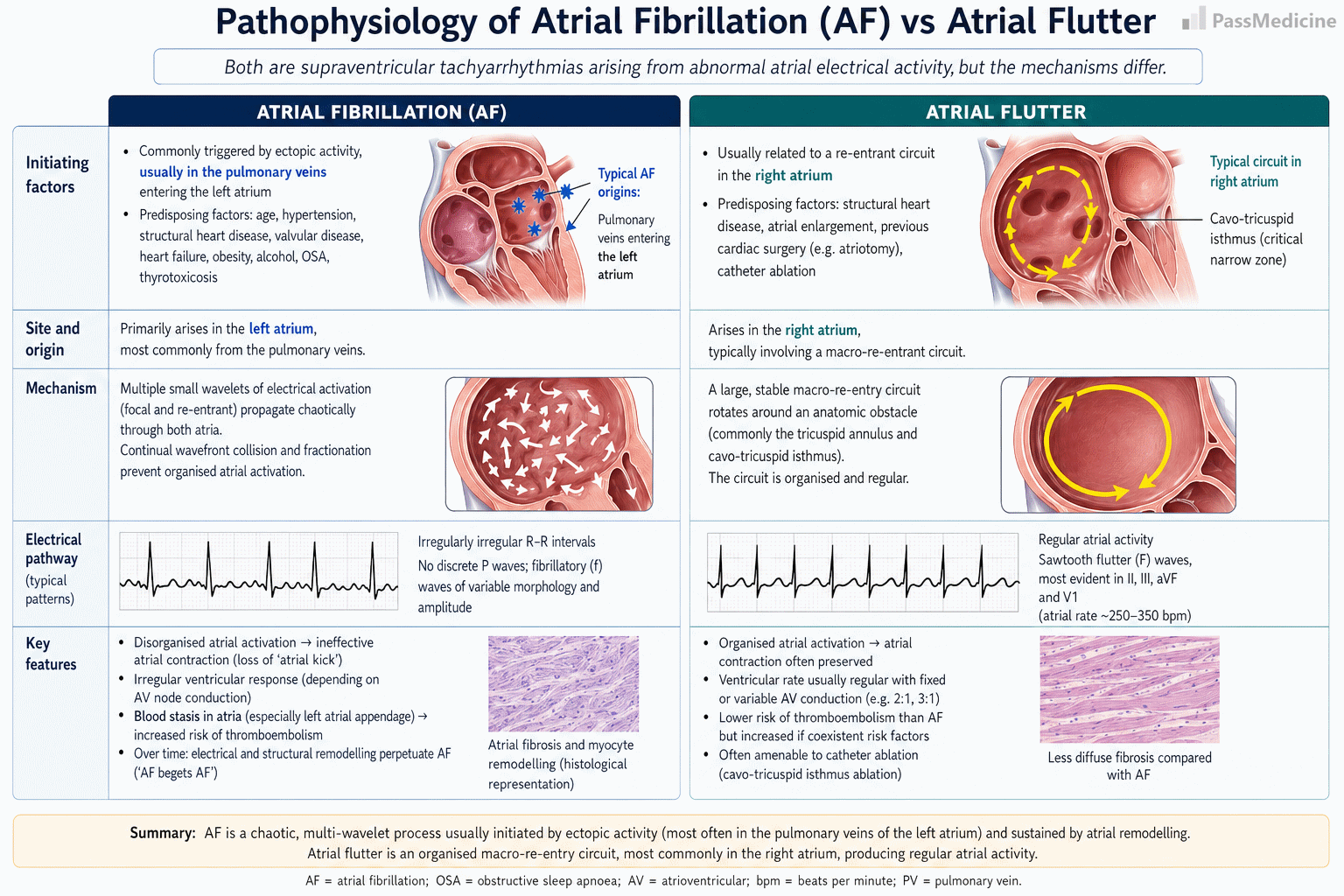
Atrial fibrillation (AF) is the most common sustained cardiac arrhythmia. It is very common, being present in around 5% of patients over aged 70-75 years and 10% of patients aged 80-85 years. Whilst uncontrolled atrial fibrillation can result in symptomatic palpitations and inefficient cardiac function probably the most important aspect of managing patients with AF is reducing the increased risk of stroke which is present in these patients.Types of atrial fibrillation
AF may by classified as either first detected episode, paroxysmal, persistent or permanent.
- first detected episode (irrespective of whether it is symptomatic or self-terminating)
- recurrent episodes, when a patient has 2 or more episodes of AF. If episodes of AF terminate spontaneously then the term paroxysmal AF is used. Such episodes last less than 7 days (typically < 24 hours). If the arrhythmia is not self-terminating then the term persistent AF is used. Such episodes usually last greater than 7 days
- in permanent AF there is continuous atrial fibrillation which cannot be cardioverted or if attempts to do so are deemed inappropriate. Treatment goals are therefore rated control and anticoagulation if appropriate
Symptoms and signs
Symptoms
- palpitations
- dyspnoea
- chest pain
Signs
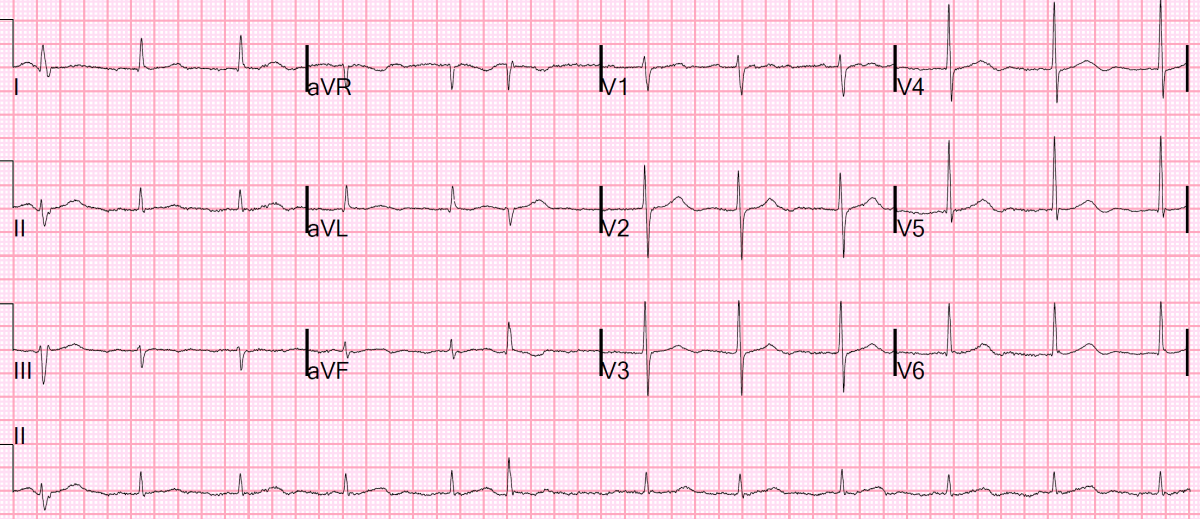
- an irregularly irregular pulse
Investigations
An ECG is essential to make the diagnosis as other conditions can give an irregular pulse, such as ventricular ectopics or sinus arrhythmia.
Management
There are two key parts of managing patients with AF:
- 1. Rate/rhythm control
- 2. Reducing stroke risk
Rate vs. rhythm control
There are two main strategies employed in dealing with the arrhythmia element of atrial fibrillation:
- rate control: accept that the pulse will be irregular, but slow the rate down to avoid negative effects on cardiac function
- rhythm control: try to get the patient back into, and maintain, normal sinus rhythm. This is termed cardioversion. Drugs (pharmacological cardioversion) and synchronised DC electrical shocks (electrical cardioversion) may be used for this purpose
For many years the predominant approach was to try and maintain a patient in sinus rhythm. This approach changed in the early 2000's and now the majority of patients are managed with a rate control strategy. NICE advocate using a rate control strategy except in a number of specific situations such as coexistent heart failure, first onset AF or where there is an obvious reversible cause.
Rate control
A beta-blocker or a rate-limiting calcium channel blocker (e.g. diltiazem) is used first-line to control the rate in AF.
If one drug does not control the rate adequately NICE recommend combination therapy with any 2 of the following:
- a betablocker
- diltiazem
- digoxin
Rhythm control
As mentioned above there are a subgroup of patients for whom a rhythm control strategy should be tried first. Other patients may have had a rate control strategy initially but switch to rhythm control if symptoms/heart rate fails to settle.
When considering cardioversion it is very important to remember that the moment a patient switches from AF to sinus rhythm presents the highest risk for embolism leading to stroke. Imagine the thrombus formed in the fibrillating atrium suddenly being pushed out when sinus rhythm is restored. For this reason patients must either have had a short duration of symptoms (less than 48 hours) or be anticoagulated for a period of time prior to attempting cardioversion.
Reducing stroke risk
Some patients with AF are at a very low risk of stroke whilst others are at a very significant risk. Clinicians use risk stratifying tools such as the CHA2DS2-VASc score to determine the most appropriate anticoagulation strategy.
| Risk factor | Points | |
|---|---|---|
| C | Congestive heart failure | 1 |
| H | Hypertension (or treated hypertension) | 1 |
| A2 | Age >= 75 years | 2 |
| Age 65-74 years | 1 | |
| D | Diabetes | 1 |
| S2 | Prior Stroke, TIA or thromboembolism | 2 |
| V | Vascular disease (including ischaemic heart disease and peripheral arterial disease) | 1 |
| S | Sex (female) | 1 |
The table below shows a suggested anticoagulation strategy based on the score:
| Score | Anticoagulation |
|---|---|
| 0 | No treatment |
| 1 | Males: Consider anticoagulation Females: No treatment (this is because their score of 1 is only reached due to their gender) |
| 2 or more | Offer anticoagulation |
NICE recommend that we offer patients a choice of anticoagulation, including warfarin and the novel oral anticoagulants (NOACs).
+PassMedicine Notes
Atrial fibrillation (AF) is the most common sustained cardiac arrhythmia. It is very common, being present in around 5% of patients over aged 70-75 years and 10% of patients aged 80-85 years. Whilst uncontrolled atrial fibrillation can result in symptomatic palpitations and inefficient cardiac function probably the most important aspect of managing patients with AF is reducing the increased risk of stroke which is present in these patients.
Types of atrial fibrillation
AF may by classified as either first detected episode, paroxysmal, persistent or permanent.- first detected episode (irrespective of whether it is symptomatic or self-terminating)
- recurrent episodes, when a patient has 2 or more episodes of AF. If episodes of AF terminate spontaneously then the term paroxysmal AF is used. Such episodes last less than 7 days (typically < 24 hours). If the arrhythmia is not self-terminating then the term persistent AF is used. Such episodes usually last greater than 7 days
- in permanent AF there is continuous atrial fibrillation which cannot be cardioverted or if attempts to do so are deemed inappropriate. Treatment goals are therefore rated control and anticoagulation if appropriate
Symptoms and signs
Symptoms- palpitations
- dyspnoea
- chest pain
- an irregularly irregular pulse
Investigations
An ECG is essential to make the diagnosis as other conditions can give an irregular pulse, such as ventricular ectopics or sinus arrhythmia.
Management
There are two key parts of managing patients with AF:- 1. Rate/rhythm control
- 2. Reducing stroke risk
Rate vs. rhythm control
There are two main strategies employed in dealing with the arrhythmia element of atrial fibrillation:- rate control: accept that the pulse will be irregular, but slow the rate down to avoid negative effects on cardiac function
- rhythm control: try to get the patient back into, and maintain, normal sinus rhythm. This is termed cardioversion. Drugs (pharmacological cardioversion) and synchronised DC electrical shocks (electrical cardioversion) may be used for this purpose
For many years the predominant approach was to try and maintain a patient in sinus rhythm. This approach changed in the early 2000's and now the majority of patients are managed with a rate control strategy. NICE advocate using a rate control strategy except in a number of specific situations such as coexistent heart failure, first onset AF or where there is an obvious reversible cause.
Rate control
A beta-blocker or a rate-limiting calcium channel blocker (e.g. diltiazem) is used first-line to control the rate in AF.
If one drug does not control the rate adequately NICE recommend combination therapy with any 2 of the following:- a betablocker
- diltiazem
- digoxin
Rhythm control
As mentioned above there are a subgroup of patients for whom a rhythm control strategy should be tried first. Other patients may have had a rate control strategy initially but switch to rhythm control if symptoms/heart rate fails to settle.
When considering cardioversion it is very important to remember that the moment a patient switches from AF to sinus rhythm presents the highest risk for embolism leading to stroke. Imagine the thrombus formed in the fibrillating atrium suddenly being pushed out when sinus rhythm is restored. For this reason patients must either have had a short duration of symptoms (less than 48 hours) or be anticoagulated for a period of time prior to attempting cardioversion.
Reducing stroke risk
Some patients with AF are at a very low risk of stroke whilst others are at a very significant risk. Clinicians use risk stratifying tools such as the CHA2DS2-VASc score to determine the most appropriate anticoagulation strategy.
_Risk factor_ Points| C _Congestive heart failure _1| H _ Hypertension (or treated hypertension) _1| A2 _Age >= 75 years _2| _Age 65-74 years _ 1| D _ Diabetes _1| S2_ Prior Stroke, TIA or thromboembolism _2| V _ Vascular disease (including ischaemic heart disease and peripheral arterial disease) _ 1| S _ Sex (female) _ 1 |The table below shows a suggested anticoagulation strategy based on the score:
Score _ Anticoagulation| 0 _ No treatment| 1 _ Males: Consider anticoagulation Females: No treatment (this is because their score of 1 is only reached due to their gender)| 2 or more_Offer anticoagulation|NICE recommend that we offer patients a choice of anticoagulation, including warfarin and the novel oral anticoagulants (NOACs).