Highlighter is on. Drag to highlight text. Click a highlight to remove it.
ALL / Endocrinology
SGLT-2 inhibitors
SGLT-2 inhibitors
SGLT-2 inhibitors reversibly inhibit sodium-glucose co-transporter 2 (SGLT-2) in the renal proximal convoluted tubule to reduce glucose reabsorption and increase urinary glucose excretion.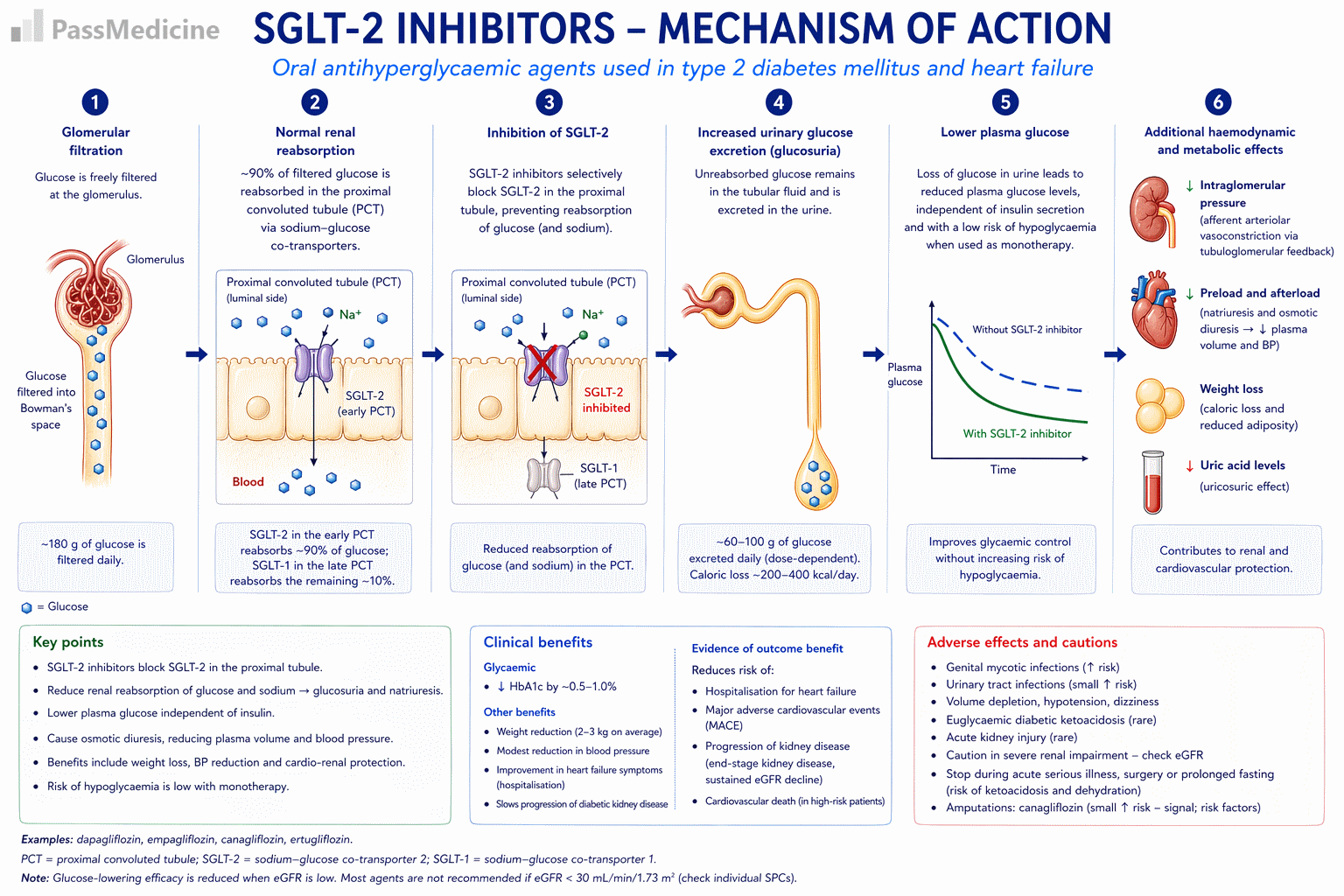
Mechanism of action of SGLT-2 inhibitors
Examples include canagliflozin, dapagliflozin and empagliflozin.
Important adverse effects include
- urinary and genital infection (secondary to glycosuria). Fournier's gangrene has also been reported
- euglycaemic ketoacidosis
- SGLT-2 should be immediately stopped
- managed in a similar way to standard diabetic ketoacidosis, but 10% glucose infusion is started immediately as glucose is normal by definition (to avoid the insulin infusion causing hypoglycaemia)
- increased risk of lower-limb amputation: feet should be closely monitored
Patients taking SGLT-2 drugs often lose weight, which can be beneficial in type 2 diabetes mellitus.
+PassMedicine Notes
SGLT-2 inhibitors reversibly inhibit sodium-glucose co-transporter 2 (SGLT-2) in the renal proximal convoluted tubule to reduce glucose reabsorption and increase urinary glucose excretion.
Examples include canagliflozin, dapagliflozin and empagliflozin.
Important adverse effects include- urinary and genital infection (secondary to glycosuria). Fournier's gangrene has also been reported
- euglycaemic ketoacidosis
- SGLT-2 should be immediately stopped
- managed in a similar way to standard diabetic ketoacidosis, but 10% glucose infusion is started immediately as glucose is normal by definition (to avoid the insulin infusion causing hypoglycaemia)
- increased risk of lower-limb amputation: feet should be closely monitored
Patients taking SGLT-2 drugs often lose weight, which can be beneficial in type 2 diabetes mellitus.