Toxoplasmosis
Toxoplasmosis
Toxoplasma gondii is an obligate intracellular protozoan that infects the body via the gastrointestinal tract, lung or broken skin. It's oocysts release trophozoites which migrate widely around the body including to the eye, brain and muscle. The usual animal reservoir is the cat, although other animals such as rats carry the disease.Immunocompotent patients
Most infections are asymptomatic. Symptomatic patients usually have a self-limiting infection, often having clinical features resembling infectious mononucleosis (fever, malaise, lymphadenopathy). Other less common manifestations include meningoencephalitis and myocarditis.
Serology is the investigation of choice.
No treatment is usually required unless the patient has a severe infection or is immunosuppressed.
HIV/immunosuppressed patients
Cerebral toxoplasmosis accounts for around 50% of cerebral lesions in patients with HIV
- constitutional symptoms, headache, confusion, drowsiness
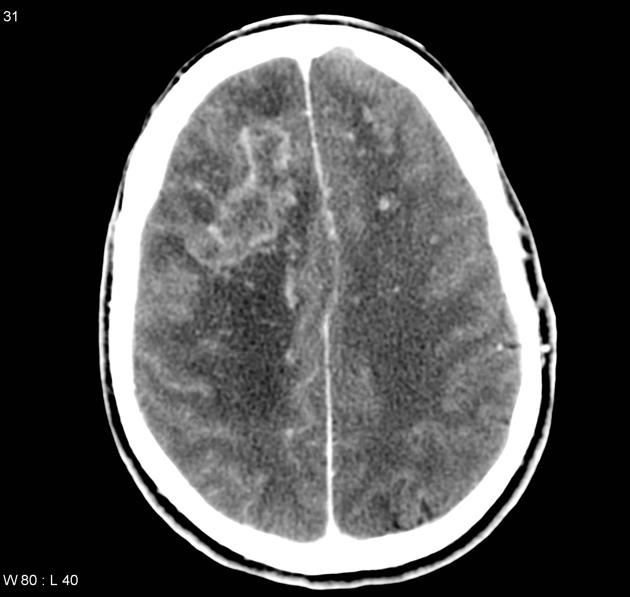
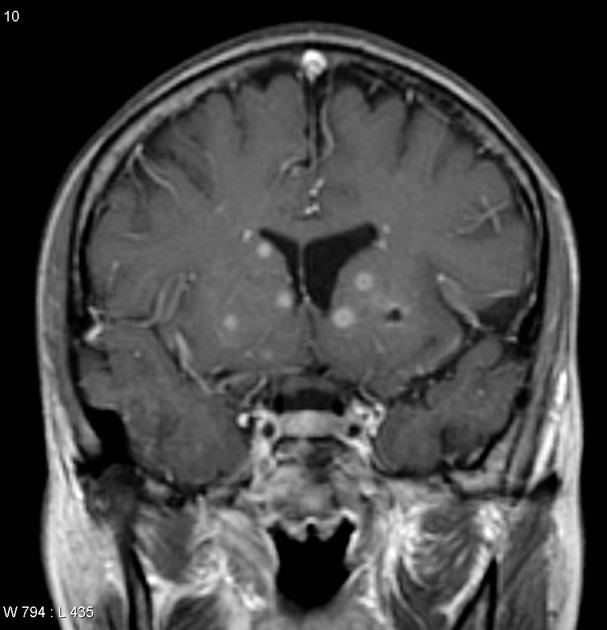
- CT: usually single or multiple ring-enhancing lesions, mass effect may be seen
- management: pyrimethamine plus sulphadiazine for at least 6 weeks
Immunosuppressed patients may also develop a chorioretinitis secondary to toxoplasmosis.
Congenital toxoplasmosis
Congenital toxoplasmosis is due to transplacental spread from the mother. It causes a variety of effects to the unborn child including
- neurological damage
- cerebral calcification
- hydrocephalus
- chorioretinitis
- ophthalmic damage
- retinopathy
- cataracts
+PassMedicine Notes
Toxoplasma gondii is an obligate intracellular protozoan that infects the body via the gastrointestinal tract, lung or broken skin. It's oocysts release trophozoites which migrate widely around the body including to the eye, brain and muscle. The usual animal reservoir is the cat, although other animals such as rats carry the disease.
Immunocompotent patients
Most infections are asymptomatic. Symptomatic patients usually have a self-limiting infection, often having clinical features resembling infectious mononucleosis (fever, malaise, lymphadenopathy). Other less common manifestations include meningoencephalitis and myocarditis.
Serology is the investigation of choice.
No treatment is usually required unless the patient has a severe infection or is immunosuppressed.
HIV/immunosuppressed patients
Cerebral toxoplasmosis accounts for around 50% of cerebral lesions in patients with HIV- constitutional symptoms, headache, confusion, drowsiness
- CT: usually single or multiple ring-enhancing lesions, mass effect may be seen
- management: pyrimethamine plus sulphadiazine for at least 6 weeks
Immunosuppressed patients may also develop a chorioretinitis secondary to toxoplasmosis.
Congenital toxoplasmosis
Congenital toxoplasmosis is due to transplacental spread from the mother. It causes a variety of effects to the unborn child including- neurological damage
- cerebral calcification
- hydrocephalus
- chorioretinitis
- ophthalmic damage
- retinopathy
- cataracts