Highlighter is on. Drag to highlight text. Click a highlight to remove it.
ALL / Cardiology
Acute pericarditis
Acute pericarditis
Acute pericarditis is a condition referring to inflammation of the pericardial sac, lasting for less than 4-6 weeks.Aetiology
- viral infections (Coxsackie)
- tuberculosis
- uraemia
- post-myocardial infarction
- early (1-3 days): fibrinous pericarditis
- late (weeks to months): autoimmune pericarditis (Dressler's syndrome)
- radiotherapy
- connective tissue disease
- systemic lupus erythematosus
- rheumatoid arthritis
- hypothyroidism
- malignancy
- lung cancer
- breast cancer
- trauma
Features
- chest pain: may be pleuritic. Is often relieved by sitting forwards
- other symptoms include a non-productive cough, dyspnoea and flu-like symptoms
- pericardial rub
Investigations
- ECG changes
- the changes in pericarditis are often global/widespread, as opposed to the 'territories' seen in ischaemic events
- 'saddle-shaped' ST elevation
- PR depression: most specific ECG marker for pericarditis
- all patients with suspected acute pericarditis should have transthoracic echocardiography
- bloods
- inflammatory markers
- troponin: around 30% of patients may have an elevated troponin - this indicates possible myopericarditis
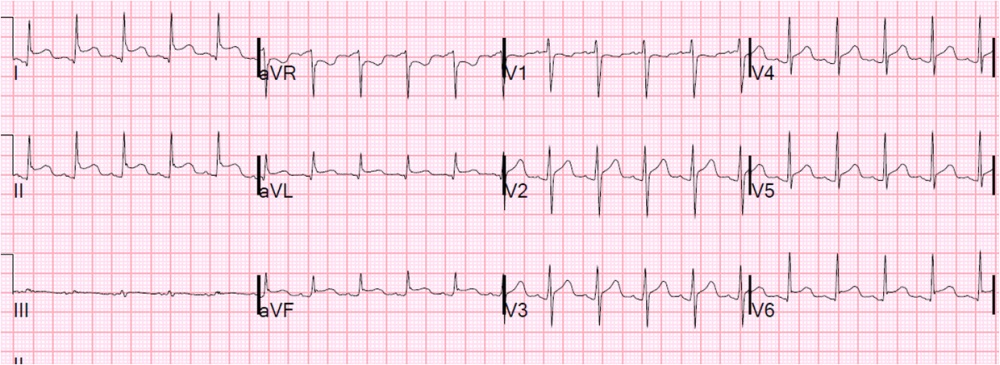
ECG showing pericarditis. Note the widespread nature of the ST elevation and the PR depression- e Image used on license from Dr Smith, University of Minnesota
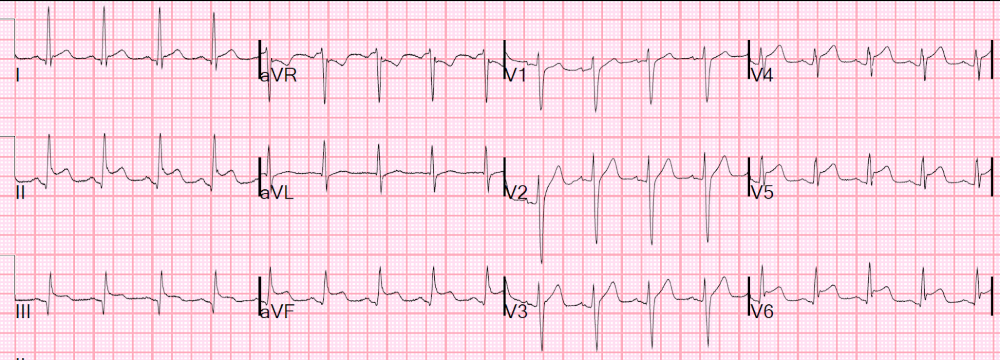
ECG showing changes consistent with acute pericarditis in a young woman. Widespread ST elevation without reciprocal changes. Marked PR depression - e Image used on license from Dr Smith, University of Minnesota
Management
- the majority of patients can be managed as outpatients
- patients who have high-risk features such as fever > 38°C or elevated troponin should be managed as an inpatient
- treat any underlying cause
- most patients however will have pericarditis secondary to viral infection, meaning no specific treatment is indicated
- strenuous physical activity should be avoided until symptom resolution and normalisation of inflammatory markers
- athletes should avoid strenuous exercise for at least 3 months until symptoms have resolved and investigations (CRP, ECG, and echocardiography) have normalised
- a combination of NSAIDs and colchicine is now generally used for first-line for patients with acute idiopathic or viral pericarditis
- therapy is continued until symptom resolution and normalisation of inflammatory markers (usually 1–2 weeks), followed by a taper of the dose over a further 2–4 weeks
+PassMedicine Notes
Acute pericarditis is a condition referring to inflammation of the pericardial sac, lasting for less than 4-6 weeks.
Aetiology- viral infections (Coxsackie)
- tuberculosis
- uraemia
- post-myocardial infarction
- early (1-3 days): fibrinous pericarditis
- late (weeks to months): autoimmune pericarditis (Dressler's syndrome)
- radiotherapy
- connective tissue disease
- systemic lupus erythematosus
- rheumatoid arthritis
- hypothyroidism
- malignancy
- lung cancer
- breast cancer
- trauma
- chest pain: may be pleuritic. Is often relieved by sitting forwards
- other symptoms include a non-productive cough, dyspnoea and flu-like symptoms
- pericardial rub
- ECG changes
- the changes in pericarditis are often global/widespread, as opposed to the 'territories' seen in ischaemic events
- 'saddle-shaped' ST elevation
- PR depression: most specific ECG marker for pericarditis
- all patients with suspected acute pericarditis should have transthoracic echocardiography
- bloods
- inflammatory markers
- troponin: around 30% of patients may have an elevated troponin - this indicates possible myopericarditis
- the majority of patients can be managed as outpatients
- patients who have high-risk features such as fever > 38°C or elevated troponin should be managed as an inpatient
- treat any underlying cause
- most patients however will have pericarditis secondary to viral infection, meaning no specific treatment is indicated
- strenuous physical activity should be avoided until symptom resolution and normalisation of inflammatory markers
- athletes should avoid strenuous exercise for at least 3 months until symptoms have resolved and investigations (CRP, ECG, and echocardiography) have normalised
- a combination of NSAIDs and colchicine is now generally used for first-line for patients with acute idiopathic or viral pericarditis
- therapy is continued until symptom resolution and normalisation of inflammatory markers (usually 1–2 weeks), followed by a taper of the dose over a further 2–4 weeks