Highlighter is on. Drag to highlight text. Click a highlight to remove it.
ALL / Neurology
Epilepsy: treatment
Epilepsy: treatment
Most neurologists now start antiepileptics following a second epileptic seizure. NICE guidelines suggest starting antiepileptics after the first seizure if any of the following are present:- the patient has a neurological deficit
- brain imaging shows a structural abnormality
- the EEG shows unequivocal epileptic activity
- the patient or their family or carers consider the risk of having a further seizure unacceptable
Safety considerations of specific drugs
The MHRA and NICE have strengthed their advice against sodium valproate use recently:
Valproate must not be started for the first time in people (male or female) younger than 55 years, unless 2 specialists independently consider and document that there is no other effective or tolerated treatment, or there are compelling reasons that the reproductive risks do not apply.
Topiramate should not be used in women and girls of childbearing potential unless conditions of the Pregnancy Prevention Programme are fulfilled.
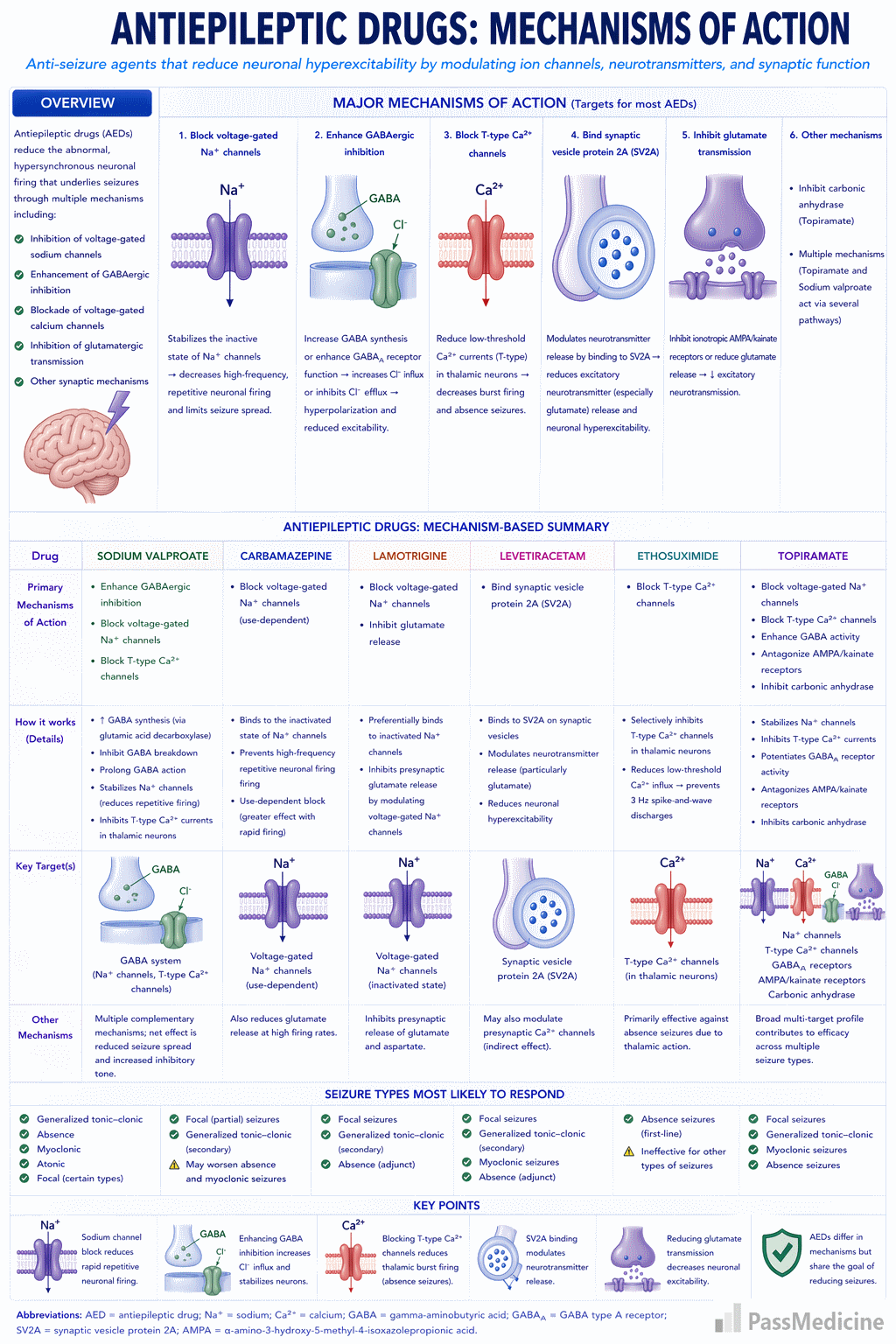
Mechanism of action of common antiepileptics
Drug treatment according to the type of epilepsy
Generalised tonic-clonic seizures
- lamotrigine or levetiracetam
Focal seizures
- first line: lamotrigine or levetiracetam
- second line: carbamazepine, oxcarbazepine or zonisamide
Absence seizures (Petit mal)
- first line: ethosuximide
- second line: lamotrigine or levetiracetam
- carbamazepine may exacerbate absence seizures
Myoclonic seizures
- first-line: levetiracetam
- second line: lamotrigine
Tonic or atonic seizures
- first-line: lamotrigine
- second line: clobazam, rufinamide, or topiramate
+PassMedicine Notes
Most neurologists now start antiepileptics following a second epileptic seizure. NICE guidelines suggest starting antiepileptics after the first seizure if any of the following are present:
- the patient has a neurological deficit
- brain imaging shows a structural abnormality
- the EEG shows unequivocal epileptic activity
- the patient or their family or carers consider the risk of having a further seizure unacceptable
Safety considerations of specific drugs
The MHRA and NICE have strengthed their advice against sodium valproate use recently:
Valproate must not be started for the first time in people (male or female) younger than 55 years, unless 2 specialists independently consider and document that there is no other effective or tolerated treatment, or there are compelling reasons that the reproductive risks do not apply.
Topiramate should not be used in women and girls of childbearing potential unless conditions of the Pregnancy Prevention Programme are fulfilled.
Drug treatment according to the type of epilepsy
Generalised tonic-clonic seizures- lamotrigine or levetiracetam
- first line: lamotrigine or levetiracetam
- second line: carbamazepine, oxcarbazepine or zonisamide
- first line: ethosuximide
- second line: lamotrigine or levetiracetam
- carbamazepine may exacerbate absence seizures
- first-line: levetiracetam
- second line: lamotrigine
- first-line: lamotrigine
- second line: clobazam, rufinamide, or topiramate
Selecting first- and second-line ASMs by seizure type