Highlighter is on. Drag to highlight text. Click a highlight to remove it.
ALL / Neurology
Normal pressure hydrocephalus
Normal pressure hydrocephalus
Normal pressure hydrocephalus (NPH) is a potentially reversible cause of cognitive impairment (dementia) typically seen in older adults. It is thought to result from impaired cerebrospinal fluid (CSF) absorption at the arachnoid granulations, leading to ventricular enlargement without a sustained rise in intracranial pressure. These changes may be idiopathic or secondary to conditions such as head injury, subarachnoid haemorrhage, or meningitis.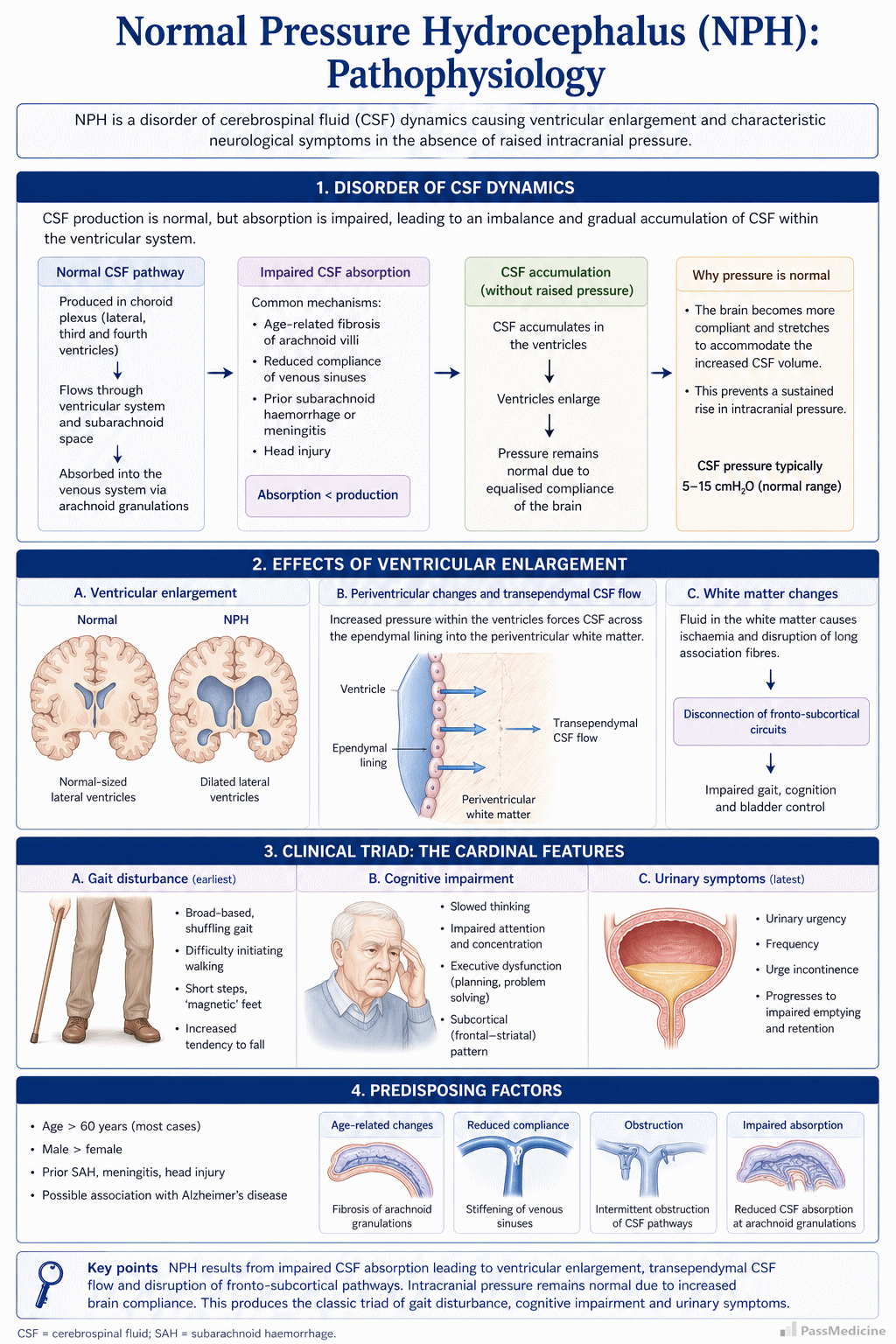
Pathophysiology of normal pressure hydrocephalus
A classical triad of features is seen
- urinary incontinence
- dementia and bradyphrenia
- gait abnormality (may be similar to Parkinson's disease)
It is thought that around 60% of patients will have all 3 features at the time of diagnosis. Symptoms typically develop over a few months.
Imaging
- hydrocephalus with ventriculomegaly in the absence of, or out of proportion to, sulcal enlargement
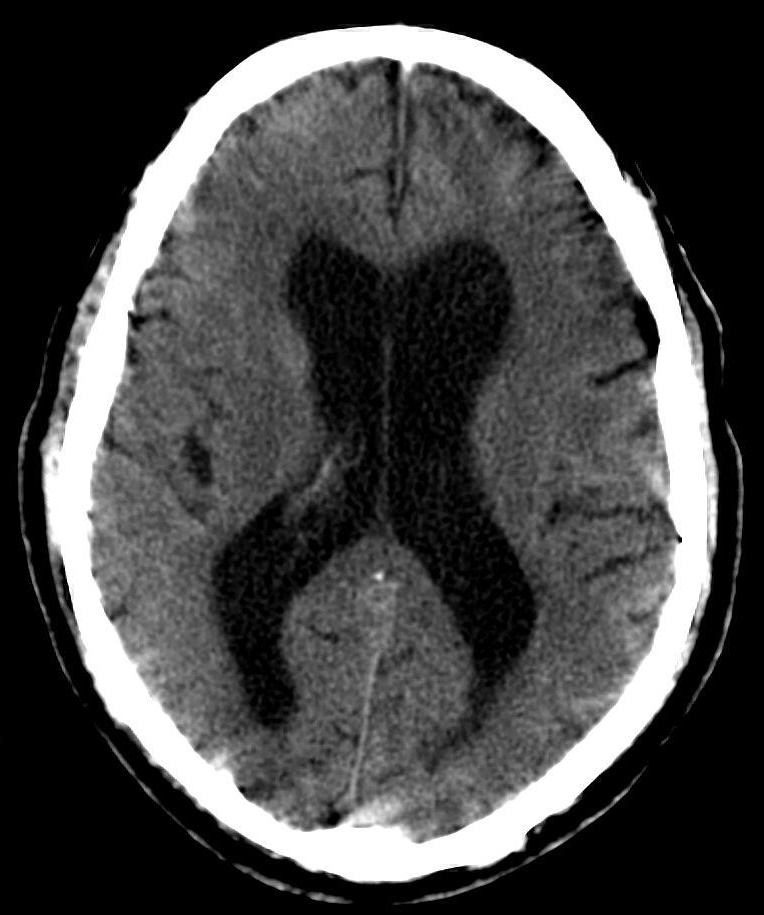
CT scan of an elderly male patient showing hydrocephalus, with dilatation of the third ventricle and lateral ventricles with the characteristic absence of sulcal enlargement - e Image used on license from Radiopaedia
Management
- ventriculoperitoneal shunting
- around 10% of patients who have shunts experience significant complications such as seizures, infection and intracerebral haemorrhages
+PassMedicine Notes
Normal pressure hydrocephalus (NPH) is a potentially reversible cause of cognitive impairment (dementia) typically seen in older adults. It is thought to result from impaired cerebrospinal fluid (CSF) absorption at the arachnoid granulations, leading to ventricular enlargement without a sustained rise in intracranial pressure. These changes may be idiopathic or secondary to conditions such as head injury, subarachnoid haemorrhage, or meningitis.
A classical triad of features is seen- urinary incontinence
- dementia and bradyphrenia
- gait abnormality (may be similar to Parkinson's disease)
It is thought that around 60% of patients will have all 3 features at the time of diagnosis. Symptoms typically develop over a few months.
Imaging- hydrocephalus with ventriculomegaly in the absence of, or out of proportion to, sulcal enlargement
- ventriculoperitoneal shunting
- around 10% of patients who have shunts experience significant complications such as seizures, infection and intracerebral haemorrhages