Highlighter is on. Drag to highlight text. Click a highlight to remove it.
ALL / Cardiology
Hypertension: management
Hypertension: management
NICE published updated guidelines for the management of hypertension in 2019. Some of the key changes include:- lowering the threshold for treating stage 1 hypertension in patients < 80 years from 20% to 10%
- angiotensin receptor blockers can be used instead of ACE-inhibitors where indicated
- if a patient is already taking an ACE-inhibitor or angiotensin receptor blocker, then a calcium channel blocker OR a thiazide-like diuretic can be used. Previously only a calcium channel blocker was recommended
Blood pressure classification
This becomes relevant later in some of the management decisions that NICE advocates.
| Stage | Criteria |
|---|---|
| Stage 1 hypertension | Clinic BP >= 140/90 mmHg and subsequent ABPM daytime average or HBPM average BP >= 135/85 mmHg |
| Stage 2 hypertension | Clinic BP >= 160/100 mmHg and subsequent ABPM daytime average or HBPM average BP >= 150/95 mmHg |
| Severe hypertension | Clinic systolic BP >= 180 mmHg, or clinic diastolic BP >= 120 mmHg |
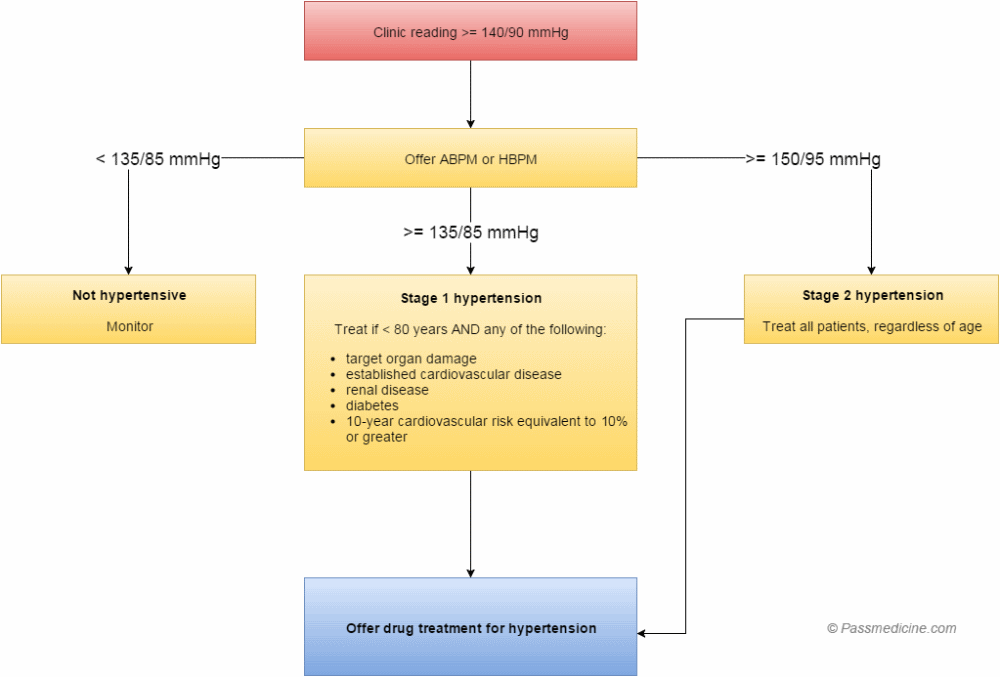
Flow chart showing simplified schematic for diagnosis hypertension following NICE guidelines
Managing hypertension
Lifestyle advice should not be forgotten and is frequently tested in exams:
- a low salt diet is recommended, aiming for less than 6g/day, ideally 3g/day. The average adult in the UK consumes around 8-12g/day of salt. A recent BMJ paper* showed that lowering salt intake can have a significant effect on blood pressure. For example, reducing salt intake by 6g/day can lower systolic blood pressure by 10mmHg
- caffeine intake should be reduced
- the other general bits of advice remain: stop smoking, drink less alcohol, eat a balanced diet rich in fruit and vegetables, exercise more, lose weight
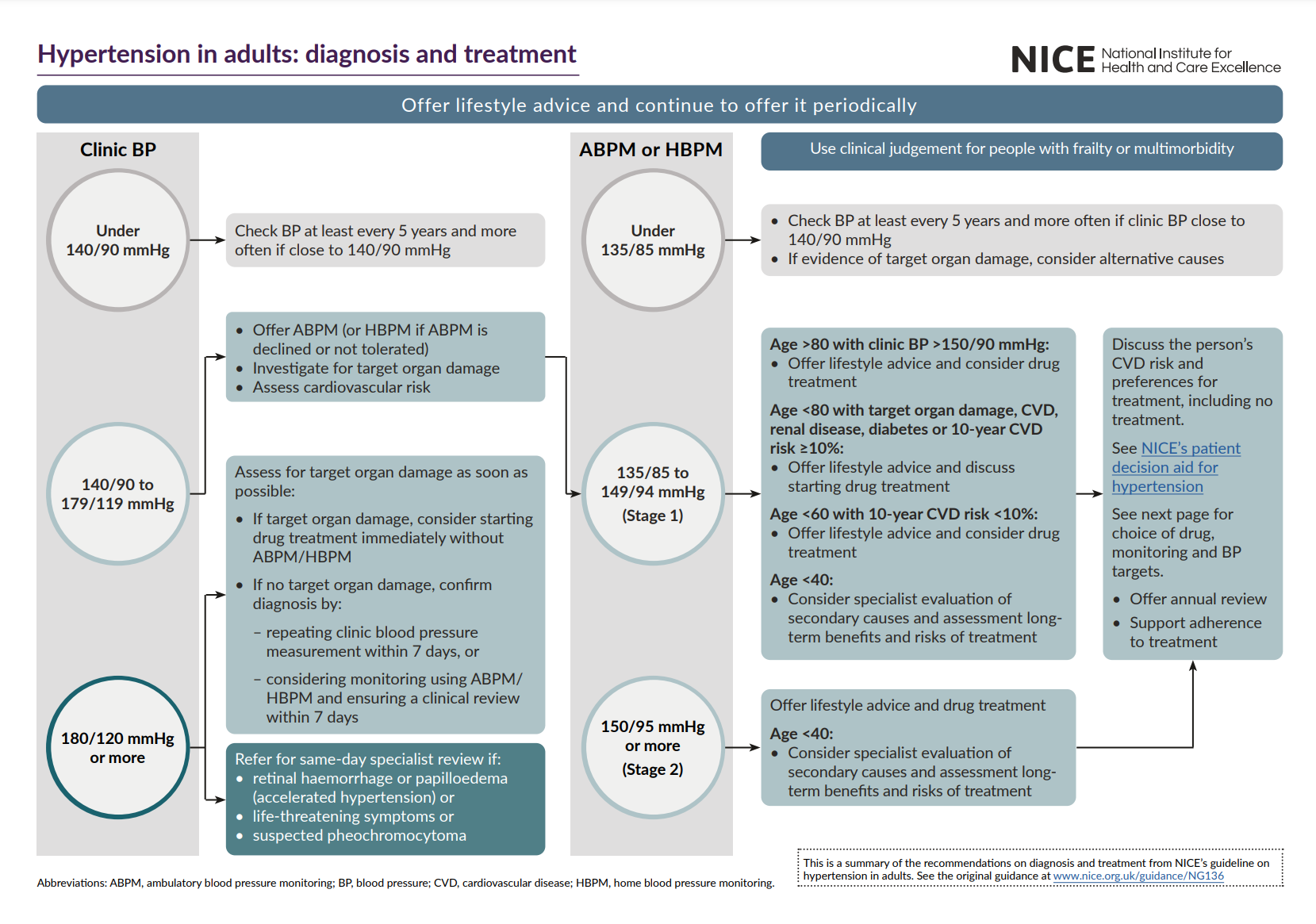
ABPM/HBPM >= 135/85 mmHg (i.e. stage 1 hypertension)
- treat if < 80 years of age AND any of the following apply; target organ damage, established cardiovascular disease, renal disease, diabetes or a 10-year cardiovascular risk equivalent to 10% or greater
- in 2019, NICE made a further recommendation, suggesting that we should 'consider antihypertensive drug treatment in addition to lifestyle advice for adults aged under 60 with stage 1 hypertension and an estimated 10-year risk below 10%. '. This seems to be due to evidence that QRISK may underestimate the lifetime probability of developing cardiovascular disease
ABPM/HBPM >= 150/95 mmHg (i.e. stage 2 hypertension)
- offer drug treatment regardless of age
For patients < 40 years consider specialist referral to exclude secondary causes.
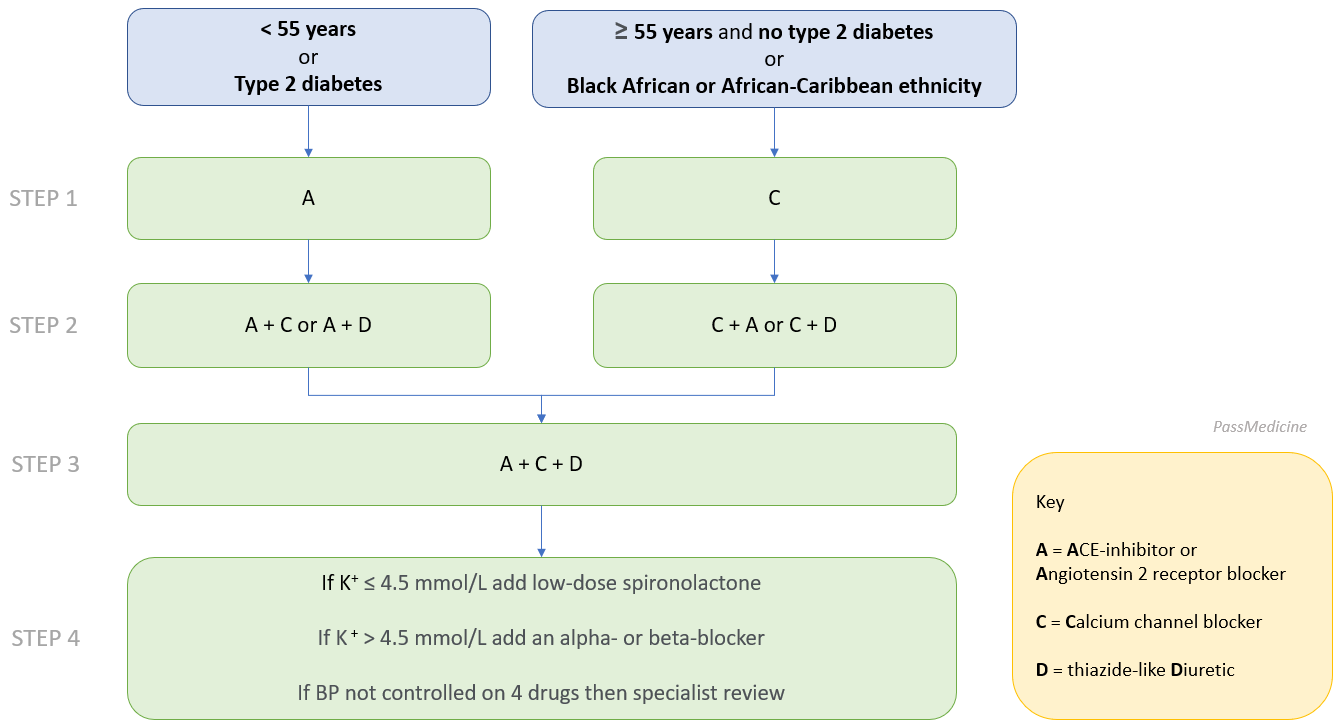
Flow chart showing the management of hypertension as per current NICE guideliness
Step 1 treatment
- patients < 55-years-old or a background of type 2 diabetes mellitus: ACE inhibitor or a Angiotensin receptor blocker (ACE-i or ARB): (A)
- angiotensin receptor blockers should be used where ACE inhibitors are not tolerated (e.g. due to a cough)
- patients >= 55-years-old or of black African or African-Caribbean origin: Calcium channel blocker (C)
- ACE inhibitors have reduced efficacy in patients of black African or African-Caribbean origin are therefore not used first-line
Step 2 treatment
- if already taking an ACE-i or ARB add a Calcium channel blocker or a thiazide-like Diuretic
- if already taking a Calcium channel blocker add an ACE-i or ARB or a thiazide-like Diuretic
- for patients of black African or African-Caribbean origin taking a calcium channel blocker for hypertension, if they require a second agent consider an angiotensin receptor blocker in preference to an ACE inhibitor
- (A + C) or (A + D) or (C + A) or (C + D)
Step 3 treatment
- add a third drug to make, i.e.:
- if already taking an (A + C) then add a D
- if already (A + D) then add a C
- (A + C + D)
Step 4 treatment
- NICE define step 4 as resistant hypertension and suggest either adding a 4th drug (as below) or seeking specialist advice
- first, check for:
- confirm elevated clinic BP with ABPM or HBPM
- assess for postural hypotension.
- discuss adherence
- if potassium < 4.5 mmol/l add low-dose spironolactone
- if potassium > 4.5 mmol/l add an alpha- or beta-blocker
Patients who fail to respond to step 4 measures should be referred to a specialist. NICE recommend:
If blood pressure remains uncontrolled with the optimal or maximum tolerated doses of four drugs, seek expert advice if it has not yet been obtained.
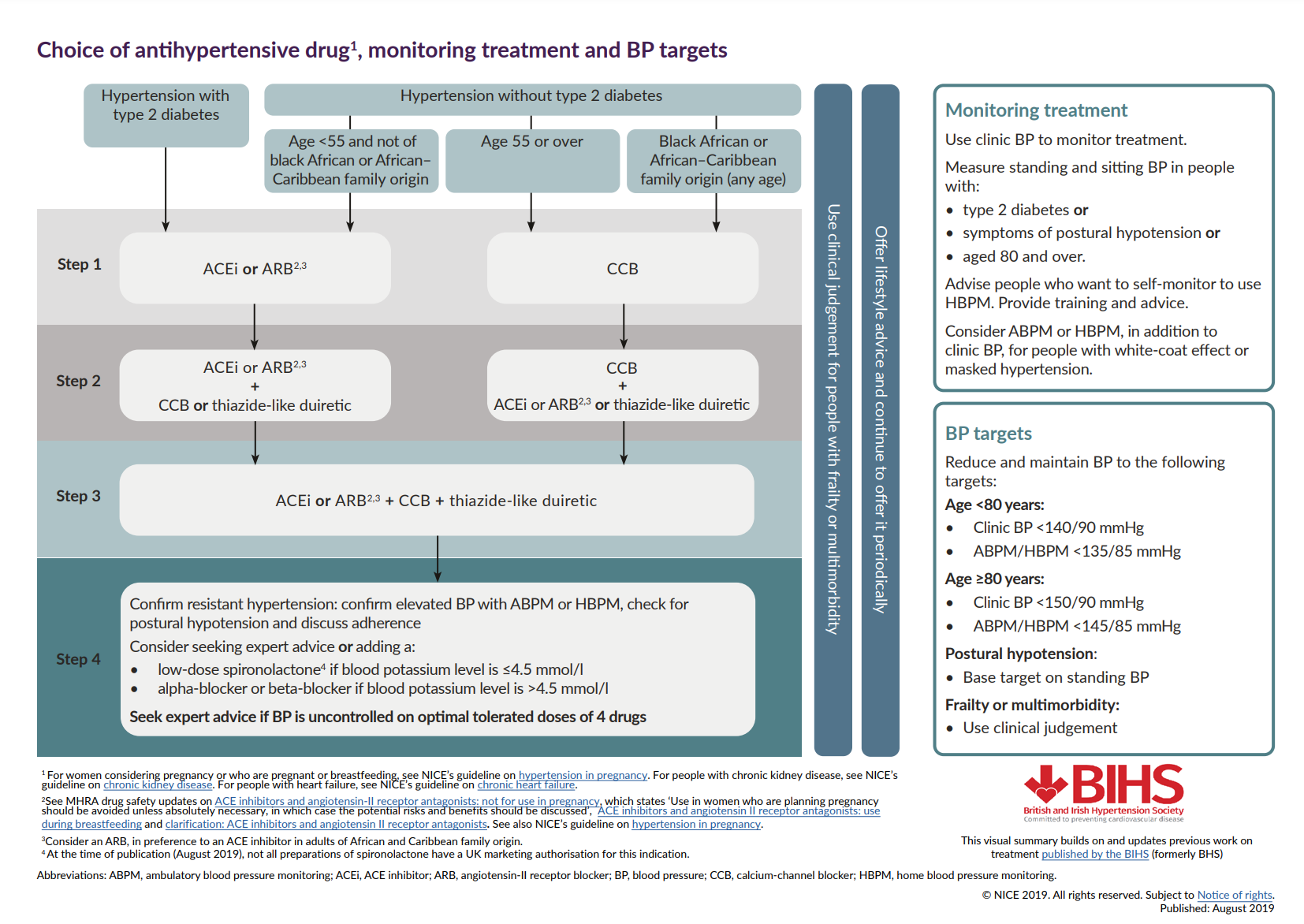
Blood pressure targets
| Clinic BP | ABPM / HBPM | |
|---|---|---|
| Age < 80 years | 140/90 mmHg | 135/85 mmHg |
| Age > 80 years | 150/90 mmHg | 145/85 mmHg |
+PassMedicine Notes
NICE published updated guidelines for the management of hypertension in 2019. Some of the key changes include:
- lowering the threshold for treating stage 1 hypertension in patients < 80 years from 20% to 10%
- angiotensin receptor blockers can be used instead of ACE-inhibitors where indicated
- if a patient is already taking an ACE-inhibitor or angiotensin receptor blocker, then a calcium channel blocker OR a thiazide-like diuretic can be used. Previously only a calcium channel blocker was recommended
Blood pressure classification
This becomes relevant later in some of the management decisions that NICE advocates.
Stage_Criteria| Stage 1 hypertension _ Clinic BP >= 140/90 mmHg and subsequent ABPM daytime average or HBPM average BP >= 135/85 mmHg| Stage 2 hypertension _ Clinic BP >= 160/100 mmHg and subsequent ABPM daytime average or HBPM average BP >= 150/95 mmHg| Severe hypertension _ Clinic systolic BP >= 180 mmHg, or clinic diastolic BP >= 120 mmHg| pdd927.png Flow chart showing simplified schematic for diagnosis hypertension following NICE guidelinesManaging hypertension
Lifestyle advice should not be forgotten and is frequently tested in exams:- a low salt diet is recommended, aiming for less than 6g/day, ideally 3g/day. The average adult in the UK consumes around 8-12g/day of salt. A recent BMJ paper* showed that lowering salt intake can have a significant effect on blood pressure. For example, reducing salt intake by 6g/day can lower systolic blood pressure by 10mmHg
- caffeine intake should be reduced
- the other general bits of advice remain: stop smoking, drink less alcohol, eat a balanced diet rich in fruit and vegetables, exercise more, lose weight
- treat if < 80 years of age AND any of the following apply; target organ damage, established cardiovascular disease, renal disease, diabetes or a 10-year cardiovascular risk equivalent to 10% or greater
- in 2019, NICE made a further recommendation, suggesting that we should 'consider antihypertensive drug treatment in addition to lifestyle advice for adults aged under 60 with stage 1 hypertension and an estimated 10-year risk below 10%. '. This seems to be due to evidence that QRISK may underestimate the lifetime probability of developing cardiovascular disease
- offer drug treatment regardless of age
For patients < 40 years consider specialist referral to exclude secondary causes.
pdd566.png Flow chart showing the management of hypertension as per current NICE guideliness Step 1 treatment- patients < 55-years-old or a background of type 2 diabetes mellitus: ACE inhibitor or a Angiotensin receptor blocker (ACE-i or ARB): (A)
- angiotensin receptor blockers should be used where ACE inhibitors are not tolerated (e.g. due to a cough)
- patients >= 55-years-old or of black African or African-Caribbean origin: Calcium channel blocker (C)
- ACE inhibitors have reduced efficacy in patients of black African or African-Caribbean origin are therefore not used first-line
- if already taking an ACE-i or ARB add a Calcium channel blocker or a thiazide-like Diuretic
- if already taking a Calcium channel blocker add an ACE-i or ARB or a thiazide-like Diuretic
- for patients of black African or African-Caribbean origin taking a calcium channel blocker for hypertension, if they require a second agent consider an angiotensin receptor blocker in preference to an ACE inhibitor
- (A + C) or (A + D) or (C + A) or (C + D)
- add a third drug to make, i.e.:
- if already taking an (A + C) then add a D
- if already (A + D) then add a C
- (A + C + D)
- NICE define step 4 as resistant hypertension and suggest either adding a 4th drug (as below) or seeking specialist advice
- first, check for:
- confirm elevated clinic BP with ABPM or HBPM
- assess for postural hypotension.
- discuss adherence
- if potassium < 4.5 mmol/l add low-dose spironolactone
- if potassium > 4.5 mmol/l add an alpha- or beta-blocker
Patients who fail to respond to step 4 measures should be referred to a specialist. NICE recommend:
If blood pressure remains uncontrolled with the optimal or maximum tolerated doses of four drugs, seek expert advice if it has not yet been obtained.