Highlighter is on. Drag to highlight text. Click a highlight to remove it.
ALL / Neurology
Carbamazepine
Carbamazepine
Carbamazepine is chemically similar to the tricyclic antidepressant drugs. It is most commonly used in the treatment of epilepsy, particularly focal seizures. Carbamazepine was previously used first-line but has now been replaced by drugs with better side-effect profiles.- trigeminal neuralgia
- bipolar disorder
Mechanism of action
- binds to sodium channels increases their refractory period
Adverse effects
- P450 enzyme inducer
- dizziness and ataxia
- drowsiness
- headache
- visual disturbances (especially diplopia)
- Steven-Johnson syndrome
- leucopenia and agranulocytosis
- hyponatraemia secondary to syndrome of inappropriate ADH secretion
Carbamazepine is known to exhibit autoinduction, hence when patients start carbamazepine they may see a return of seizures after 3-4 weeks of treatment.
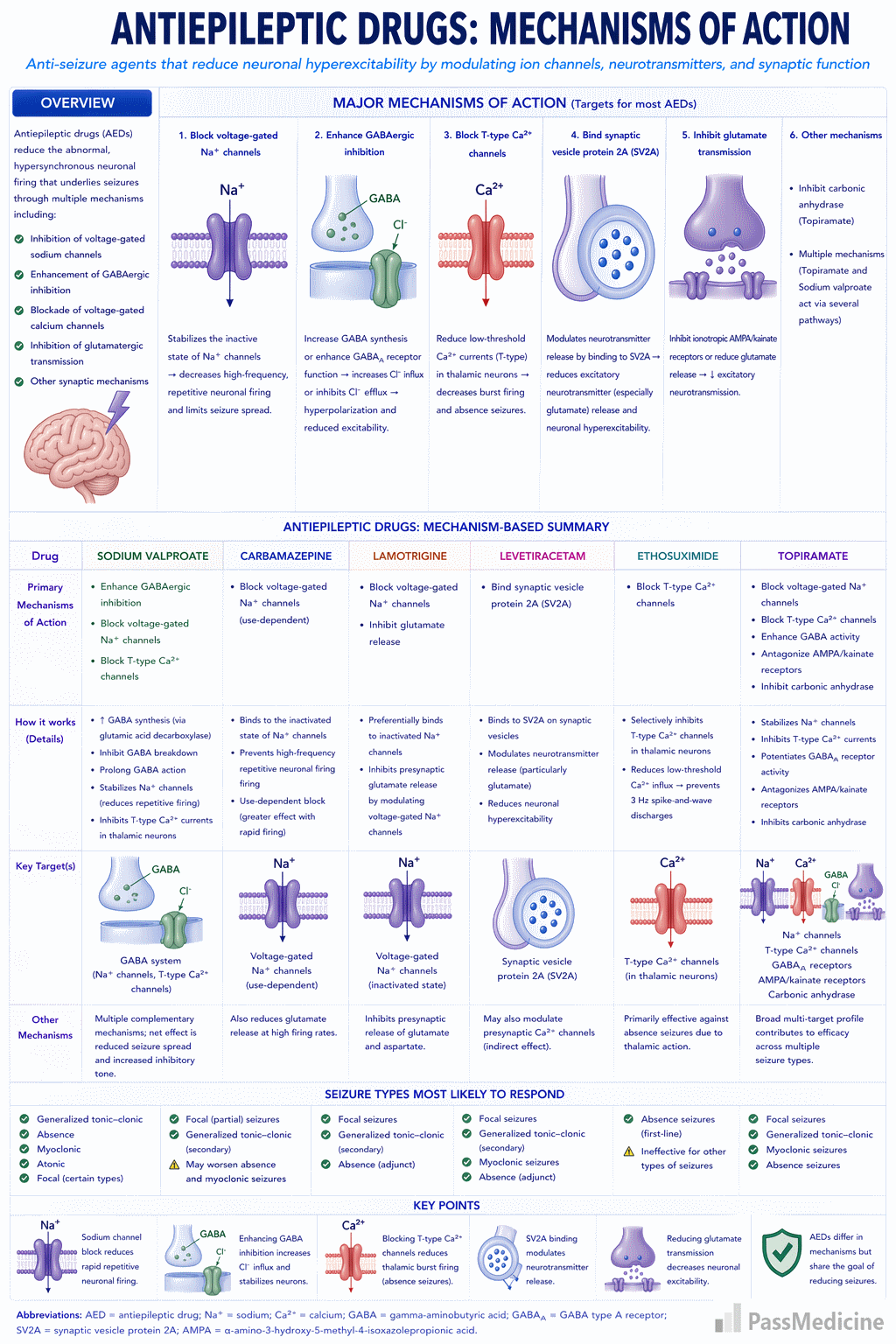
Mechanism of action of common antiepileptics
+PassMedicine Notes
Carbamazepine is chemically similar to the tricyclic antidepressant drugs. It is most commonly used in the treatment of epilepsy, particularly focal seizures. Carbamazepine was previously used first-line but has now been replaced by drugs with better side-effect profiles.
- trigeminal neuralgia
- bipolar disorder
- binds to sodium channels increases their refractory period
- P450 enzyme inducer
- dizziness and ataxia
- drowsiness
- headache
- visual disturbances (especially diplopia)
- Steven-Johnson syndrome
- leucopenia and agranulocytosis
- hyponatraemia secondary to syndrome of inappropriate ADH secretion
Carbamazepine is known to exhibit autoinduction, hence when patients start carbamazepine they may see a return of seizures after 3-4 weeks of treatment.