Hypertension: diagnosis
Hypertension: diagnosis
NICE published updated guidelines for the management of hypertension in 2019. This builds on the significant guidelines released in 2011 that recommended:- classifying hypertension into stages
- recommending the use of ambulatory blood pressure monitoring (ABPM) and home blood pressure monitoring (HBPM)
Why were these guidelines needed?
It has long been recognised by doctors that there is a subgroup of patients whose blood pressure climbs 20 mmHg whenever they enter a clinical setting, so called 'white coat hypertension'. If we just rely on clinic readings then such patients may be diagnosed as having hypertension when, the vast majority of the time, their blood pressure is normal.
This has led to the use of both ambulatory blood pressure monitoring (ABPM) and home blood pressure monitoring (HBPM) to confirm the diagnosis of hypertension. These techniques allow a more accurate assessment of a patients' overall blood pressure. Not only does this help prevent overdiagnosis of hypertension - ABPM has been shown to be a more accurate predictor of cardiovascular events than clinic readings.
ABPM is preferred to HBPM if available as it's more accurate. NICE state the following: 'If ABPM is unsuitable or the person is unable to tolerate it, offer home blood pressure monitoring (HBPM) to confirm the diagnosis of hypertension.'
Blood pressure classification
This becomes relevant later in some of the management decisions that NICE advocate.
| Stage | Criteria |
|---|---|
| Stage 1 hypertension | Clinic BP >= 140/90 mmHg and subsequent ABPM daytime average or HBPM average BP >= 135/85 mmHg |
| Stage 2 hypertension | Clinic BP >= 160/100 mmHg and subsequent ABPM daytime average or HBPM average BP >= 150/95 mmHg |
| Severe hypertension | Clinic systolic BP >= 180 mmHg, or clinic diastolic BP >= 120 mmHg |
Diagnosing hypertension
Firstly, NICE recommend measuring blood pressure in both arms when considering a diagnosis of hypertension.
If the difference in readings between arms is more than 20 mmHg then the measurements should be repeated. If the difference remains > 20 mmHg then subsequent blood pressures should be recorded from the arm with the higher reading.
It should of course be remember that there are pathological causes of unequal blood pressure readings from the arms, such as supravalvular aortic stenosis. It is therefore prudent to listen to the heart sounds if a difference exists and further investigation if a very large difference is noted.
NICE also recommend taking a second reading during the consultation, if the first reading is > 140/90 mmHg. The lower reading of the two should determine further management.
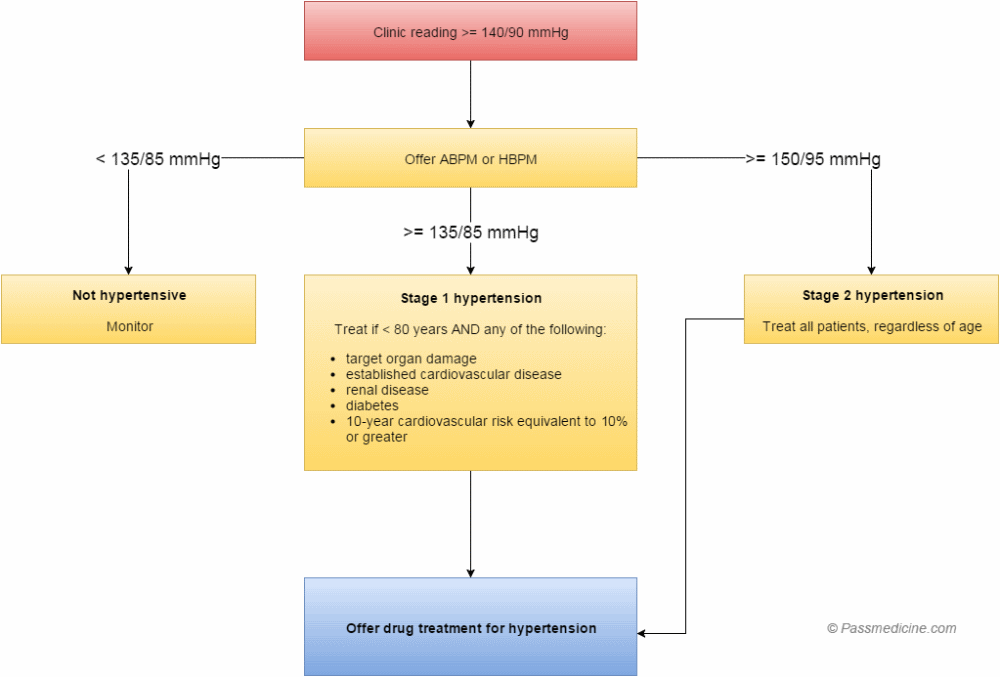
NICE suggest offering ABPM or HBPM to any patient with a blood pressure >= 140/90 mmHg.
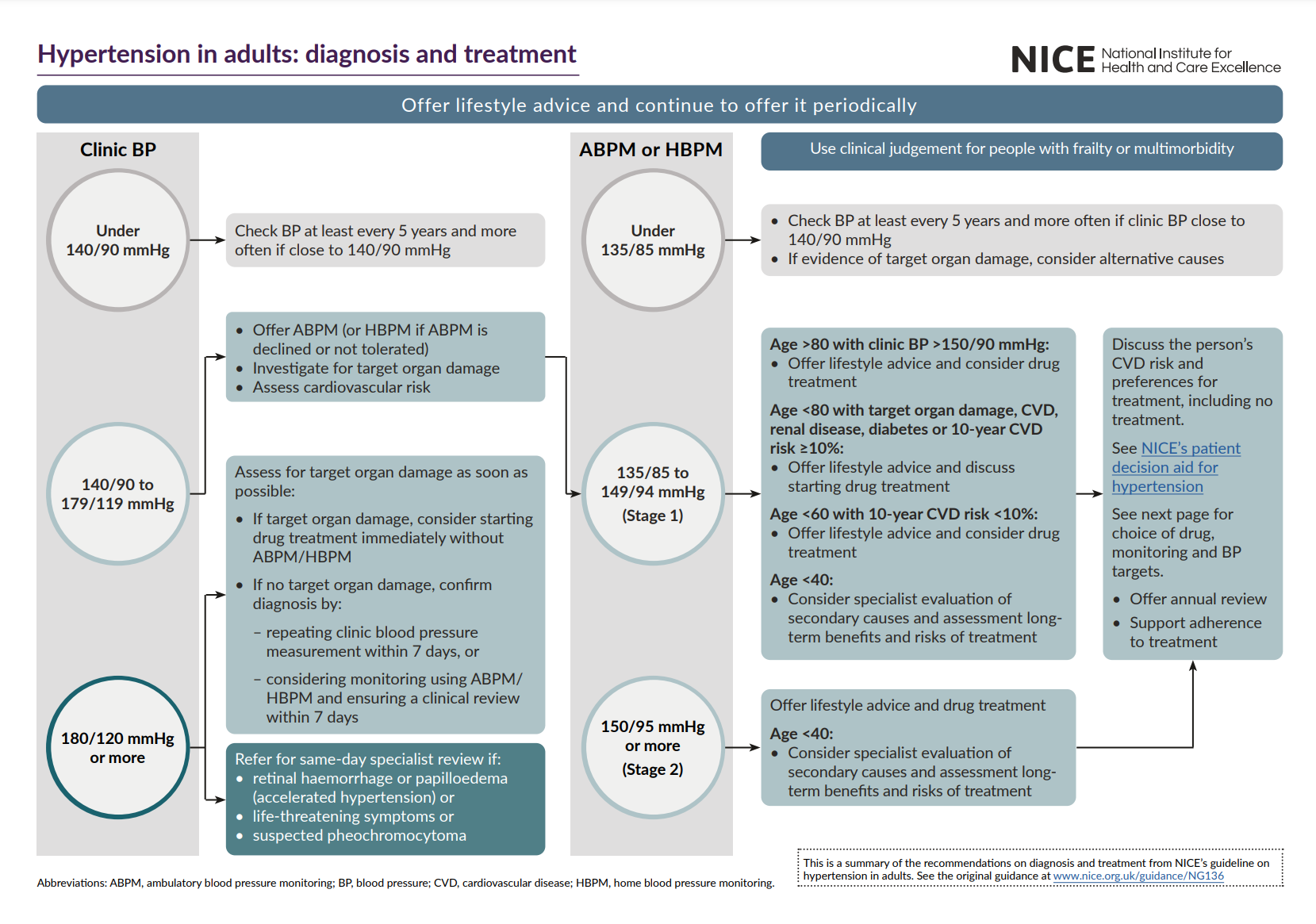
If the blood pressure is >= 180/120 mmHg:
- admit for specialist assessment if:
- signs of retinal haemorrhage or papilloedema (accelerated hypertension) or
- life-threatening symptoms such as new-onset confusion, chest pain, signs of heart failure, or acute kidney injury
- NICE also recommend referral if a phaeochromocytoma is suspected (labile or postural hypotension, headache, palpitations, pallor and diaphoresis)
- if none of the above then arrange urgent investigations for end-organ damage (e.g. bloods, urine ACR, ECG)
- if target organ damage is identified, consider starting antihypertensive drug treatment immediately, without waiting for the results of ABPM or HBPM.
- if no target organ damage is identified, repeat clinic blood pressure measurement within 7 days
Ambulatory blood pressure monitoring (ABPM)
- at least 2 measurements per hour during the person's usual waking hours (for example, between 08:00 and 22:00)
- use the average value of at least 14 measurements
If ABPM is not tolerated or declined HBPM should be offered.
Home blood pressure monitoring (HBPM)
- for each BP recording, two consecutive measurements need to be taken, at least 1 minute apart and with the person seated
- BP should be recorded twice daily, ideally in the morning and evening
- BP should be recorded for at least 4 days, ideally for 7 days
- discard the measurements taken on the first day and use the average value of all the remaining measurements
Interpreting the results
ABPM/HBPM >= 135/85 mmHg (i.e. stage 1 hypertension)
- treat if < 80 years of age AND any of the following apply; target organ damage, established cardiovascular disease, renal disease, diabetes or a 10-year cardiovascular risk equivalent to 10% or greater
- in 2019, NICE made a further recommendation, suggesting that we should 'consider antihypertensive drug treatment in addition to lifestyle advice for adults aged under 60 with stage 1 hypertension and an estimated 10-year risk below 10%. '. This seems to be due to evidence that QRISK may underestimate the lifetime probability of developing cardiovascular disease
ABPM/HBPM >= 150/95 mmHg (i.e. stage 2 hypertension)
- offer drug treatment regardless of age
+PassMedicine Notes
- classifying hypertension into stages
- recommending the use of ambulatory blood pressure monitoring (ABPM) and home blood pressure monitoring (HBPM)
Why were these guidelines needed?
It has long been recognised by doctors that there is a subgroup of patients whose blood pressure climbs 20 mmHg whenever they enter a clinical setting, so called 'white coat hypertension'. If we just rely on clinic readings then such patients may be diagnosed as having hypertension when, the vast majority of the time, their blood pressure is normal.
This has led to the use of both ambulatory blood pressure monitoring (ABPM) and home blood pressure monitoring (HBPM) to confirm the diagnosis of hypertension. These techniques allow a more accurate assessment of a patients' overall blood pressure. Not only does this help prevent overdiagnosis of hypertension - ABPM has been shown to be a more accurate predictor of cardiovascular events than clinic readings.
ABPM is preferred to HBPM if available as it's more accurate. NICE state the following: 'If ABPM is unsuitable or the person is unable to tolerate it, offer home blood pressure monitoring (HBPM) to confirm the diagnosis of hypertension.'
Blood pressure classification
This becomes relevant later in some of the management decisions that NICE advocate.
Stage_Criteria| Stage 1 hypertension _ Clinic BP >= 140/90 mmHg and subsequent ABPM daytime average or HBPM average BP >= 135/85 mmHg| Stage 2 hypertension _ Clinic BP >= 160/100 mmHg and subsequent ABPM daytime average or HBPM average BP >= 150/95 mmHg| Severe hypertension _ Clinic systolic BP >= 180 mmHg, or clinic diastolic BP >= 120 mmHg|Diagnosing hypertension
Firstly, NICE recommend measuring blood pressure in both arms when considering a diagnosis of hypertension.
If the difference in readings between arms is more than 20 mmHg then the measurements should be repeated. If the difference remains > 20 mmHg then subsequent blood pressures should be recorded from the arm with the higher reading.
It should of course be remember that there are pathological causes of unequal blood pressure readings from the arms, such as supravalvular aortic stenosis. It is therefore prudent to listen to the heart sounds if a difference exists and further investigation if a very large difference is noted.
NICE also recommend taking a second reading during the consultation, if the first reading is > 140/90 mmHg. The lower reading of the two should determine further management.
NICE suggest offering ABPM or HBPM to any patient with a blood pressure >= 140/90 mmHg.
If the blood pressure is >= 180/120 mmHg:- admit for specialist assessment if:
- signs of retinal haemorrhage or papilloedema (accelerated hypertension) or
- life-threatening symptoms such as new-onset confusion, chest pain, signs of heart failure, or acute kidney injury
- NICE also recommend referral if a phaeochromocytoma is suspected (labile or postural hypotension, headache, palpitations, pallor and diaphoresis)
- if none of the above then arrange urgent investigations for end-organ damage (e.g. bloods, urine ACR, ECG)
- if target organ damage is identified, consider starting antihypertensive drug treatment immediately, without waiting for the results of ABPM or HBPM.
- if no target organ damage is identified, repeat clinic blood pressure measurement within 7 days
- at least 2 measurements per hour during the person's usual waking hours (for example, between 08:00 and 22:00)
- use the average value of at least 14 measurements
If ABPM is not tolerated or declined HBPM should be offered.
Home blood pressure monitoring (HBPM)- for each BP recording, two consecutive measurements need to be taken, at least 1 minute apart and with the person seated
- BP should be recorded twice daily, ideally in the morning and evening
- BP should be recorded for at least 4 days, ideally for 7 days
- discard the measurements taken on the first day and use the average value of all the remaining measurements
Interpreting the results
ABPM/HBPM >= 135/85 mmHg (i.e. stage 1 hypertension)- treat if < 80 years of age AND any of the following apply; target organ damage, established cardiovascular disease, renal disease, diabetes or a 10-year cardiovascular risk equivalent to 10% or greater
- in 2019, NICE made a further recommendation, suggesting that we should 'consider antihypertensive drug treatment in addition to lifestyle advice for adults aged under 60 with stage 1 hypertension and an estimated 10-year risk below 10%. '. This seems to be due to evidence that QRISK may underestimate the lifetime probability of developing cardiovascular disease
- offer drug treatment regardless of age