Highlighter is on. Drag to highlight text. Click a highlight to remove it.
ALL / Gastroenterology
Oesophageal cancer
Oesophageal cancer
Until recent times oesophageal cancer was most commonly due to a squamous cell carcinoma but the incidence of adenocarcinoma is rising rapidly. Adenocarcinoma is now the most common type of oesophageal cancer and is more likely to develop in patients with a history of gastro-oesophageal reflux disease (GORD) or Barrett's.The majority of adenocarcinomas are located near the gastroesophageal junction whereas squamous cell tumours are most commonly found in the upper two-thirds of the oesophagus.
| Adenocarcinoma | Squamous cell cancer | |
|---|---|---|
| Epidemiology | Most common type in the UK/US | Most common type in the developing world |
| Location | Lower third - near the gastroesophageal junction | Upper two-thirds of the oesophagus |
| Risk factors |
|
|
Features
- dysphagia: the most common presenting symptom
- anorexia and weight loss
- vomiting
- other possible features include:
- odynophagia
- hoarseness: advanced oesophageal tumours, especially in the upper third, may invade or compress the recurrent laryngeal nerve
- melaena
Diagnosis
- Upper GI endoscopy with biopsy is used for diagnosis
- Endoscopic ultrasound is the preferred method for locoregional staging
- CT scanning of the chest, abdomen and pelvis is used for initial staging
- FDG-PET CT may be used for detecting occult metastases if metastases are not seen on the initial staging CT scans.
- Laparoscopy is sometimes performed to detect occult peritoneal disease
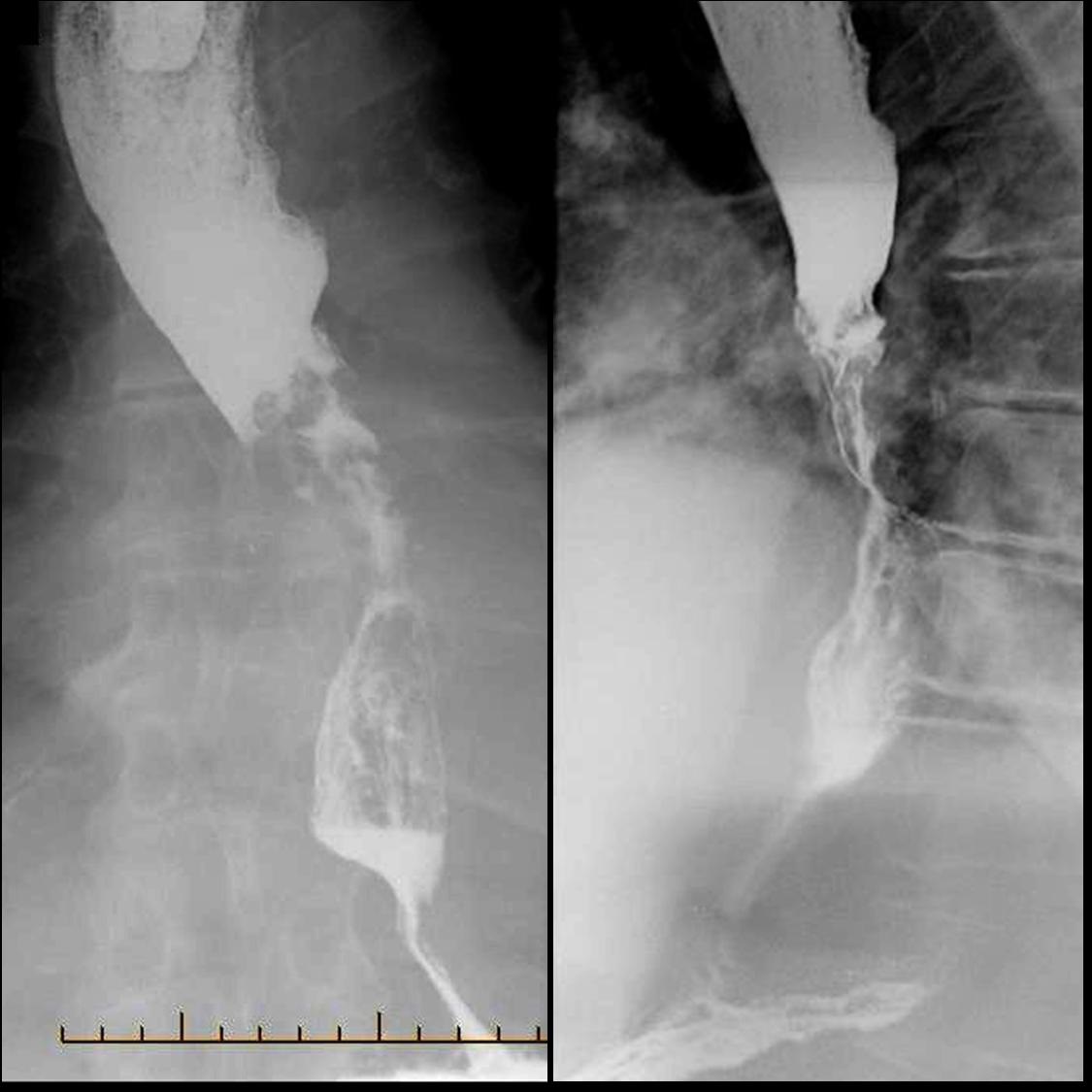
Barium swallow - 5cm irregular narrowing of the mid-thoracic oesophagus with proximal shouldering- e Image used on license from Radiopaedia
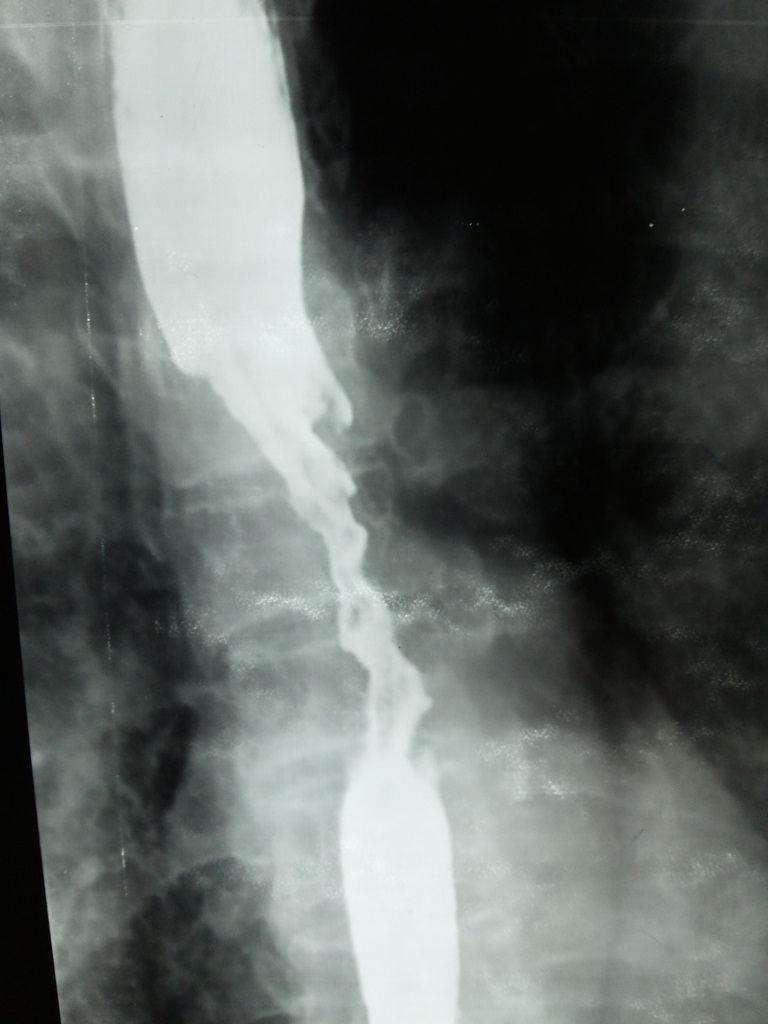
Barium swallow showing oesophageal cancer - e Image used on license from Radiopaedia
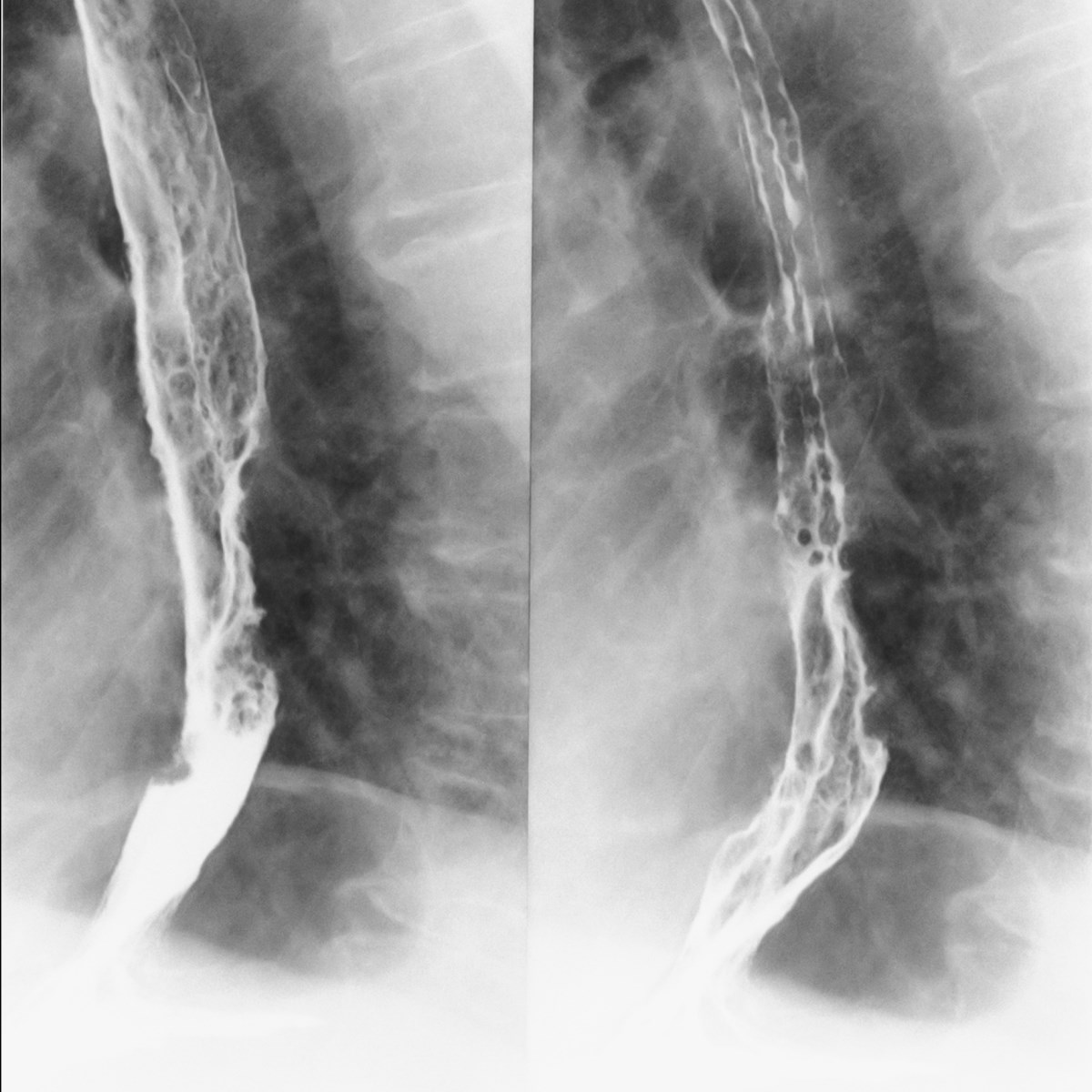
Fluoroscopy - a region of fixed, irregular stricturing is seen in the distal oesophagus- e Image used on license from Radiopaedia
Treatment
- Operable disease (T1N0M0) is best managed by surgical resection - the most common procedure is an Ivor-Lewis type oesophagectomy
- The biggest surgical challenge is that of anastomotic leak, with an intrathoracic anastomosis resulting in mediastinitis
- In addition to surgical resection many patients will be treated with adjuvant chemotherapy
+PassMedicine Notes
Until recent times oesophageal cancer was most commonly due to a squamous cell carcinoma but the incidence of adenocarcinoma is rising rapidly. Adenocarcinoma is now the most common type of oesophageal cancer and is more likely to develop in patients with a history of gastro-oesophageal reflux disease (GORD) or Barrett's.
The majority of adenocarcinomas are located near the gastroesophageal junction whereas squamous cell tumours are most commonly found in the upper two-thirds of the oesophagus.
_ Adenocarcinoma _ Squamous cell cancer| Epidemiology _ Most common type in the UK/US _ Most common type in the developing world| Location _ Lower third - near the gastroesophageal junction _ Upper two-thirds of the oesophagus| Risk factors _- GORD
- Barrett's oesophagus
- smoking
- obesity
- smoking
- alcohol
- achalasia
- Plummer-Vinson syndrome
- diets rich in nitrosamines|
- dysphagia: the most common presenting symptom
- anorexia and weight loss
- vomiting
- other possible features include:
- odynophagia
- hoarseness: advanced oesophageal tumours, especially in the upper third, may invade or compress the recurrent laryngeal nerve
- melaena
- Upper GI endoscopy with biopsy is used for diagnosis
- Endoscopic ultrasound is the preferred method for locoregional staging
- CT scanning of the chest, abdomen and pelvis is used for initial staging
- FDG-PET CT may be used for detecting occult metastases if metastases are not seen on the initial staging CT scans.
- Laparoscopy is sometimes performed to detect occult peritoneal disease
- Operable disease (T1N0M0) is best managed by surgical resection - the most common procedure is an Ivor-Lewis type oesophagectomy
- The biggest surgical challenge is that of anastomotic leak, with an intrathoracic anastomosis resulting in mediastinitis
- In addition to surgical resection many patients will be treated with adjuvant chemotherapy