Highlighter is on. Drag to highlight text. Click a highlight to remove it.
ALL / Cardiology
Wolff-Parkinson White
Wolff-Parkinson White
Wolff-Parkinson White (WPW) syndrome is caused by a congenital accessory conducting pathway between the atria and ventricles leading to atrioventricular re-entry tachycardia (AVRT). As the accessory pathway does not slow conduction AF can degenerate rapidly to VF.

Presentation
- typically presents in teenagers/young adults but can be at any age
- palpitations
- sudden onset and offset, often rapid and regular.
- light-headedness, pre-syncope
Possible ECG features include:
- short PR interval
- wide QRS complexes with a slurred upstroke - 'delta wave'
- left axis deviation if right-sided accessory pathway
- in the majority of cases, or in a question without qualification, Wolff-Parkinson-White syndrome is associated with left axis deviation
- right axis deviation if left-sided accessory pathway
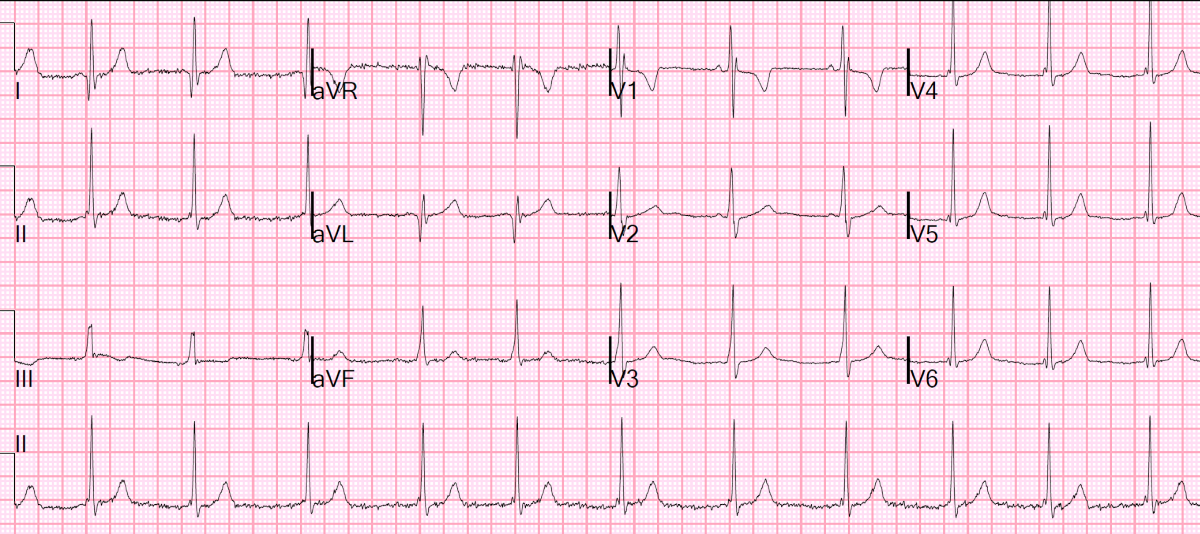
ECG showing Wolff-Parkinson White - short PR interval and slurred upstroke -
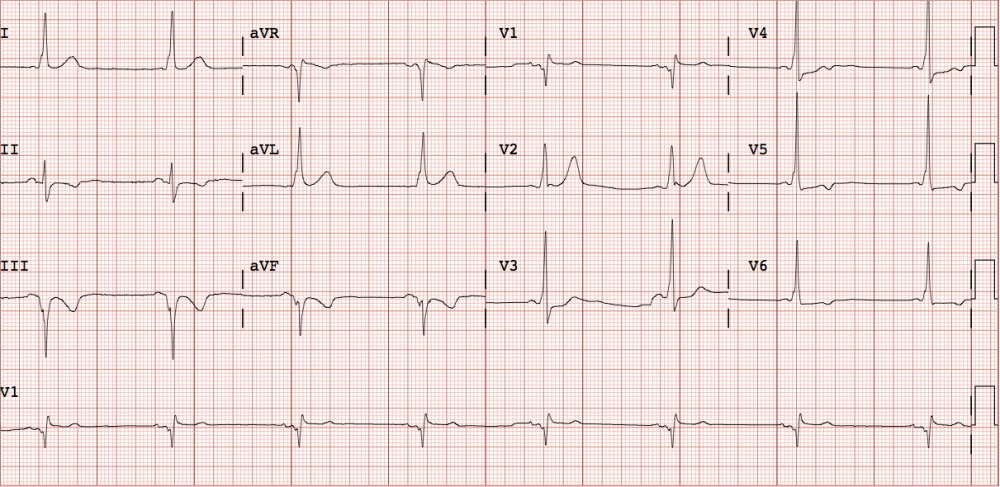
ECG showing short PR interval associated with a slurred upstroke (delta wave). Note the non-specific ST-T changes which are common in WPW and may be mistaken for ischaemia. The left axis deviation means that this is type B WPW, implying a right-sided pathway - e Image used on license from Dr Smith, University of Minnesota
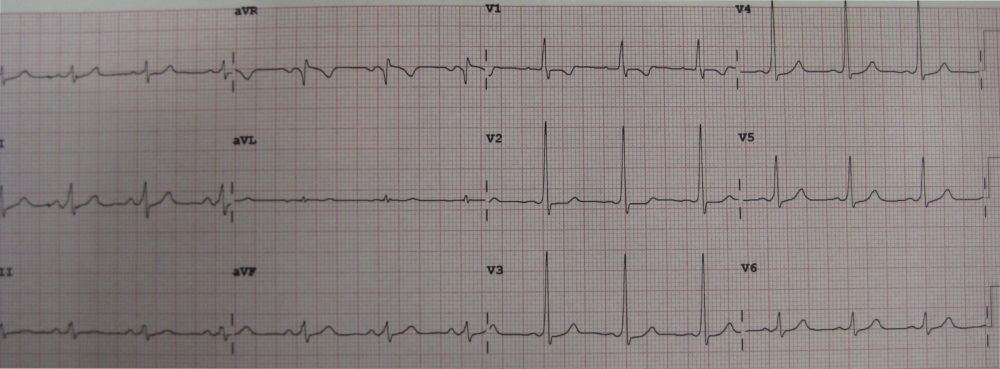
ECG showing a characteristic delta wave - e Image used on license from Dr Smith, University of Minnesota
Differentiating between type A and type B
- type A (left-sided pathway): dominant R wave in V1
- type B (right-sided pathway): no dominant R wave in V1
Associations of WPW
- HOCM
- mitral valve prolapse
- Ebstein's anomaly
- thyrotoxicosis
- secundum ASD
Management
- definitive treatment: radiofrequency ablation of the accessory pathway
- medical therapy: sotalol***, amiodarone, flecainide
- sotalol should be avoided if there is coexistent atrial fibrillation as prolonging the refractory period at the AV node may increase the rate of transmission through the accessory pathway, increasing the ventricular rate and potentially deteriorating into ventricular fibrillation
+PassMedicine Notes
Wolff-Parkinson White (WPW) syndrome is caused by a congenital accessory conducting pathway between the atria and ventricles leading to atrioventricular re-entry tachycardia (AVRT). As the accessory pathway does not slow conduction AF can degenerate rapidly to VF.
swb012.jpg#http://en.wikipedia.org/wiki/Wolff Parkinson White syndrome
Presentation- typically presents in teenagers/young adults but can be at any age
- palpitations
- sudden onset and offset, often rapid and regular.
- light-headedness, pre-syncope
- short PR interval
- wide QRS complexes with a slurred upstroke - 'delta wave'
- left axis deviation if right-sided accessory pathway
- in the majority of cases, or in a question without qualification, Wolff-Parkinson-White syndrome is associated with left axis deviation
- right axis deviation if left-sided accessory pathway
- type A (left-sided pathway): dominant R wave in V1
- type B (right-sided pathway): no dominant R wave in V1
- HOCM
- mitral valve prolapse
- Ebstein's anomaly
- thyrotoxicosis
- secundum ASD
- definitive treatment: radiofrequency ablation of the accessory pathway
- medical therapy: sotalol***, amiodarone, flecainide
- sotalol should be avoided if there is coexistent atrial fibrillation as prolonging the refractory period at the AV node may increase the rate of transmission through the accessory pathway, increasing the ventricular rate and potentially deteriorating into ventricular fibrillation