Highlighter is on. Drag to highlight text. Click a highlight to remove it.
ALL / Rheumatology
Paget's disease of the bone
Paget's disease of the bone
Paget's disease is a disease of increased but uncontrolled bone turnover. It is thought to be primarily a disorder of osteoclasts, with excessive osteoclastic resorption followed by increased osteoblastic activity. Paget's disease is common (UK prevalence 5%) but symptomatic in only 1 in 20 patients. The skull, spine/pelvis, and long bones of the lower extremities are most commonly affected.Predisposing factors
- increasing age
- male sex
- northern latitude
- family history
Clinical features - only 5% of patients are symptomatic
- the stereotypical presentation is an older male with bone pain and an isolated raised ALP
- bone pain (e.g. pelvis, lumbar spine, femur)
- classical, untreated features: bowing of tibia, bossing of skull
Investigations
- bloods
- raised alkaline phosphatase (ALP)
- calcium and phosphate are typically normal. Hypercalcaemia may occasionally occur with prolonged immobilisation
- other markers of bone turnover include
- procollagen type I N-terminal propeptide (PINP)
- serum C-telopeptide (CTx)
- urinary N-telopeptide (NTx)
- urinary hydroxyproline
- x-rays
- plain radiographs are the first-line investigation and are usually diagnostic
- osteolysis in early disease → mixed lytic/sclerotic lesions later
- skull x-ray: thickened vault, osteoporosis circumscripta
- bone scintigraphy
- increased uptake is seen focally at the sites of active bone lesions
Management
- indications for treatment include
- bone pain
- skull or long bone deformity
- fracture
- periarticular Paget's
- bisphosphonate (either oral risedronate or IV zoledronate)
- calcitonin is less commonly used now
Complications
- deafness (cranial nerve entrapment)
- bone sarcoma (1% if affected for > 10 years)
- fractures
- skull thickening
- high-output cardiac failure
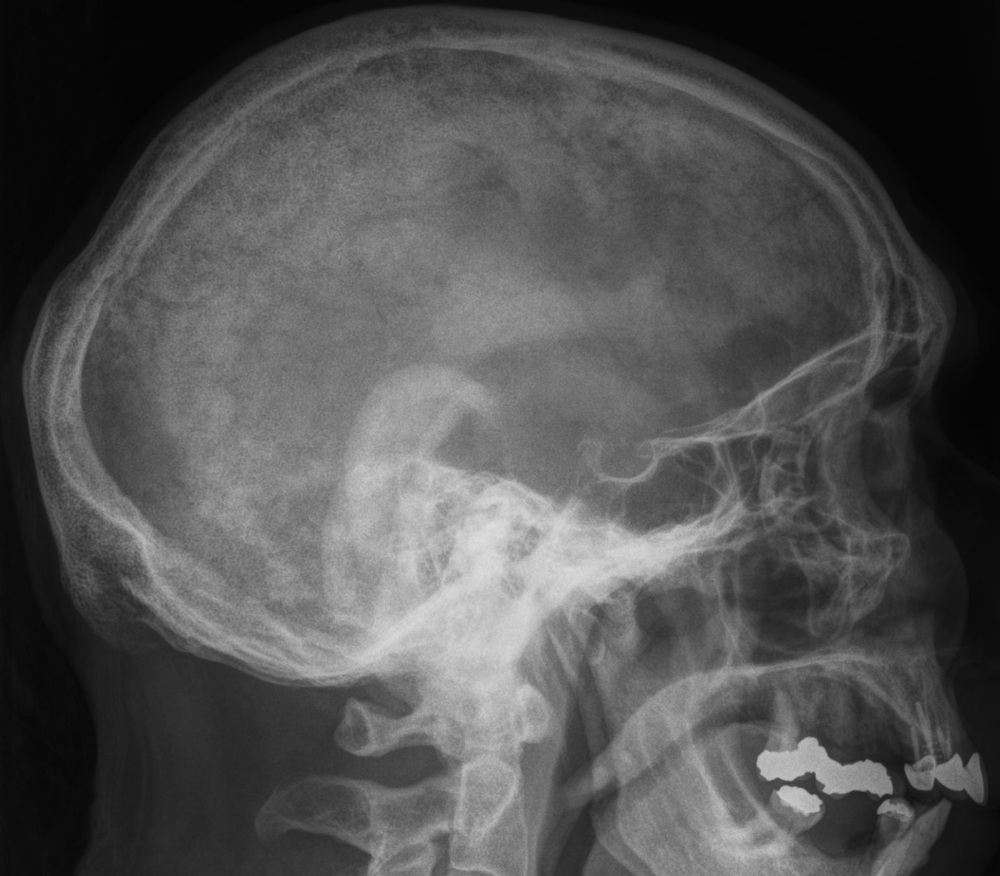
The radiograph demonstrates marked thickening of the calvarium. There are also ill-defined sclerotic and lucent areas throughout. These features are consistent with Paget
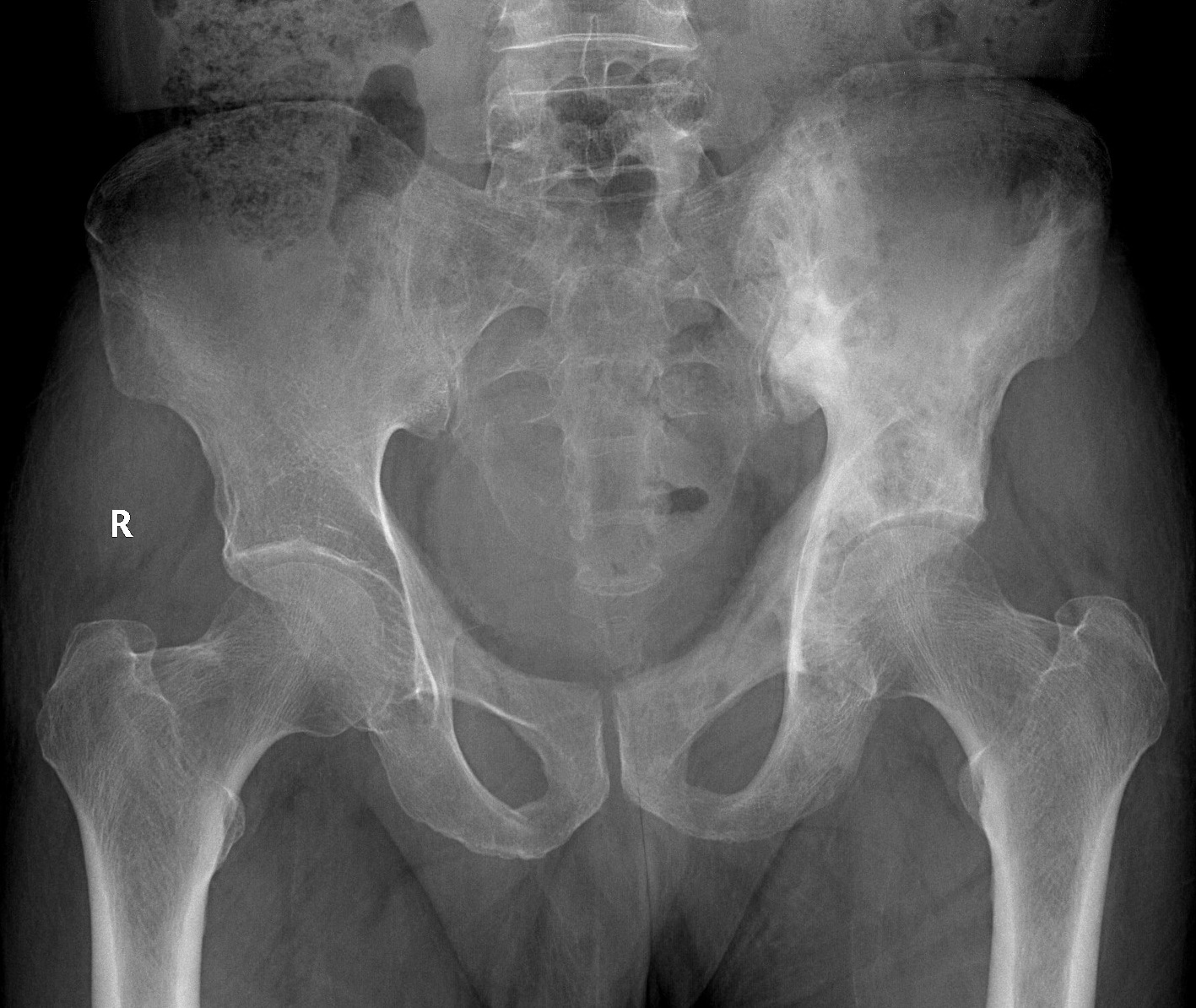
Pelvic x-ray from an elderly man with Paget
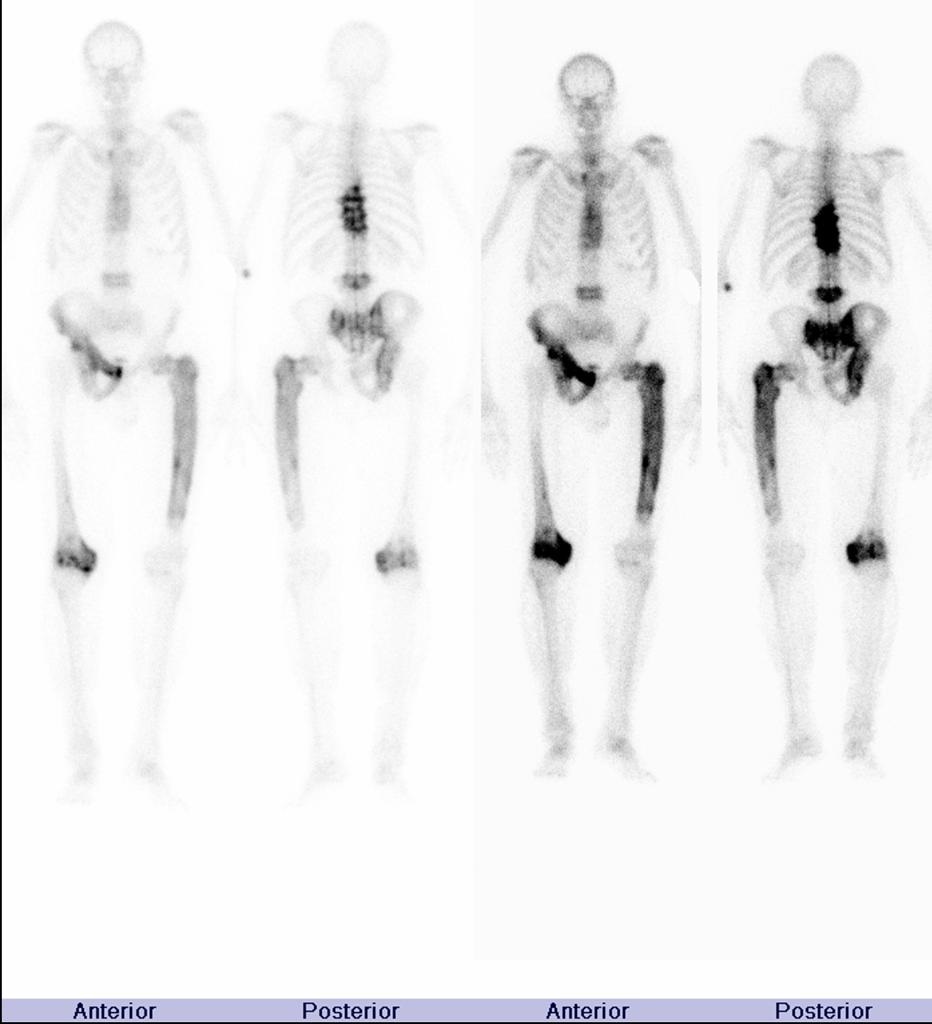
Isotope bone scan from a patient with Paget
+PassMedicine Notes
Paget's disease is a disease of increased but uncontrolled bone turnover. It is thought to be primarily a disorder of osteoclasts, with excessive osteoclastic resorption followed by increased osteoblastic activity. Paget's disease is common (UK prevalence 5%) but symptomatic in only 1 in 20 patients. The skull, spine/pelvis, and long bones of the lower extremities are most commonly affected.
Predisposing factors- increasing age
- male sex
- northern latitude
- family history
- the stereotypical presentation is an older male with bone pain and an isolated raised ALP
- bone pain (e.g. pelvis, lumbar spine, femur)
- classical, untreated features: bowing of tibia, bossing of skull
- bloods
- raised alkaline phosphatase (ALP)
- calcium and phosphate are typically normal. Hypercalcaemia may occasionally occur with prolonged immobilisation
- other markers of bone turnover include
- procollagen type I N-terminal propeptide (PINP)
- serum C-telopeptide (CTx)
- urinary N-telopeptide (NTx)
- urinary hydroxyproline
- x-rays
- plain radiographs are the first-line investigation and are usually diagnostic
- osteolysis in early disease --> mixed lytic/sclerotic lesions later
- skull x-ray: thickened vault, osteoporosis circumscripta
- bone scintigraphy
- increased uptake is seen focally at the sites of active bone lesions
- indications for treatment include
- bone pain
- skull or long bone deformity
- fracture
- periarticular Paget's
- bisphosphonate (either oral risedronate or IV zoledronate)
- calcitonin is less commonly used now
- deafness (cranial nerve entrapment)
- bone sarcoma (1% if affected for > 10 years)
- fractures
- skull thickening
- high-output cardiac failure