Highlighter is on. Drag to highlight text. Click a highlight to remove it.
ALL / Gastroenterology
<i>Clostridioides difficile</i>
Clostridioides difficile
Clostridioides difficile is a Gram positive rod often encountered in hospital practice. It produces an exotoxin which causes intestinal damage leading to a syndrome called pseudomembranous colitis. C. difficile develops when the normal gut flora are suppressed by broad-spectrum antibiotics. Clindamycin is historically associated with causing C. difficile but the aetiology has evolved significantly over the past 10 years. Second and third-generation cephalosporins are now the leading cause of C. difficile.Other than antibiotics, risk factors include:
- proton pump inhibitors
Pathophysiology
- anaerobic gram-positive, spore-forming, toxin-producing bacillus
- transmission: via the faecal-oral route by ingestion of spores
- releases two exotoxins (toxin A and toxin B) that act on intestinal epithelial cells and inflammatory cells resulting in colitis
Features
- diarrhoea
- abdominal pain
- a raised white blood cell count (WCC) is characteristic
- if severe toxic megacolon may develop
The Public Health England severity scale is often used as this may determine treatment:
| Mild | Moderate | Severe | Life-threatening |
|---|---|---|---|
| Normal WCC | ↑ WCC ( < 15 x 109/L) Typically 3-5 loose stools per day | ↑ WCC ( > 15 x 109/L) or an acutely ↑ creatinine (> 50% above baseline) or a temperature > 38.5°C or evidence of severe colitis(abdominal or radiological signs) | Hypotension Partial or complete ileus Toxic megacolon, or CT evidence of severe disease |
Diagnosis
- is made by detecting C. difficile toxin (CDT) in the stool
- C. difficile antigen positivity only shows exposure to the bacteria, rather than current infection
Management
Current antibiotic therapy should be reviewed and antibiotics stopped if possible.
First episode of C. difficile infection
- first-line therapy is oral vancomycin for 10 days
- second-line therapy: oral fidaxomicin
- third-line therapy: oral vancomycin +/- IV metronidazole
Recurrent episode
- recurrent infection occurs in around 20% of patients, increasing to 50% after their second episode
- within 12 weeks of symptom resolution: oral fidaxomicin
- after 12 weeks of symptom resolution: oral vancomycin OR fidaxomicin
Life-threatening C. difficile infection
- oral vancomycin AND IV metronidazole
- specialist advice - surgery may be considered
Other therapies
- bezlotoxumab is a monoclonal antibody which targets C. difficile toxin B
- NICE do not currently support its use to prevent recurrences as it is not cost-effective
- faecal microbiota transplant
- may be considered for patients who've had 2 or more previous episodes
Preventing the spread of C. difficile infection
- isolation in side room: the patient should remain isolated until there has been no diarrhoea (types 5-7
- all staff should wear disposable gloves and an apron during any contact with patients known to have C. difficile
- hand washing is also essential - alcohol gel does not kill the spores of C. difficile
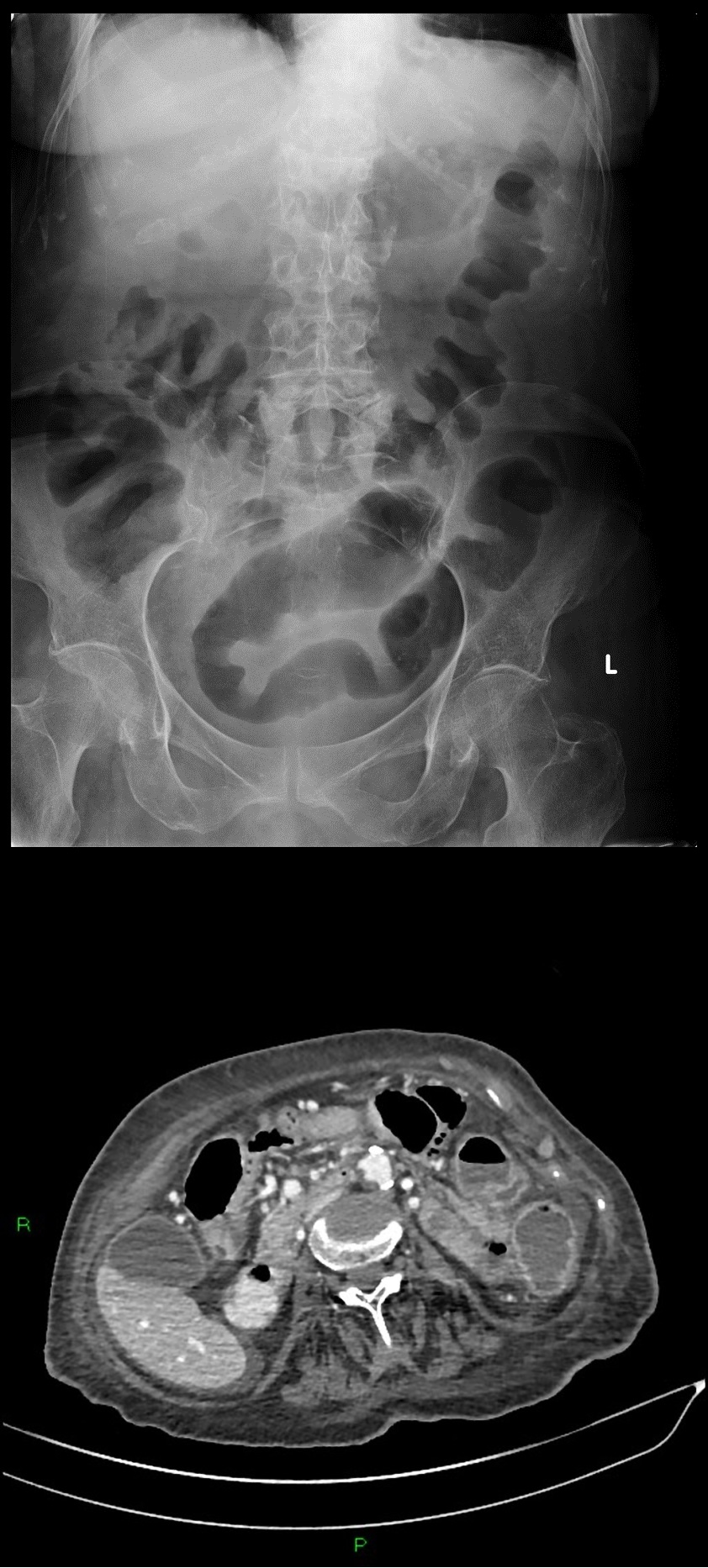
Elderly lady with infectious colitis secondary to C. difficile. On the abdominal film note the loss of bowel wall architecture and thumb-printing consistent with colitis. The CT from the same patient is enhanced by oral contrast. There is moderate free fluid in pelvis and peritoneum. The colon is oedematous throughout with enhancing walls, but of normal calibre. The sigmoid colon is smooth and featureless. Small bowel, liver, spleen, kidneys, adrenals and pancreas are normal.
+PassMedicine Notes
Clostridioides difficile is a Gram positive rod often encountered in hospital practice. It produces an exotoxin which causes intestinal damage leading to a syndrome called pseudomembranous colitis. C. difficile develops when the normal gut flora are suppressed by broad-spectrum antibiotics. Clindamycin is historically associated with causing C. difficile but the aetiology has evolved significantly over the past 10 years. Second and third-generation cephalosporins are now the leading cause of C. difficile.
Other than antibiotics, risk factors include:- proton pump inhibitors
- anaerobic gram-positive, spore-forming, toxin-producing bacillus
- transmission: via the faecal-oral route by ingestion of spores
- releases two exotoxins (toxin A and toxin B) that act on intestinal epithelial cells and inflammatory cells resulting in colitis
- diarrhoea
- abdominal pain
- a raised white blood cell count (WCC) is characteristic
- if severe toxic megacolon may develop
The Public Health England severity scale is often used as this may determine treatment:
Mild _ Moderate_ Severe _Life-threatening| Normal WCC _ ↑ WCC ( < 15 x 109/L) Typically 3-5 loose stools per day _ ↑ WCC ( > 15 x 109/L) or an acutely ↑ creatinine (> 50% above baseline) or a temperature > 38.5°C or evidence of severe colitis(abdominal or radiological signs) _ Hypotension Partial or complete ileus Toxic megacolon, or CT evidence of severe disease| Diagnosis- is made by detecting C. difficile toxin (CDT) in the stool
- C. difficile antigen positivity only shows exposure to the bacteria, rather than current infection
Management
Current antibiotic therapy should be reviewed and antibiotics stopped if possible.
First episode of C. difficile infection- first-line therapy is oral vancomycin for 10 days
- second-line therapy: oral fidaxomicin
- third-line therapy: oral vancomycin +/- IV metronidazole
- recurrent infection occurs in around 20% of patients, increasing to 50% after their second episode
- within 12 weeks of symptom resolution: oral fidaxomicin
- after 12 weeks of symptom resolution: oral vancomycin OR fidaxomicin
- oral vancomycin AND IV metronidazole
- specialist advice - surgery may be considered
Treatment pathway for Clostridioides difficile infection
Other therapies- bezlotoxumab is a monoclonal antibody which targets C. difficile toxin B
- NICE do not currently support its use to prevent recurrences as it is not cost-effective
- faecal microbiota transplant
- may be considered for patients who've had 2 or more previous episodes
- isolation in side room: the patient should remain isolated until there has been no diarrhoea (types 5-7
- all staff should wear disposable gloves and an apron during any contact with patients known to have C. difficile
- hand washing is also essential - alcohol gel does not kill the spores of C. difficile