Highlighter is on. Drag to highlight text. Click a highlight to remove it.
ALL / Endocrinology
Hypocalcaemia: features
Hypocalcaemia: features
As extracellular calcium concentrations are important for muscle and nerve function many of the features seen in hypocalcaemia seen a result of neuromuscular excitabilityFeatures
- tetany: muscle twitching, cramping and spasm
- perioral paraesthesia
- if chronic: depression, cataracts
- ECG: prolonged QT interval
Trousseau's sign
- carpal spasm if the brachial artery occluded by inflating the blood pressure cuff and maintaining pressure above systolic
- wrist flexion and fingers are drawn together
- seen in around 95% of patients with hypocalcaemia and around 1% of normocalcaemic people
Chvostek's sign
- tapping over parotid causes facial muscles to twitch
- seen in around 70% of patients with hypocalcaemia and around 10% of normocalcaemic people
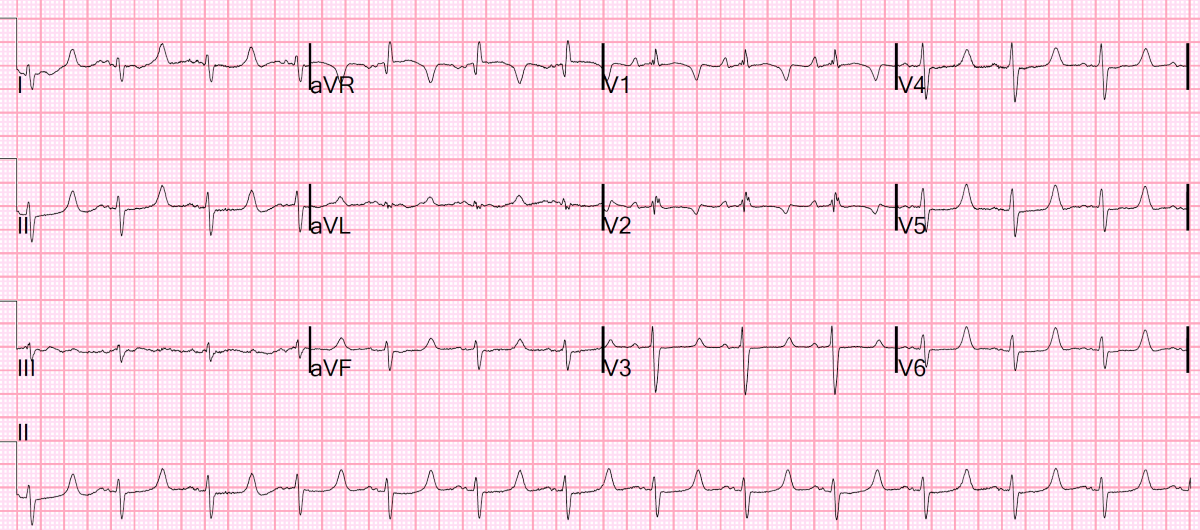
Very long QT secondary to hypocalcaemia. There are also features of hyperkalaemia. The combination of findings is not uncommon in dialysis patients - e Image used on license from Dr Smith, University of Minnesota
+PassMedicine Notes
As extracellular calcium concentrations are important for muscle and nerve function many of the features seen in hypocalcaemia seen a result of neuromuscular excitability
Features- tetany: muscle twitching, cramping and spasm
- perioral paraesthesia
- if chronic: depression, cataracts
- ECG: prolonged QT interval
- carpal spasm if the brachial artery occluded by inflating the blood pressure cuff and maintaining pressure above systolic
- wrist flexion and fingers are drawn together
- seen in around 95% of patients with hypocalcaemia and around 1% of normocalcaemic people
- tapping over parotid causes facial muscles to twitch
- seen in around 70% of patients with hypocalcaemia and around 10% of normocalcaemic people