Highlighter is on. Drag to highlight text. Click a highlight to remove it.
ALL / Cardiology
Heart failure: acute management
Heart failure: acute management
Recommended treatments for all patients- IV loop diuretics
- e.g. furosemide or bumetanide
- NICE recommend using a higher dose of diuretic than that on which the person was admitted
Possible additional treatments
- oxygen
- this should be given in line with British Thoracic Society guidelines, i.e. keep oxygen saturations at 94-98%
- vasodilators
- e.g. IV GTN, isosorbide dinitrate or sodium nitroprusside infusion
- reduce preload and afterload
- nitrates should not be routinely given to all patients, may be considered if systolic BP > 100 mmHg
- they may, however, have a role if concomitant myocardial ischaemia, severe hypertension or regurgitant aortic or mitral valve disease
- the major side-effect/contraindication is hypotension
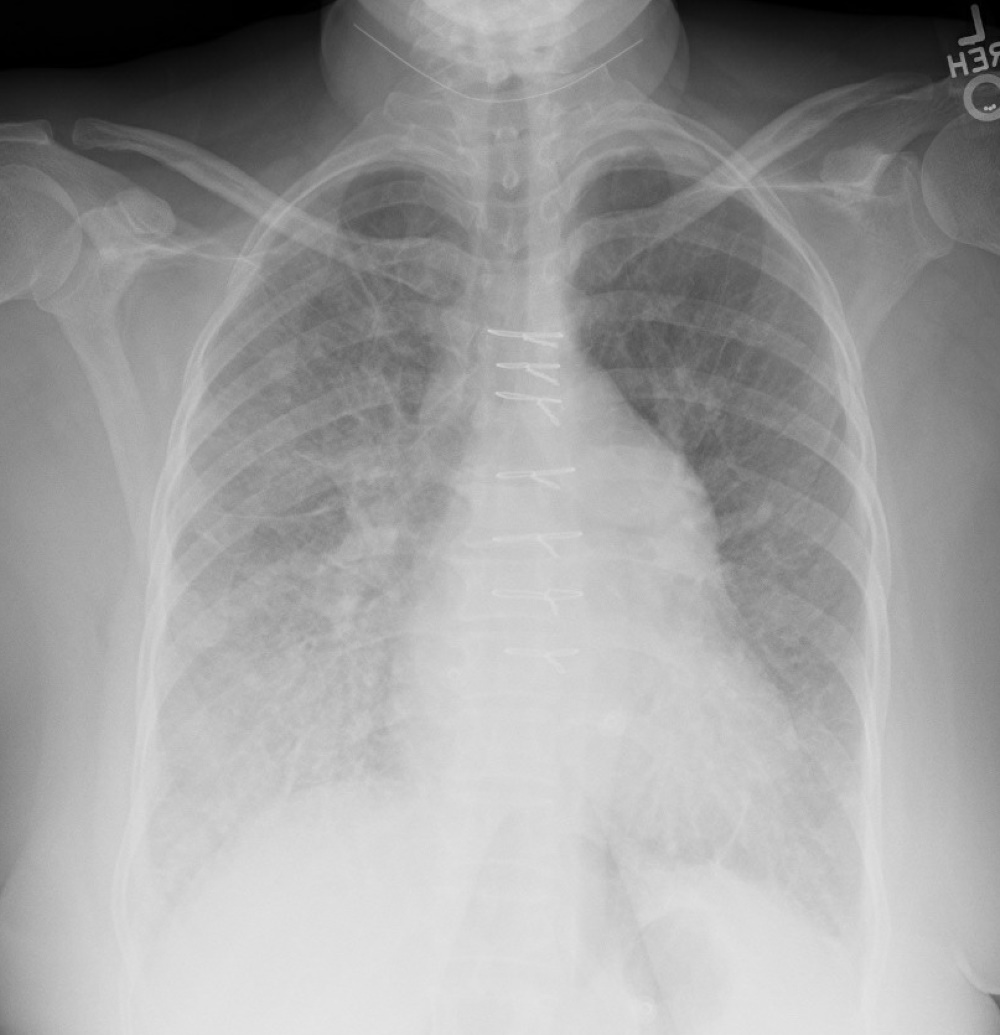
Chest x-ray showing pulmonary oedema - e Image used on license from Radiopaedia
Patients with respiratory failure
- CPAP
Patients with hypotension (e.g. < 85 mmHg)/cardiogenic shock
- this can be a difficult scenario to manage
- some of the treatments typically used for acute heart failure (e.g. loop diuretics and nitrates) may exacerbate the hypotension
- inotropic agents
- e.g. dobutamine
- should be considered for patients with severe left ventricular dysfunction who have potentially reversible cardiogenic shock
- vasopressor agents
- e.g. norepinephrine
- normally only used if insufficient response to inotropes and evidence of end-organ hypoperfusion
- mechanical circulatory assistance
- e.g. intra-aortic balloon counterpulsation or ventricular assist devices
Other treatments
- opiates
- NICE state 'do not routinely offer opiates to people with acute heart failure'
- they were previously used routinely and help to reduce dyspnoea/distress in patients
- however some studies have suggested increased morbidity in patients given opiates
General points
- regular medication for heart failure such as beta-blockers ACE-inhibitors should be continued
- beta-blockers should only be stopped if the patient has heart rate less than 50 beats per minute, second or third degree atrioventricular block, or shock
+PassMedicine Notes
Recommended treatments for all patients
- IV loop diuretics
- e.g. furosemide or bumetanide
- NICE recommend using a higher dose of diuretic than that on which the person was admitted
- oxygen
- this should be given in line with British Thoracic Society guidelines, i.e. keep oxygen saturations at 94-98%
- vasodilators
- e.g. IV GTN, isosorbide dinitrate or sodium nitroprusside infusion
- reduce preload and afterload
- nitrates should not be routinely given to all patients, may be considered if systolic BP > 100 mmHg
- they may, however, have a role if concomitant myocardial ischaemia, severe hypertension or regurgitant aortic or mitral valve disease
- the major side-effect/contraindication is hypotension
- CPAP
- this can be a difficult scenario to manage
- some of the treatments typically used for acute heart failure (e.g. loop diuretics and nitrates) may exacerbate the hypotension
- inotropic agents
- e.g. dobutamine
- should be considered for patients with severe left ventricular dysfunction who have potentially reversible cardiogenic shock
- vasopressor agents
- e.g. norepinephrine
- normally only used if insufficient response to inotropes and evidence of end-organ hypoperfusion
- mechanical circulatory assistance
- e.g. intra-aortic balloon counterpulsation or ventricular assist devices
- opiates
- NICE state 'do not routinely offer opiates to people with acute heart failure'
- they were previously used routinely and help to reduce dyspnoea/distress in patients
- however some studies have suggested increased morbidity in patients given opiates
- regular medication for heart failure such as beta-blockers ACE-inhibitors should be continued
- beta-blockers should only be stopped if the patient has heart rate less than 50 beats per minute, second or third degree atrioventricular block, or shock