Highlighter is on. Drag to highlight text. Click a highlight to remove it.
ALL / Dermatology
Pyoderma gangrenosum
Pyoderma gangrenosum
Pyoderma gangrenosum is a rare, non-infectious, inflammatory disorder. It is an uncommon cause of very painful skin ulceration. It may affect any part of the skin, but the lower legs are the most common site.Pathophysiology
- pyoderma gangrenosum is classified as a neutrophilic dermatosis
- neutrophilic dermatoses are skin conditions characterised by dense infiltration of neutrophils in the affected tissue and this is often seen on biopsy
Causes
- idiopathic in 50%
- inflammatory bowel disease in 10-15%
- ulcerative colitis
- Crohn's
- rheumatological
- rheumatoid arthritis
- SLE
- haematological
- myeloproliferative disorders
- lymphoma
- myeloid leukaemias
- monoclonal gammopathy (IgA)
- granulomatosis with polyangiitis
- primary biliary cirrhosis
Features
- location
- typically on the lower limb
- soften at the site of a minor injury as in this patient's case and this is known as pathergy
- initially features:
- usually starts quite suddenly
- small pustule, red bump or blood-blister
- later features:
- the skin then breaks down resulting in an ulcer which is often painful
- the edge of the ulcer is often described as purple, violaceous and undermined.
- the ulcer itself may be deep and necrotic
- may be accompanied by systemic symptoms
- fever
- myalgia
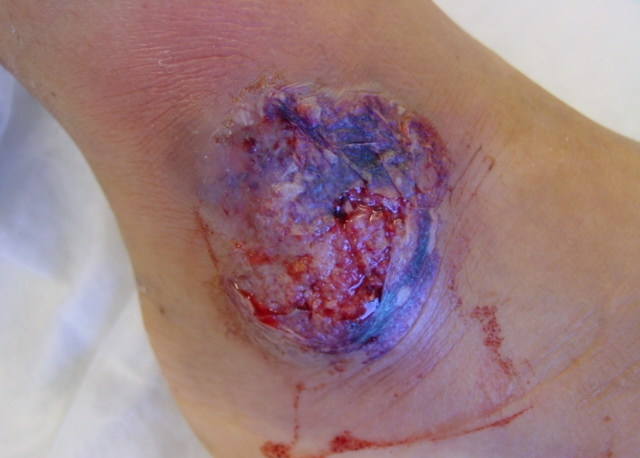
Pyoderma gangrenosum in a young woman with a background of Crohn
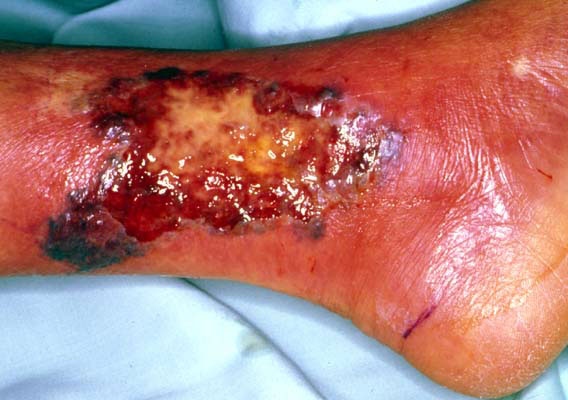
Pyoderma gangrenosum
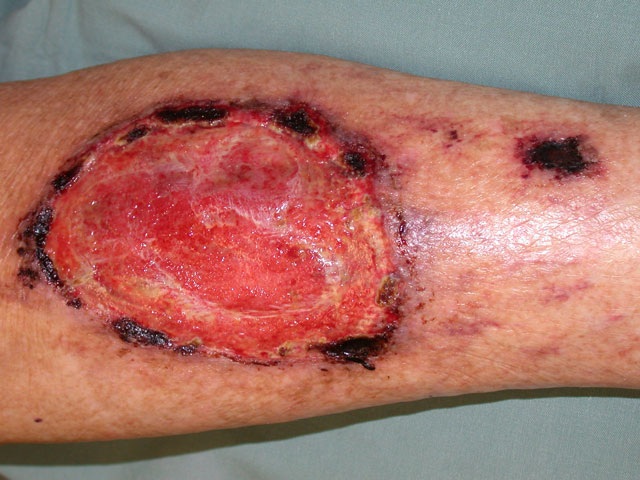
Pyoderma gangrenosum
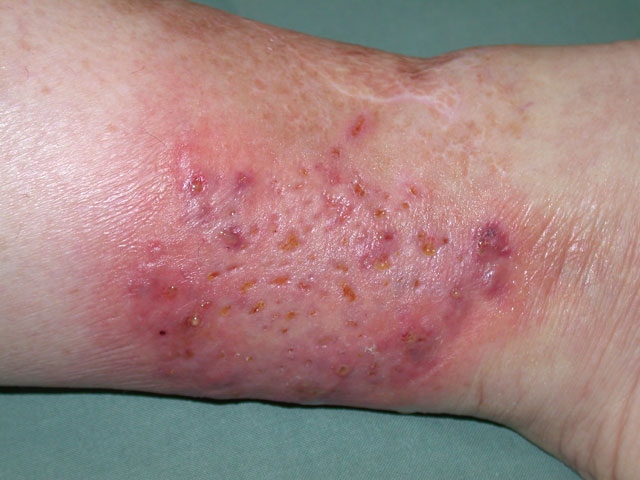
Pyoderma gangrenosum
Diagnosis
- often made by the characteristic appearance, associations with other diseases, the presence of pathergy, histology results and when other diseases have been ruled out
- histology is not specific and can vary depending on the time and site of the specimen but may be helpful in ruling out other causes of an ulcer.
Management
- the potential for rapid progression is high in most patients and most doctors advocate oral steroids as first-line treatment
- other immunosuppressive therapy, for example, ciclosporin and infliximab, have a role in difficult cases
- any surgery should be postponed until the disease process is controlled on immunosuppression to risk worsening of the disease (pathergy)
+PassMedicine Notes
Pyoderma gangrenosum is a rare, non-infectious, inflammatory disorder. It is an uncommon cause of very painful skin ulceration. It may affect any part of the skin, but the lower legs are the most common site.
Pathophysiology- pyoderma gangrenosum is classified as a neutrophilic dermatosis
- neutrophilic dermatoses are skin conditions characterised by dense infiltration of neutrophils in the affected tissue and this is often seen on biopsy
- idiopathic in 50%
- inflammatory bowel disease in 10-15%
- ulcerative colitis
- Crohn's
- rheumatological
- rheumatoid arthritis
- SLE
- haematological
- myeloproliferative disorders
- lymphoma
- myeloid leukaemias
- monoclonal gammopathy (IgA)
- granulomatosis with polyangiitis
- primary biliary cirrhosis
- location
- typically on the lower limb
- soften at the site of a minor injury as in this patient's case and this is known as pathergy
- initially features:
- usually starts quite suddenly
- small pustule, red bump or blood-blister
- later features:
- the skin then breaks down resulting in an ulcer which is often painful
- the edge of the ulcer is often described as purple, violaceous and undermined.
- the ulcer itself may be deep and necrotic
- may be accompanied by systemic symptoms
- fever
- myalgia
- often made by the characteristic appearance, associations with other diseases, the presence of pathergy, histology results and when other diseases have been ruled out
- histology is not specific and can vary depending on the time and site of the specimen but may be helpful in ruling out other causes of an ulcer.
- the potential for rapid progression is high in most patients and most doctors advocate oral steroids as first-line treatment
- other immunosuppressive therapy, for example, ciclosporin and infliximab, have a role in difficult cases
- any surgery should be postponed until the disease process is controlled on immunosuppression to risk worsening of the disease (pathergy)