Atrial fibrillation: anticoagulation
Atrial fibrillation: anticoagulation
NICE updated their guidelines on the management of atrial fibrillation (AF) in 2021.Does the patient need anticoagulation?
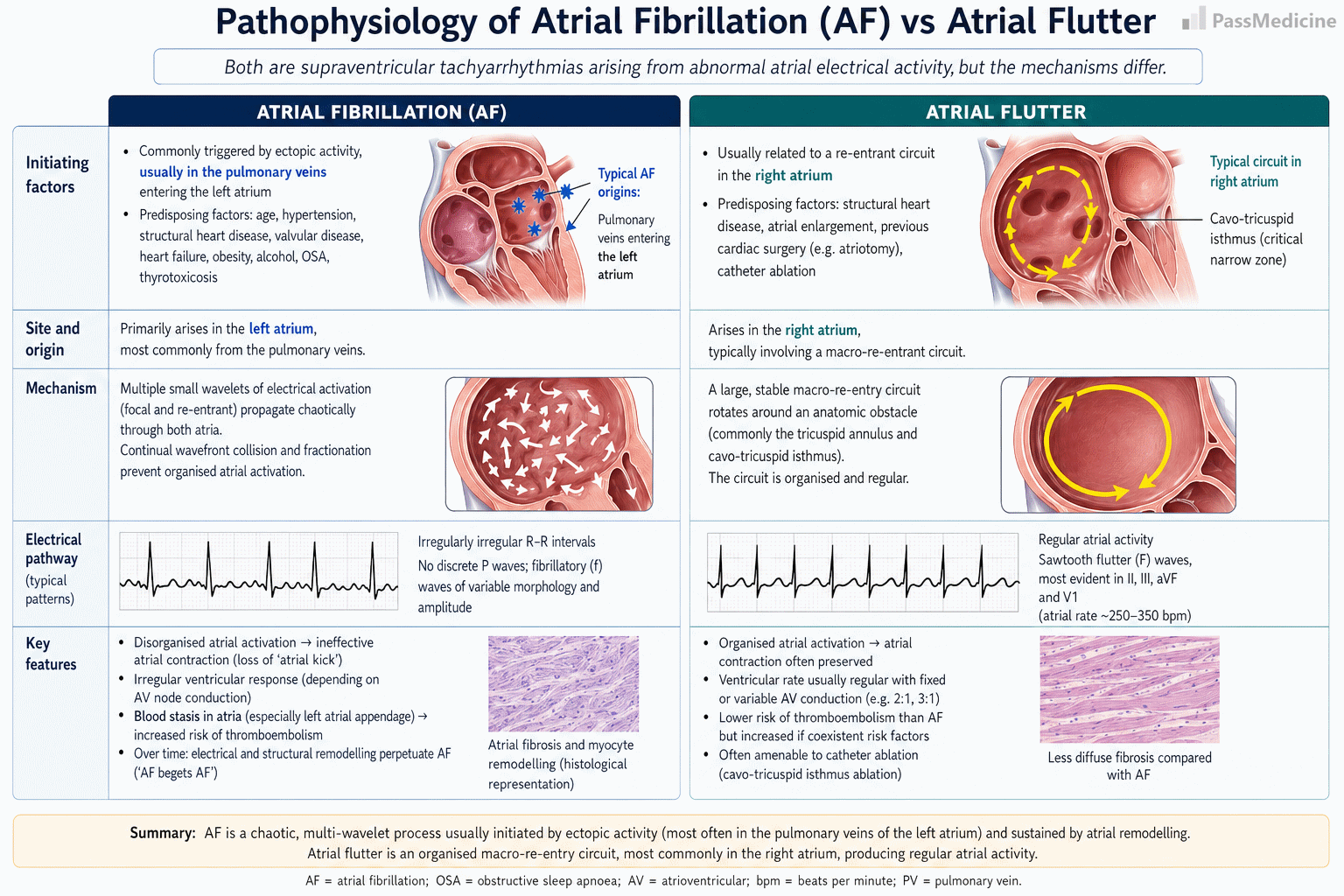
The need for anticoagulation should be considered in patients with any history of AF, not just if they are in AF currently, i.e. the following groups should be assessed:
- symptomatic or asymptomatic paroxysmal, persistent or permanent atrial fibrillation
- atrial flutter
- a continuing risk of arrhythmia recurrence after cardioversion back to sinus rhythm or catheter ablation
NICE suggest using the CHA2DS2-VASc score to determine the most appropriate anticoagulation strategy. This scoring system superceded the CHADS2 score.
| Risk factor | Points | |
|---|---|---|
| C | Congestive heart failure | 1 |
| H | Hypertension (or treated hypertension) | 1 |
| A2 | Age >= 75 years | 2 |
| Age 65-74 years | 1 | |
| D | Diabetes | 1 |
| S2 | Prior Stroke, TIA or thromboembolism | 2 |
| V | Vascular disease (including ischaemic heart disease and peripheral arterial disease) | 1 |
| S | Sex (female) | 1 |
The table below shows a suggested anticoagulation strategy based on the score:
| Score | Anticoagulation |
|---|---|
| 0 | No treatment |
| 1 | Males: Consider anticoagulation Females: No treatment (this is because their score of 1 is only reached due to their gender) |
| 2 or more | Offer anticoagulation |
Remember that if a CHA2DS2-VASc score suggests no need for anticoagulation it is important to ensure a transthoracic echocardiogram has been done to exclude valvular heart disease, which in combination with AF is an absolute indication for anticoagulation.
Assessing bleeding risk
Doctors have always thought carefully about the risk/benefit profile of starting someone on warfarin. A history of falls, old age, alcohol excess and a history of previous bleeding are common things that make us consider whether anticoagulation is in the best interests of the patient., but NICE warn us not to withhold anticoagulation solely on the grounds of age or risk falls. NICE now recommend we formalise this risk assessment using the ORBIT scoring system. Previously the HAS-BLED scoring system was recommended.
| Variable | Points |
|---|---|
| Haemoglobin <130 g/L for males and < 120 g/L for females, or haemtocrit < 40% for males and < 36% for females | 2 |
| Age > 74 years | 1 |
| Bleeding history (GI bleeding, intracranial bleeding or haemorrhagic stroke) | 2 |
| Renal impairment (GFR < 60 mL/min/1.73m2) | 1 |
| Treatment with antiplatelet agents | 1 |
There are no formal rules on how we act on the ORBIT score and individual patient factors should be taken into account. However, the following table acts as a guide:
| ORBIT score | Risk group | Bleeds per 100 patient-years |
|---|---|---|
| 0-2 | Low | 2.4 |
| 3 | Medium | 4.7 |
| 4-7 | High | 8.1 |
If treatment is indicated, which anticoagulant?
For many years warfarin was the anticoagulant of choice in atrial fibrillation. This changed following the development of direct oral anticoagulants (DOACs). These have the advantage of not requiring regular blood tests to check the INR and now recommended as the first-line anticoagulant for patients with AF. If a patient was previously started on warfarin, NICE recommend discussing switching to a DOAC during a routine follow-up appointment.
The following DOACs are recommended by NICE for reducing stroke risk in AF:
- apixaban
- dabigatran
- edoxaban
- rivaroxaban
Warfarin is now used second-line, in patients where a DOAC is contraindicated or not tolerated.
Aspirin is not recommended for reducing stroke risk in patients with AF.
+PassMedicine Notes
NICE updated their guidelines on the management of atrial fibrillation (AF) in 2021.
Does the patient need anticoagulation?
The need for anticoagulation should be considered in patients with any history of AF, not just if they are in AF currently, i.e. the following groups should be assessed:- symptomatic or asymptomatic paroxysmal, persistent or permanent atrial fibrillation
- atrial flutter
- a continuing risk of arrhythmia recurrence after cardioversion back to sinus rhythm or catheter ablation
NICE suggest using the CHA2DS2-VASc score to determine the most appropriate anticoagulation strategy. This scoring system superceded the CHADS2 score.
_Risk factor_Points| C _Congestive heart failure _1| H _ Hypertension (or treated hypertension) _1| A2 _Age >= 75 years _2| _Age 65-74 years _ 1| D _ Diabetes _1| S2_ Prior Stroke, TIA or thromboembolism _2| V _ Vascular disease (including ischaemic heart disease and peripheral arterial disease) _ 1| S _ Sex (female) _ 1 |The table below shows a suggested anticoagulation strategy based on the score:
Score _ Anticoagulation| 0 _ No treatment| 1 _ Males: Consider anticoagulation Females: No treatment (this is because their score of 1 is only reached due to their gender)| 2 or more_Offer anticoagulation|Remember that if a CHA2DS2-VASc score suggests no need for anticoagulation it is important to ensure a transthoracic echocardiogram has been done to exclude valvular heart disease, which in combination with AF is an absolute indication for anticoagulation.
Assessing bleeding risk
Doctors have always thought carefully about the risk/benefit profile of starting someone on warfarin. A history of falls, old age, alcohol excess and a history of previous bleeding are common things that make us consider whether anticoagulation is in the best interests of the patient., but NICE warn us not to withhold anticoagulation solely on the grounds of age or risk falls. NICE now recommend we formalise this risk assessment using the ORBIT scoring system. Previously the HAS-BLED scoring system was recommended.
Variable _ Points| Haemoglobin 74 years _ 1| Bleeding history (GI bleeding, intracranial bleeding or haemorrhagic stroke) _ 2| Renal impairment (GFR < 60 mL/min/1.73m2) _ 1| Treatment with antiplatelet agents _ 1|There are no formal rules on how we act on the ORBIT score and individual patient factors should be taken into account. However, the following table acts as a guide:
ORBIT score _ Risk group _ Bleeds per 100 patient-years| 0-2 _ Low _ 2.4| 3 _ Medium _ 4.7| 4-7 _ High _ 8.1|If treatment is indicated, which anticoagulant?
For many years warfarin was the anticoagulant of choice in atrial fibrillation. This changed following the development of direct oral anticoagulants (DOACs). These have the advantage of not requiring regular blood tests to check the INR and now recommended as the first-line anticoagulant for patients with AF. If a patient was previously started on warfarin, NICE recommend discussing switching to a DOAC during a routine follow-up appointment.
The following DOACs are recommended by NICE for reducing stroke risk in AF:- apixaban
- dabigatran
- edoxaban
- rivaroxaban
Warfarin is now used second-line, in patients where a DOAC is contraindicated or not tolerated.
Aspirin is not recommended for reducing stroke risk in patients with AF.