Highlighter is on. Drag to highlight text. Click a highlight to remove it.
ALL / Clinical Sciences
Mitochondrial diseases
Mitochondrial diseases
Whilst most DNA is found in the cell nucleus, a small amount of double-stranded DNA is present in the mitochondria. It encodes protein components of the respiratory chain and some special types of RNAMitochondrial inheritance has the following characteristics:
- inheritance is only via the maternal line as the sperm contributes no cytoplasm to the zygote
- none of the children of an affected male will inherit the disease
- all of the children of an affected female will inherit the disease
- generally, encode rare neurological diseases
- poor genotype:phenotype correlation - within a tissue or cell there can be different mitochondrial populations - this is known as heteroplasmy
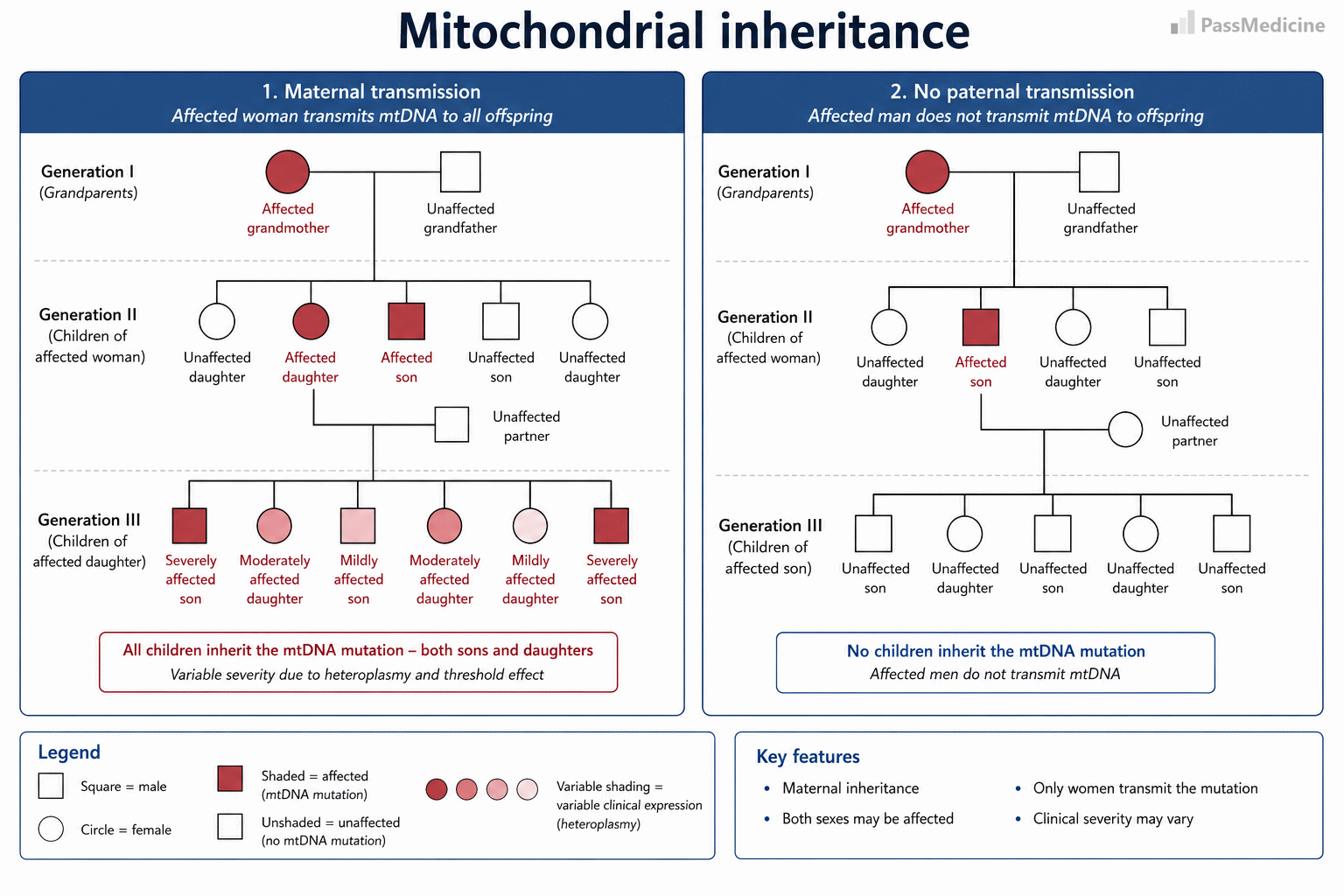
Pattern of mitchondrial inheritance
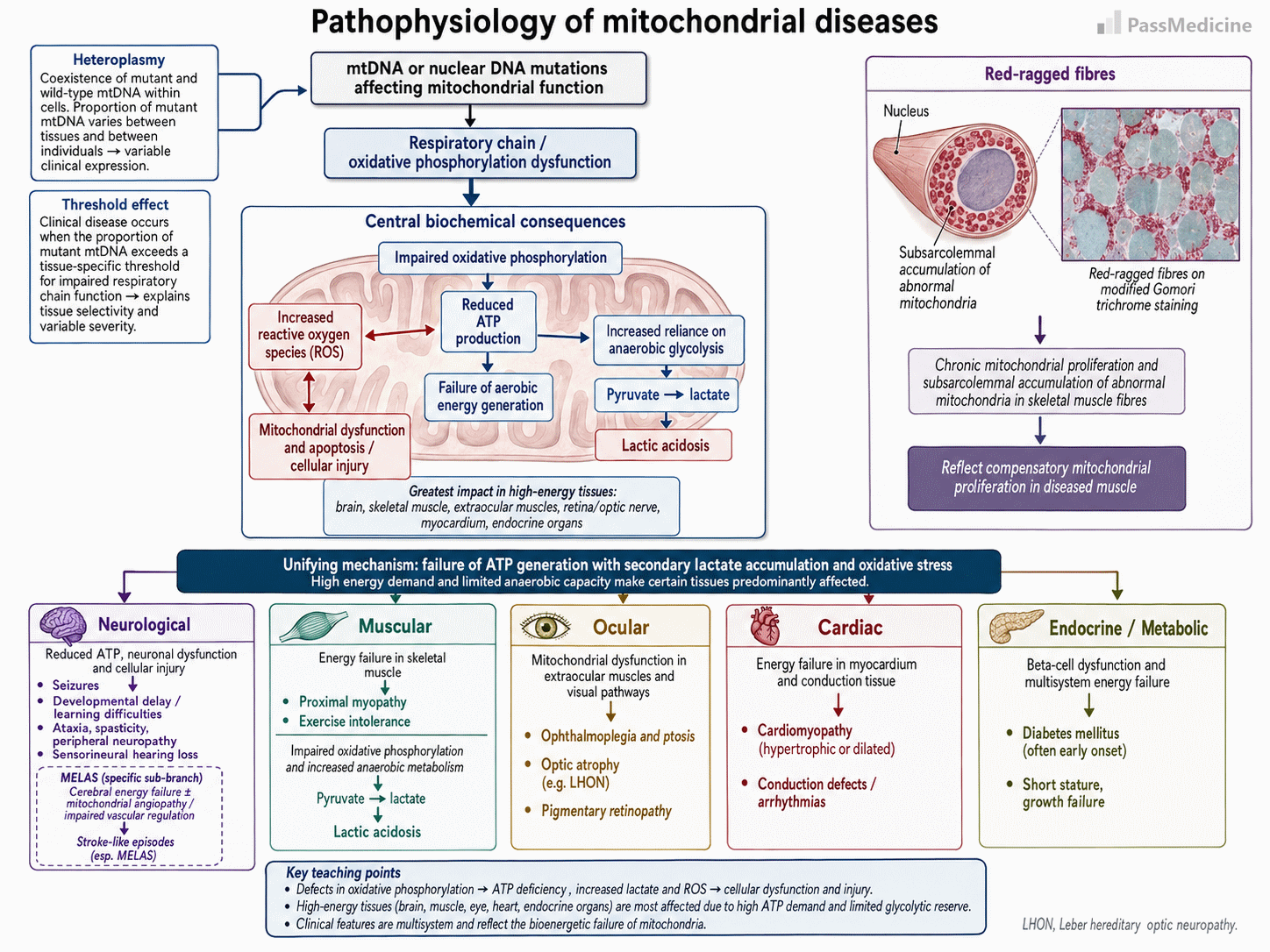
Pathophysiology of mitchondrial diseases
Common clinical features of mitochondrial disorders
- neurological
- seizures
- developmental delay / learning difficulties
- ataxia, spasticity, peripheral neuropathy
- stroke-like episodes (esp. MELAS)
- sensorineural hearing loss
- ophthalmoplegia and ptosis
- muscular
- proximal myopathy, exercise intolerance
- lactic acidosis (due to impaired oxidative phosphorylation)
- ocular
- optic atrophy (e.g. Leber’s hereditary optic neuropathy, LHON)
- pigmentary retinopathy
- cardiac
- cardiomyopathy (hypertrophic or dilated)
- conduction defects / arrhythmias
- endocrine / metabolic
- diabetes mellitus (often early onset)
- short stature, growth failure
Histology
- muscle biopsy classically shows 'red, ragged fibres' due to increased number of mitochondria
Examples include:
- Leber's optic atrophy
- symptoms typically develop at around the age of 30 years
- central scotoma → loss of colour vision → rapid onset of significant visual impairment
- MELAS syndrome: mitochondrial encephalomyopathy lactic acidosis and stroke-like episodes
- MERRF syndrome: myoclonus epilepsy with ragged-red fibres
- Kearns-Sayre syndrome: onset in patients < 20 years old, external ophthalmoplegia, retinitis pigmentosa. Ptosis may be seen
- sensorineural hearing loss
+PassMedicine Notes
Whilst most DNA is found in the cell nucleus, a small amount of double-stranded DNA is present in the mitochondria. It encodes protein components of the respiratory chain and some special types of RNA
Mitochondrial inheritance has the following characteristics:- inheritance is only via the maternal line as the sperm contributes no cytoplasm to the zygote
- none of the children of an affected male will inherit the disease
- all of the children of an affected female will inherit the disease
- generally, encode rare neurological diseases
- poor genotype:phenotype correlation - within a tissue or cell there can be different mitochondrial populations - this is known as heteroplasmy
- neurological
- seizures
- developmental delay / learning difficulties
- ataxia, spasticity, peripheral neuropathy
- stroke-like episodes (esp. MELAS)
- sensorineural hearing loss
- ophthalmoplegia and ptosis
- muscular
- proximal myopathy, exercise intolerance
- lactic acidosis (due to impaired oxidative phosphorylation)
- ocular
- optic atrophy (e.g. Leber’s hereditary optic neuropathy, LHON)
- pigmentary retinopathy
- cardiac
- cardiomyopathy (hypertrophic or dilated)
- conduction defects / arrhythmias
- endocrine / metabolic
- diabetes mellitus (often early onset)
- short stature, growth failure
- muscle biopsy classically shows 'red, ragged fibres' due to increased number of mitochondria
- Leber's optic atrophy
- symptoms typically develop at around the age of 30 years
- central scotoma --> loss of colour vision --> rapid onset of significant visual impairment
- MELAS syndrome: mitochondrial encephalomyopathy lactic acidosis and stroke-like episodes
- MERRF syndrome: myoclonus epilepsy with ragged-red fibres
- Kearns-Sayre syndrome: onset in patients < 20 years old, external ophthalmoplegia, retinitis pigmentosa. Ptosis may be seen
- sensorineural hearing loss