Highlighter is on. Drag to highlight text. Click a highlight to remove it.
ALL / Ophthalmology
Scleritis
Scleritis
Scleritis describes full-thickness inflammation of the sclera. It generally has a non-infective cause and typically causes a red, painful eye.Risk factors
- rheumatoid arthritis: the most commonly associated condition
- systemic lupus erythematosus
- sarcoidosis
- granulomatosis with polyangiitis
Features
- 'red eye'
- classically painful (in comparison to episcleritis), but sometimes only mild pain/discomfort is present
- watering and photophobia are common
- gradual decrease in vision
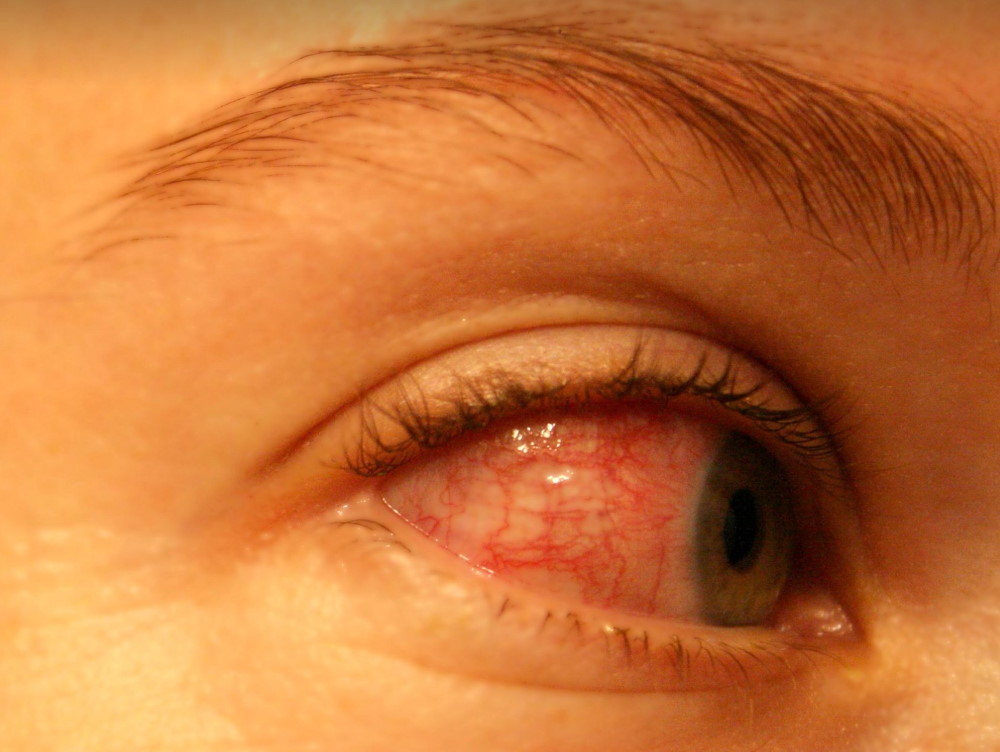
Image showing scleritis in a patient with underlying rheumatoid arthritis
Management
- same-day assessment by an ophthalmologist
- oral NSAIDs are typically used first-line
- oral glucocorticoids may be used for more severe presentations
- immunosuppressive drugs for resistant cases (and also to treat any underlying associated diseases)
+PassMedicine Notes
Scleritis describes full-thickness inflammation of the sclera. It generally has a non-infective cause and typically causes a red, painful eye.
Risk factors- rheumatoid arthritis: the most commonly associated condition
- systemic lupus erythematosus
- sarcoidosis
- granulomatosis with polyangiitis
- 'red eye'
- classically painful (in comparison to episcleritis), but sometimes only mild pain/discomfort is present
- watering and photophobia are common
- gradual decrease in vision
- same-day assessment by an ophthalmologist
- oral NSAIDs are typically used first-line
- oral glucocorticoids may be used for more severe presentations
- immunosuppressive drugs for resistant cases (and also to treat any underlying associated diseases)