Highlighter is on. Drag to highlight text. Click a highlight to remove it.
ALL / Neurology
Friedreich's ataxia
Friedreich's ataxia
Friedreich's ataxia is the most common of the early-onset hereditary ataxias. It is an autosomal recessive, trinucleotide repeat disorder characterised by a GAA repeat in the X25 gene on chromosome 9 (frataxin). Friedreich's ataxia is unusual amongst trinucleotide repeat disorders in not demonstrating the phenomenon of anticipation.The typical age of onset is 10-15 years old. Gait ataxia and kyphoscoliosis are the most common presenting features.
Neurological features
- absent ankle jerks/extensor plantars
- cerebellar ataxia
- optic atrophy
- spinocerebellar tract degeneration
Other features
- hypertrophic obstructive cardiomyopathy (90%, most common cause of death)
- diabetes mellitus (10-20%)
- high-arched palate
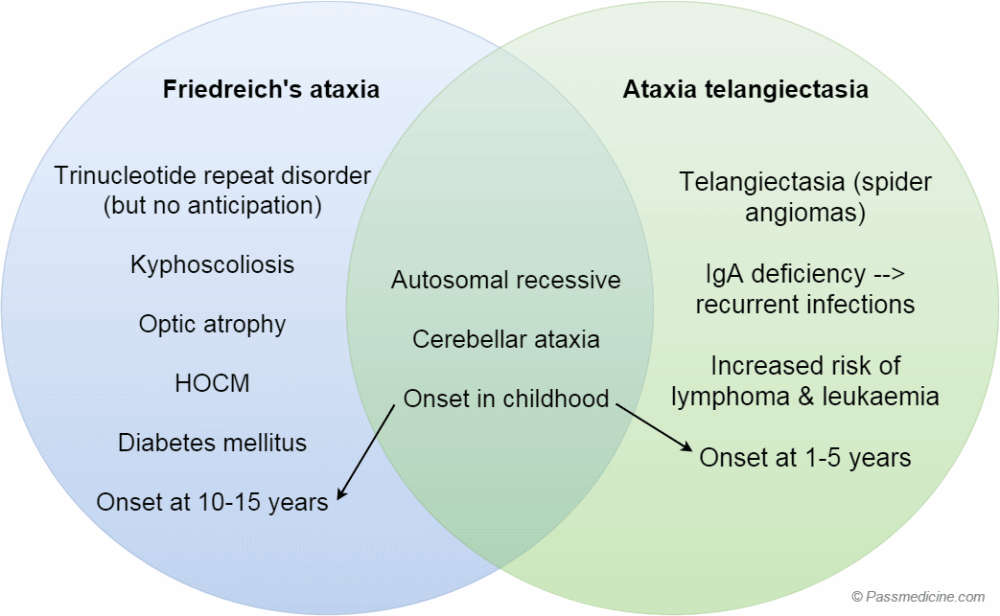
Comparison of Friedreich's ataxia and ataxic telangiectasia. Note in particular how ataxic telangiectasia tends to present much earlier, often at the age of 1-2 years
+PassMedicine Notes
Friedreich's ataxia is the most common of the early-onset hereditary ataxias. It is an autosomal recessive, trinucleotide repeat disorder characterised by a GAA repeat in the X25 gene on chromosome 9 (frataxin). Friedreich's ataxia is unusual amongst trinucleotide repeat disorders in not demonstrating the phenomenon of anticipation.
The typical age of onset is 10-15 years old. Gait ataxia and kyphoscoliosis are the most common presenting features.
Neurological features- absent ankle jerks/extensor plantars
- cerebellar ataxia
- optic atrophy
- spinocerebellar tract degeneration
- hypertrophic obstructive cardiomyopathy (90%, most common cause of death)
- diabetes mellitus (10-20%)
- high-arched palate