Highlighter is on. Drag to highlight text. Click a highlight to remove it.
ALL / Dermatology
Fungal nail infections
Fungal nail infections
Fungal nail infection (onychomycosis) may involve any part of the nail, or the entire nail unit. Toenails are significantly more likely to become infected than fingernailsCausative organisms
- dermatophytes
- account for around 90% of cases
- mainly Trichophyton rubrum
- yeasts
- account for around 5-10% of cases
- e.g. Candida
- non-dermatophyte moulds
Risk factors
- increasing age
- diabetes mellitus
- psoriasis
- repeated nail trauma
Features
- 'unsightly' nails are a common reason for presentation
- thickened, rough, opaque nails are the most common finding
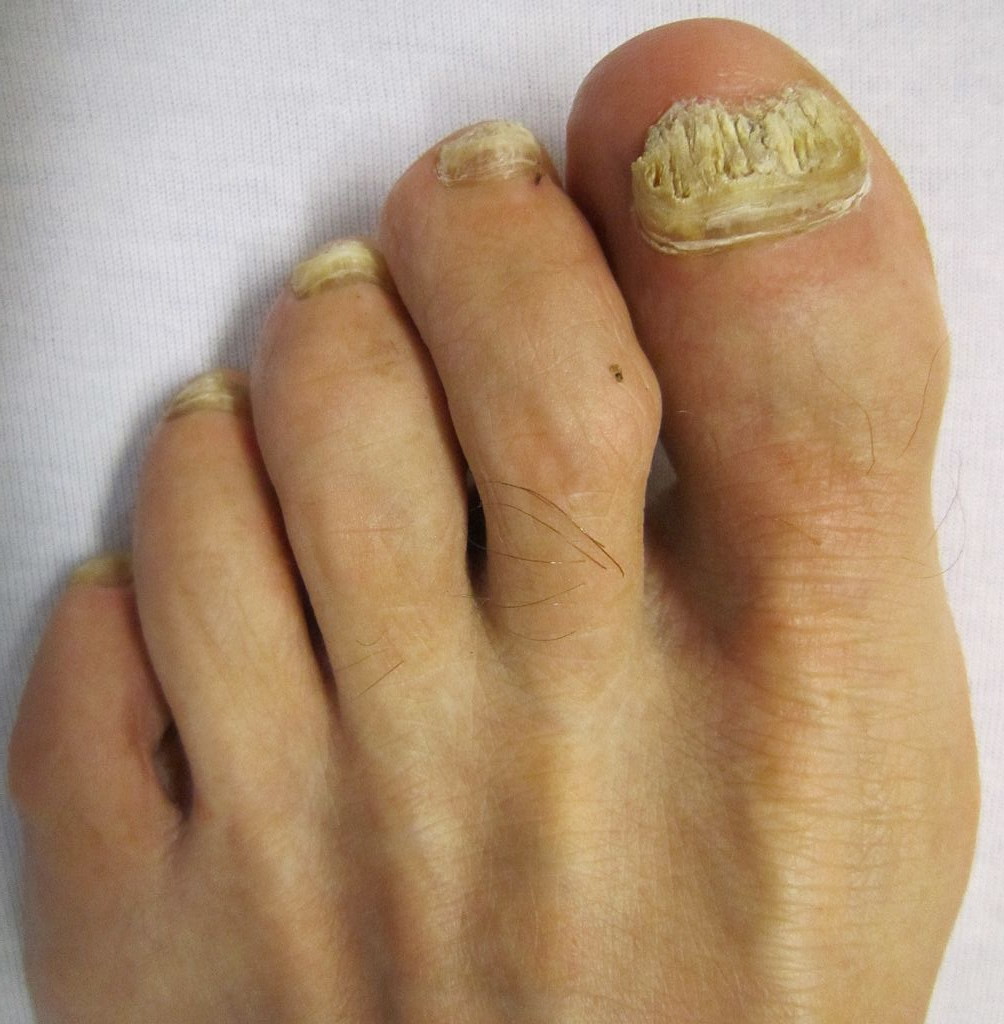
Extensive dermatophyte infection of a toe nail
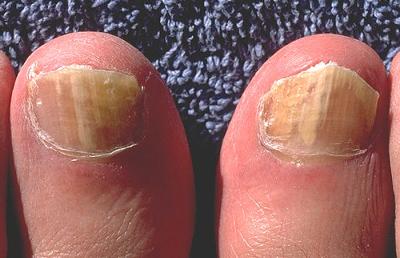
Fungal nail infection
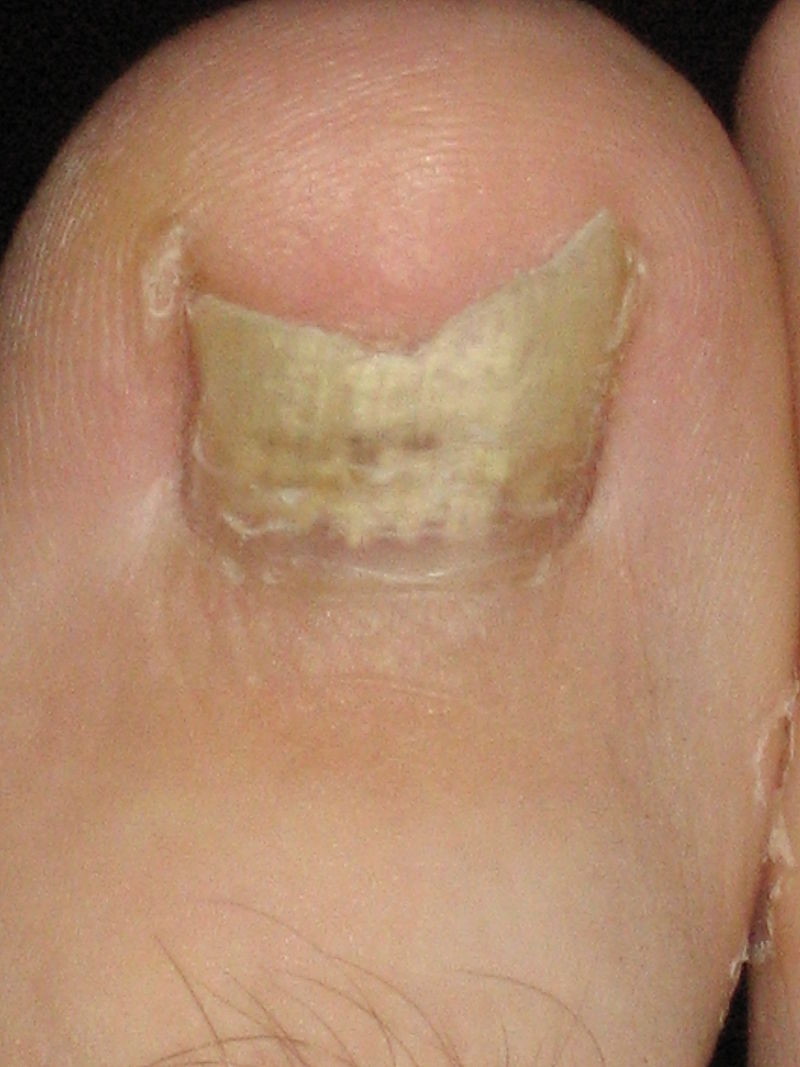
Fungal nail infection
Differential diagnosis
- psoriasis
- repeated trauma
- lichen planus
- yellow nail syndrome
Investigation
- nail clippings +/- scrapings of the affected nail
- microscopy and culture
- should be done for all patients if antifungal treatment is being considered
- the false-negative rate for cultures are around 30%, so repeat samples may need to be sent if the clinical suspicion is high
Management
- do not need to be treated if it is asymptomatic and the patient is not bothered by the appearance
- if dermatophyte or Candida infection is confirmed
- if limited involvement (≤50% nail affected, ≤ 2 nails affected, more superficial white onychomycosis): topical treatment with amorolfine 5% nail lacquer; 6 months for fingernails and 9 - 12 months for toenails
- if more extensive involvement due to a dermatophyte infection: oral terbinafine is currently recommended first-line; 6 weeks - 3 months therapy is needed for fingernail infections whilst toenails should be treated for 3 - 6 months
- if more extensive involvement due to a Candida infection: oral itraconazole is recommended first-line; 'pulsed' weekly therapy is recommended
+PassMedicine Notes
Fungal nail infection (onychomycosis) may involve any part of the nail, or the entire nail unit. Toenails are significantly more likely to become infected than fingernails
Causative organisms- dermatophytes
- account for around 90% of cases
- mainly Trichophyton rubrum
- yeasts
- account for around 5-10% of cases
- e.g. Candida
- non-dermatophyte moulds
- increasing age
- diabetes mellitus
- psoriasis
- repeated nail trauma
- 'unsightly' nails are a common reason for presentation
- thickened, rough, opaque nails are the most common finding
- psoriasis
- repeated trauma
- lichen planus
- yellow nail syndrome
- nail clippings +/- scrapings of the affected nail
- microscopy and culture
- should be done for all patients if antifungal treatment is being considered
- the false-negative rate for cultures are around 30%, so repeat samples may need to be sent if the clinical suspicion is high
- do not need to be treated if it is asymptomatic and the patient is not bothered by the appearance
- if dermatophyte or Candida infection is confirmed
- if limited involvement (≤50% nail affected, ≤ 2 nails affected, more superficial white onychomycosis): topical treatment with amorolfine 5% nail lacquer; 6 months for fingernails and 9 - 12 months for toenails
- if more extensive involvement due to a dermatophyte infection: oral terbinafine is currently recommended first-line; 6 weeks - 3 months therapy is needed for fingernail infections whilst toenails should be treated for 3 - 6 months
- if more extensive involvement due to a Candida infection: oral itraconazole is recommended first-line; 'pulsed' weekly therapy is recommended