Highlighter is on. Drag to highlight text. Click a highlight to remove it.
ALL / Clinical Sciences
HIV: immunology
HIV: immunology
Human Immunodeficiency Virus (HIV) is a retrovirus that targets the immune system, leading to progressive immunodeficiency and increased susceptibility to opportunistic infections and certain malignancies. The immunopathogenesis of HIV involves complex interactions between the virus and the host's immune system.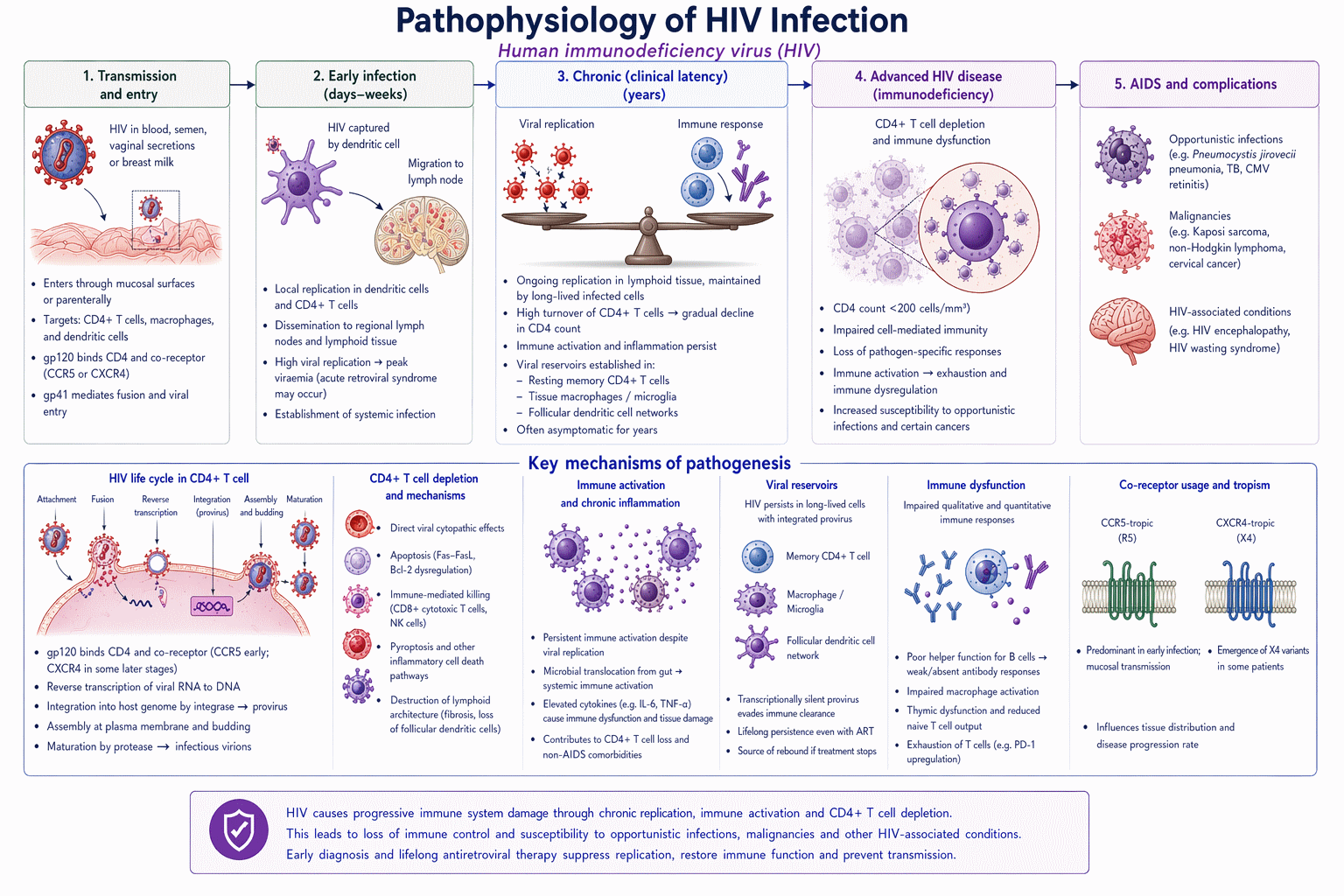
Pathophysiology of HIV infection
Viral Entry and Initial Infection
- Target Cells: HIV primarily infects CD4+ T lymphocytes, macrophages, and dendritic cells.
- Attachment and Fusion: The viral envelope glycoproteins gp120 and gp41 facilitate attachment to the CD4 receptor and co-receptors (CCR5 or CXCR4) on host cells, enabling viral entry.
- Reverse Transcription and Integration: Once inside the host cell, reverse transcriptase converts viral RNA into proviral DNA, which integrates into the host genome via the integrase enzyme.
Impact on the Immune System
- CD4+ T Cell Depletion: Progressive loss of CD4+ T cells occurs through direct viral cytopathic effects, apoptosis, and immune-mediated destruction.
- Impaired Immune Responses: The reduction in CD4+ T cells disrupts both cell-mediated and humoral immunity, compromising helper functions essential for activating B cells, cytotoxic T lymphocytes, and macrophages.
- Chronic Immune Activation: Persistent viral replication and microbial translocation from damaged gut mucosa lead to systemic immune activation, accelerating immune system deterioration.
β2-microglobulin
- Immune Activation and Cellular Turnover: In HIV infection, β2-microglobulin levels increase due to chronic immune activation. HIV replicates continuously, stimulating T cells and other immune cells. As part of this activation, cells shed β2-microglobulin into the bloodstream, leading to elevated levels.
- CD8+ T Cell Response: HIV infection drives a strong cytotoxic T lymphocyte (CD8+ T cell) response to target infected cells. This increased activity of CD8+ cells, which express β2-microglobulin as part of the MHC class I complex, contributes to elevated circulating levels.
- Lymphocyte Turnover: As CD4+ T cells are infected and depleted, the body attempts to replenish these cells, increasing lymphocyte turnover. This process further stimulates β2-microglobulin release, reflecting the body’s efforts to compensate for immune cell losses.
Mechanisms of Immune Evasion
- High Mutation Rate: Reverse transcriptase lacks proofreading ability, resulting in rapid genetic variability that allows the virus to evade immune detection.
- Glycan Shielding: Extensive glycosylation of gp120 masks viral epitopes from neutralising antibodies.
- Latency and Reservoirs: HIV establishes latent reservoirs in resting memory CD4+ T cells, evading both immune responses and antiretroviral therapy.
Consequences of Immunodeficiency
- Opportunistic Infections: Increased susceptibility to infections such as Pneumocystis jirovecii pneumonia, tuberculosis, and candidiasis.
- Malignancies: Higher incidence of cancers like Kaposi's sarcoma and non-Hodgkin lymphoma due to impaired immune surveillance.
- Immune Reconstitution Inflammatory Syndrome (IRIS): Exacerbation of symptoms upon initiation of antiretroviral therapy as the recovering immune system mounts responses against existing pathogens.
Host Factors Influencing Disease Progression
- Genetic Polymorphisms: Variations in co-receptor genes (e.g., CCR5-Δ32 mutation) can confer resistance or alter disease progression.
- HLA Alleles: Certain HLA types are associated with more effective cytotoxic T lymphocyte responses and slower disease progression.
- Immune Activation Levels: Baseline levels of immune activation correlate with the rate of CD4+ T cell decline.
Immune Response to HIV
- Innate Immunity:
- Natural Killer Cells: Attempt to control infection through cytotoxic activity but are often inhibited by viral proteins.
- Adaptive Immunity:
- Humoral Response: Antibodies against HIV proteins are produced but are often strain-specific and ineffective against rapidly mutating viruses.
- Cellular Response: CD8+ cytotoxic T lymphocytes target infected cells but are undermined by viral escape mutations and immune exhaustion.
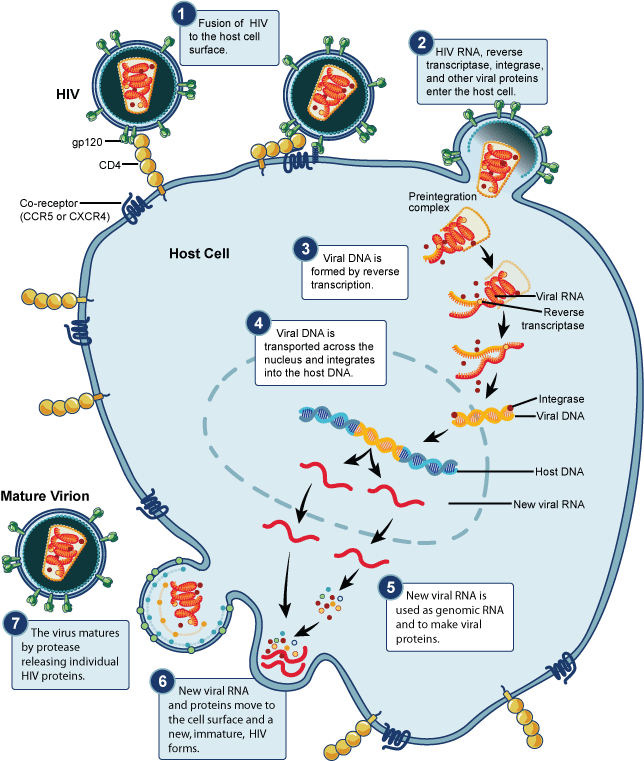
An illustration model of the HIV Replication Cycle. Each step of the cycle is numbered and concisely described. Credit: NIAID
+PassMedicine Notes
Human Immunodeficiency Virus (HIV) is a retrovirus that targets the immune system, leading to progressive immunodeficiency and increased susceptibility to opportunistic infections and certain malignancies. The immunopathogenesis of HIV involves complex interactions between the virus and the host's immune system.
Viral Entry and Initial Infection- Target Cells: HIV primarily infects CD4+ T lymphocytes, macrophages, and dendritic cells.
- Attachment and Fusion: The viral envelope glycoproteins gp120 and gp41 facilitate attachment to the CD4 receptor and co-receptors (CCR5 or CXCR4) on host cells, enabling viral entry.
- Reverse Transcription and Integration: Once inside the host cell, reverse transcriptase converts viral RNA into proviral DNA, which integrates into the host genome via the integrase enzyme.
- CD4+ T Cell Depletion: Progressive loss of CD4+ T cells occurs through direct viral cytopathic effects, apoptosis, and immune-mediated destruction.
- Impaired Immune Responses: The reduction in CD4+ T cells disrupts both cell-mediated and humoral immunity, compromising helper functions essential for activating B cells, cytotoxic T lymphocytes, and macrophages.
- Chronic Immune Activation: Persistent viral replication and microbial translocation from damaged gut mucosa lead to systemic immune activation, accelerating immune system deterioration.
- Immune Activation and Cellular Turnover: In HIV infection, β2-microglobulin levels increase due to chronic immune activation. HIV replicates continuously, stimulating T cells and other immune cells. As part of this activation, cells shed β2-microglobulin into the bloodstream, leading to elevated levels.
- CD8+ T Cell Response: HIV infection drives a strong cytotoxic T lymphocyte (CD8+ T cell) response to target infected cells. This increased activity of CD8+ cells, which express β2-microglobulin as part of the MHC class I complex, contributes to elevated circulating levels.
- Lymphocyte Turnover: As CD4+ T cells are infected and depleted, the body attempts to replenish these cells, increasing lymphocyte turnover. This process further stimulates β2-microglobulin release, reflecting the body’s efforts to compensate for immune cell losses.
- High Mutation Rate: Reverse transcriptase lacks proofreading ability, resulting in rapid genetic variability that allows the virus to evade immune detection.
- Glycan Shielding: Extensive glycosylation of gp120 masks viral epitopes from neutralising antibodies.
- Latency and Reservoirs: HIV establishes latent reservoirs in resting memory CD4+ T cells, evading both immune responses and antiretroviral therapy.
- Opportunistic Infections: Increased susceptibility to infections such as Pneumocystis jirovecii pneumonia, tuberculosis, and candidiasis.
- Malignancies: Higher incidence of cancers like Kaposi's sarcoma and non-Hodgkin lymphoma due to impaired immune surveillance.
- Immune Reconstitution Inflammatory Syndrome (IRIS): Exacerbation of symptoms upon initiation of antiretroviral therapy as the recovering immune system mounts responses against existing pathogens.
- Genetic Polymorphisms: Variations in co-receptor genes (e.g., CCR5-Δ32 mutation) can confer resistance or alter disease progression.
- HLA Alleles: Certain HLA types are associated with more effective cytotoxic T lymphocyte responses and slower disease progression.
- Immune Activation Levels: Baseline levels of immune activation correlate with the rate of CD4+ T cell decline.
- Innate Immunity:
- Natural Killer Cells: Attempt to control infection through cytotoxic activity but are often inhibited by viral proteins.
- Adaptive Immunity:
- Humoral Response: Antibodies against HIV proteins are produced but are often strain-specific and ineffective against rapidly mutating viruses.
- Cellular Response: CD8+ cytotoxic T lymphocytes target infected cells but are undermined by viral escape mutations and immune exhaustion.