Highlighter is on. Drag to highlight text. Click a highlight to remove it.
ALL / Endocrinology
Primary hyperparathyroidism
Primary hyperparathyroidism
Primary hyperparathyroidism is caused by excess secretion of PTH resulting in hypercalcaemia. It is the most common cause of hypercalcaemia in outpatients and is often diagnosed following an incidental finding of an elevated serum calcium concentration. In 85% of cases a parathyroid adenoma is responsible.Causes of primary hyperparathyroidism
- 85%: solitary adenoma
- 10%: hyperplasia
- 4%: multiple adenoma
- 1%: carcinoma
Around 80% of patients are asymptomatic and are diagnosed on routine blood tests. The symptomatic features of primary hyperparathyroidism may be remembered by the mnemonic: 'bones, stones, abdominal groans and psychic moans':
- polydipsia, polyuria
- depression
- anorexia, nausea, constipation
- peptic ulceration
- pancreatitis
- bone pain/fracture
- renal stones
- hypertension
Associations
- hypertension
- multiple endocrine neoplasia: MEN I and II
Investigations
- bloods
- raised calcium, low phosphate
- PTH may be raised or (inappropriately, given the raised calcium) normal
- technetium-MIBI subtraction scan
- x-ray findings
- pepperpot skull
- osteitis fibrosa cystica
Treatment
- the definitive management is total parathyroidectomy
- conservative management may be offered if the calcium level is less than 0.25 mmol/L above the upper limit of normal AND the patient is > 50 years AND there is no evidence of end-organ damage
- patients not suitable for surgery may be treated with cinacalcet, a calcimimetic
- a calcimimetic 'mimics' the action of calcium on tissues by allosteric activation of the calcium-sensing receptor
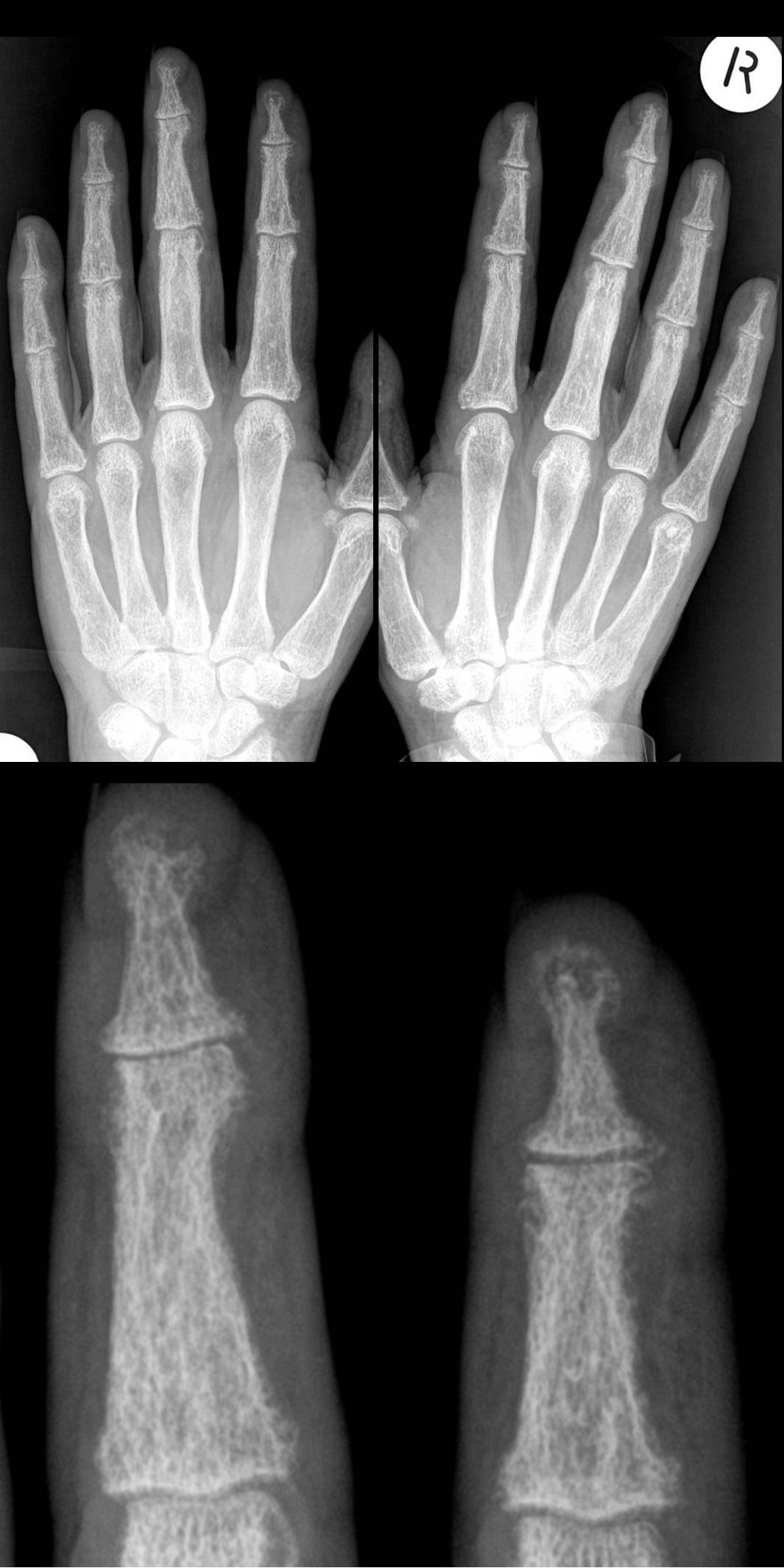
Bilateral hand radiographs in a middle-aged woman demonstrating generalised osteopenia, erosion of the terminal phalangeal tufts (acro-osteolysis) and subperiosteal resorption of bone particularly the radial aspects of the 2nd and 3rd middle phalanges. These changes are consistent with a diagnosis of hyperparathyroidism.
+PassMedicine Notes
Primary hyperparathyroidism is caused by excess secretion of PTH resulting in hypercalcaemia. It is the most common cause of hypercalcaemia in outpatients and is often diagnosed following an incidental finding of an elevated serum calcium concentration. In 85% of cases a parathyroid adenoma is responsible.
Causes of primary hyperparathyroidism- 85%: solitary adenoma
- 10%: hyperplasia
- 4%: multiple adenoma
- 1%: carcinoma
- polydipsia, polyuria
- depression
- anorexia, nausea, constipation
- peptic ulceration
- pancreatitis
- bone pain/fracture
- renal stones
- hypertension
- hypertension
- multiple endocrine neoplasia: MEN I and II
- bloods
- raised calcium, low phosphate
- PTH may be raised or (inappropriately, given the raised calcium) normal
- technetium-MIBI subtraction scan
- x-ray findings
- pepperpot skull
- osteitis fibrosa cystica
- the definitive management is total parathyroidectomy
- conservative management may be offered if the calcium level is less than 0.25 mmol/L above the upper limit of normal AND the patient is > 50 years AND there is no evidence of end-organ damage
- patients not suitable for surgery may be treated with cinacalcet, a calcimimetic
- a calcimimetic 'mimics' the action of calcium on tissues by allosteric activation of the calcium-sensing receptor
Management pathway of primary hyperparathyroidism