Highlighter is on. Drag to highlight text. Click a highlight to remove it.
ALL / Gastroenterology
Haemochromatosis: features
Haemochromatosis: features
Haemochromatosis is an autosomal recessive disorder of iron absorption and metabolism resulting in iron accumulation. It is caused by inheritance of mutations in the HFE gene on both copies of chromosome 6*. It is often asymptomatic in early disease and initial symptoms often non-specific e.g. lethargy and arthralgia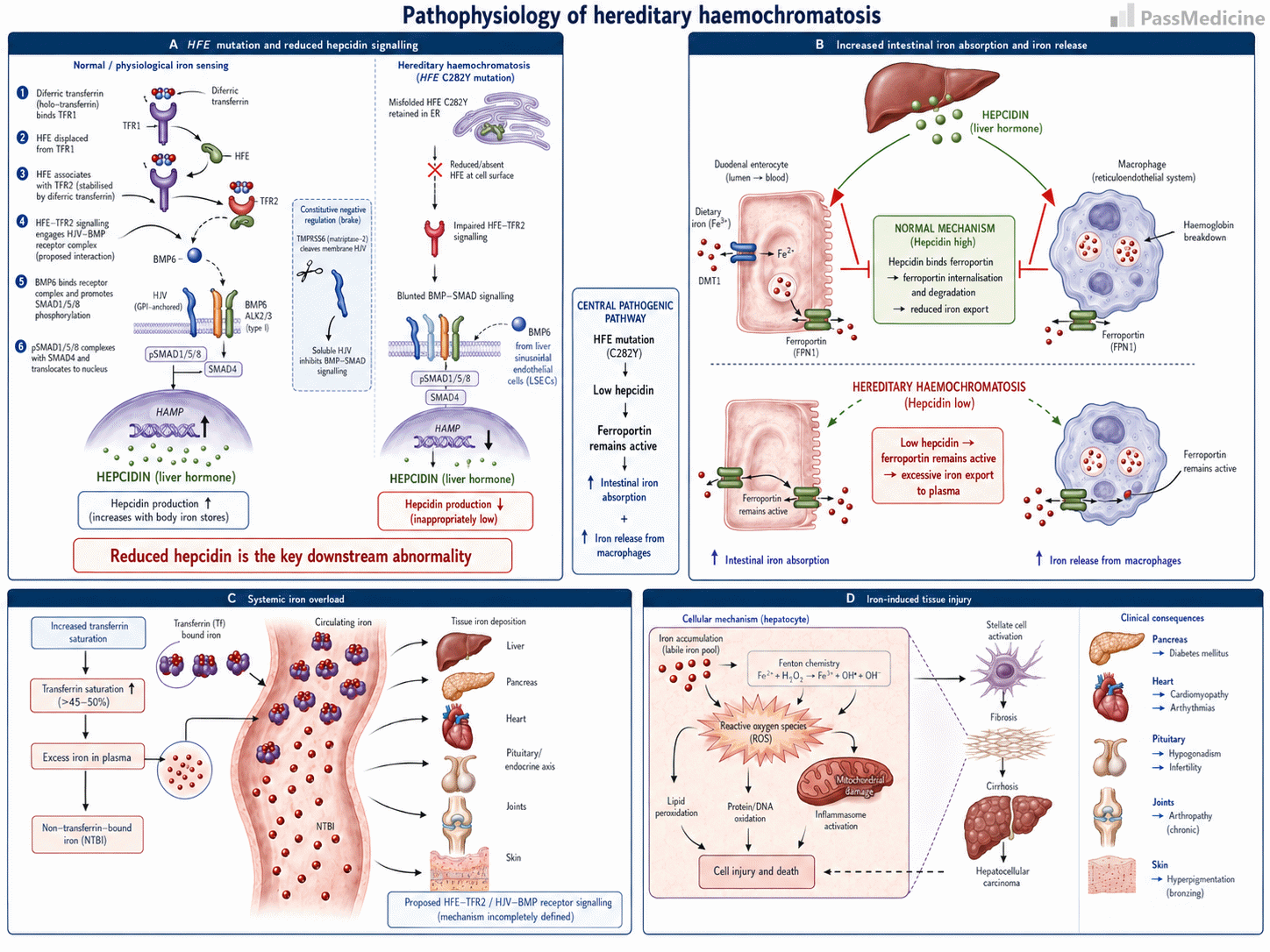
Pathophysiology of haemochromatosis
Epidemiology
- 1 in 10 people of European descent carry a mutation in the genes affecting iron metabolism, mainly HFE
- prevalence in people of European descent = 1 in 200, making it more common than cystic fibrosis
Presenting features
- early symptoms include fatigue, erectile dysfunction and arthralgia (often of the hands)
- 'bronze' skin pigmentation
- diabetes mellitus
- liver: stigmata of chronic liver disease, hepatomegaly, cirrhosis, hepatocellular deposition)
- cardiac failure (2nd to dilated cardiomyopathy)
- hypogonadism (2nd to cirrhosis and pituitary dysfunction - hypogonadotrophic hypogonadism)
- arthopathy
- chronic haemochromatosis arthropathy: gradual joint pain, stiffness and bony enlargement, classically affecting the second and third MCP joints bilaterally.
- associated calcium pyrophosphate deposition (CPPD) crystal arthritis: acute episodes of painful, warm, swollen joints (pseudogout), commonly affecting the knees or wrists.
Questions have previously been asked regarding which features are reversible with treatment:
| Reversible complications | Irreversible complications |
|---|---|
|
|
*there are rare cases of families with classic features of genetic haemochromatosis but no mutation in the HFE gene
**whilst elevated liver function tests and hepatomegaly may be reversible, cirrhosis is not
+PassMedicine Notes
Haemochromatosis is an autosomal recessive disorder of iron absorption and metabolism resulting in iron accumulation. It is caused by inheritance of mutations in the HFE gene on both copies of chromosome 6*. It is often asymptomatic in early disease and initial symptoms often non-specific e.g. lethargy and arthralgia
Epidemiology- 1 in 10 people of European descent carry a mutation in the genes affecting iron metabolism, mainly HFE
- prevalence in people of European descent = 1 in 200, making it more common than cystic fibrosis
- early symptoms include fatigue, erectile dysfunction and arthralgia (often of the hands)
- 'bronze' skin pigmentation
- diabetes mellitus
- liver: stigmata of chronic liver disease, hepatomegaly, cirrhosis, hepatocellular deposition)
- cardiac failure (2nd to dilated cardiomyopathy)
- hypogonadism (2nd to cirrhosis and pituitary dysfunction - hypogonadotrophic hypogonadism)
- arthopathy
- chronic haemochromatosis arthropathy: gradual joint pain, stiffness and bony enlargement, classically affecting the second and third MCP joints bilaterally.
- associated calcium pyrophosphate deposition (CPPD) crystal arthritis: acute episodes of painful, warm, swollen joints (pseudogout), commonly affecting the knees or wrists.
Questions have previously been asked regarding which features are reversible with treatment:
Reversible complications_Irreversible complications|- Cardiomyopathy
- Skin pigmentation
- Liver cirrhosis**
- Diabetes mellitus
- Hypogonadotrophic hypogonadism
- Arthropathy|