Highlighter is on. Drag to highlight text. Click a highlight to remove it.
ALL / Neurology
Tuberous sclerosis
Tuberous sclerosis
Tuberous sclerosis (TS) is a genetic condition of autosomal dominant inheritance. Like neurofibromatosis, the majority of features seen in TS are neurocutaneous.Cutaneous features
- depigmented 'ash-leaf' spots which fluoresce under UV light
- roughened patches of skin over lumbar spine (Shagreen patches)
- adenoma sebaceum (angiofibromas): butterfly distribution over nose
- fibromata beneath nails (subungual fibromata)
- cafe-au-lait spots* may be seen
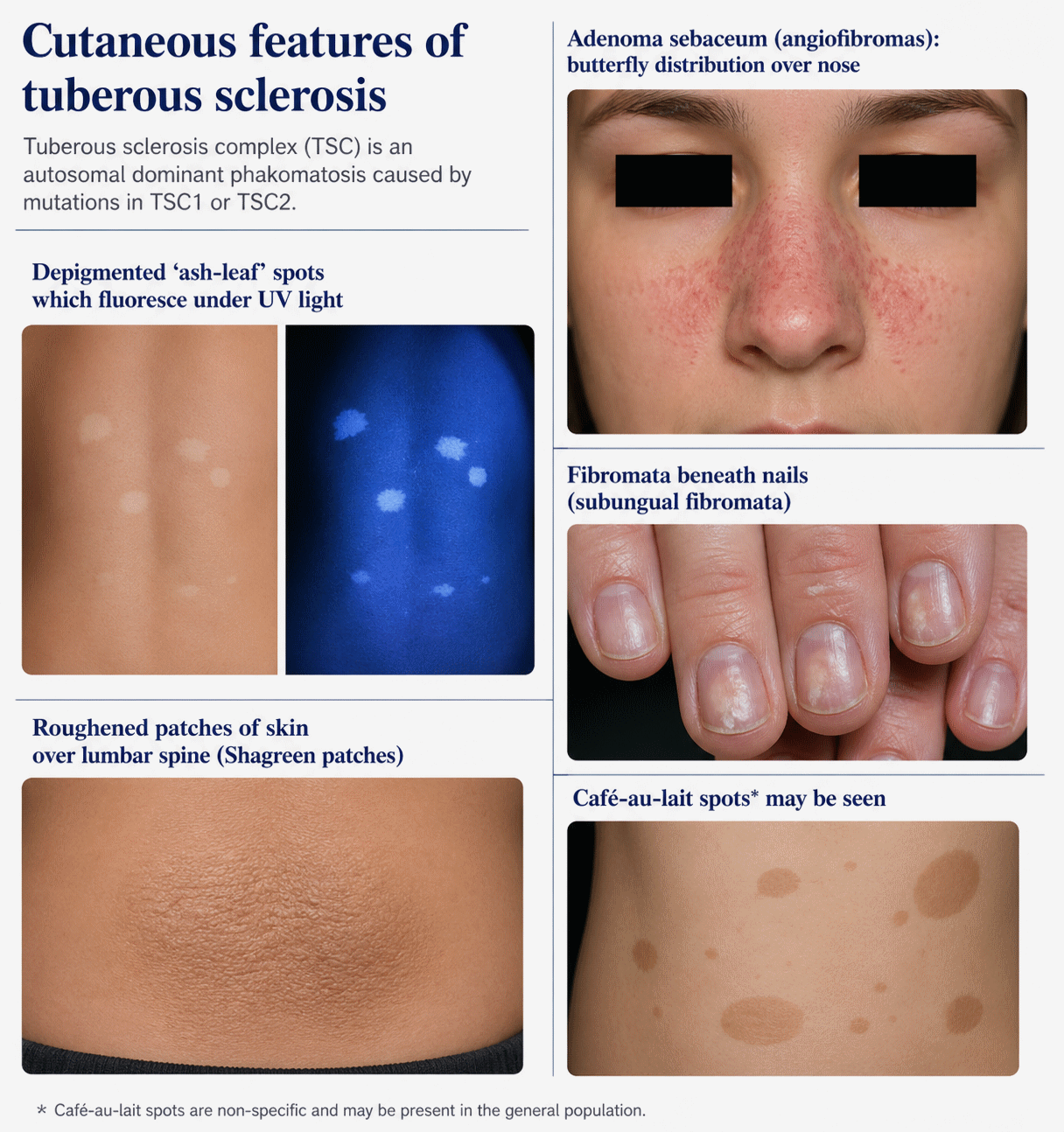
Cutaneous features of tuberous sclerosis
Neurological features
- developmental delay
- epilepsy (infantile spasms or partial)
- intellectual impairment
Also
- retinal hamartomas: dense white areas on retina (phakomata)
- rhabdomyomas of the heart
- gliomatous changes can occur in the brain lesions
- polycystic kidneys, renal angiomyolipomata
- lymphangioleiomyomatosis: multiple lung cysts
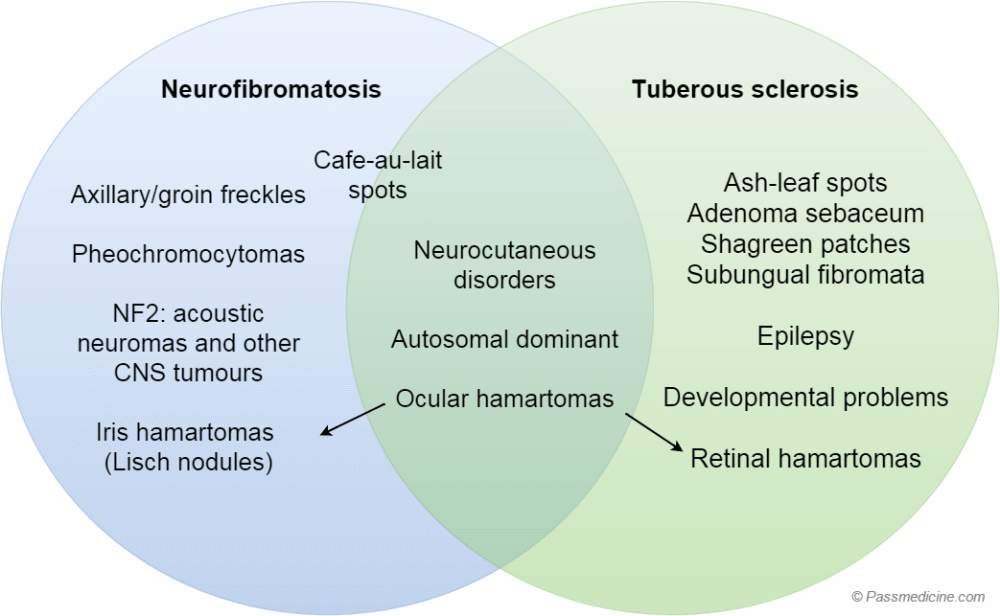
Comparison of neurofibromatosis and tuberous sclerosis. Note that whilst they are both autosomal dominant neurocutaneous disorders there is little overlap otherwise
*these of course are more commonly associated with neurofibromatosis. However a 1998 study of 106 children with TS found cafe-au-lait spots in 28% of patients
+PassMedicine Notes
Tuberous sclerosis (TS) is a genetic condition of autosomal dominant inheritance. Like neurofibromatosis, the majority of features seen in TS are neurocutaneous.
Cutaneous features- depigmented 'ash-leaf' spots which fluoresce under UV light
- roughened patches of skin over lumbar spine (Shagreen patches)
- adenoma sebaceum (angiofibromas): butterfly distribution over nose
- fibromata beneath nails (subungual fibromata)
- cafe-au-lait spots* may be seen
- developmental delay
- epilepsy (infantile spasms or partial)
- intellectual impairment
- retinal hamartomas: dense white areas on retina (phakomata)
- rhabdomyomas of the heart
- gliomatous changes can occur in the brain lesions
- polycystic kidneys, renal angiomyolipomata
- lymphangioleiomyomatosis: multiple lung cysts
*these of course are more commonly associated with neurofibromatosis. However a 1998 study of 106 children with TS found cafe-au-lait spots in 28% of patients