Highlighter is on. Drag to highlight text. Click a highlight to remove it.
ALL / Rheumatology
Polyarteritis nodosa
Polyarteritis nodosa
Polyarteritis nodosa (PAN) is a vasculitis affecting medium-sized arteries with necrotizing inflammation leading to aneurysm formation. PAN is more common in middle-aged men and is associated with hepatitis B infection.Features
- fever, malaise, arthralgia
- weight loss
- hypertension
- mononeuritis multiplex, sensorimotor polyneuropathy
- testicular pain
- due to arterial narrowing or occlusion → testicular ischaemia
- livedo reticularis
- haematuria, renal failure
- perinuclear-antineutrophil cytoplasmic antibodies (ANCA) are found in around 20% of patients with 'classic' PAN
- hepatitis B serology positive in 30% of patients
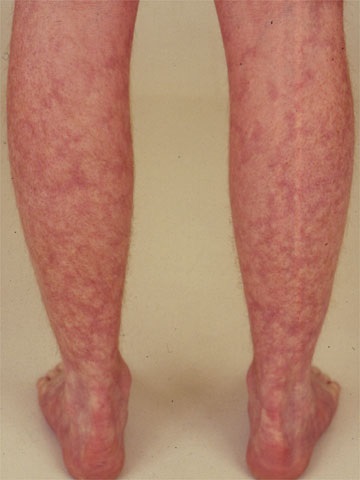
Livedo reticularis
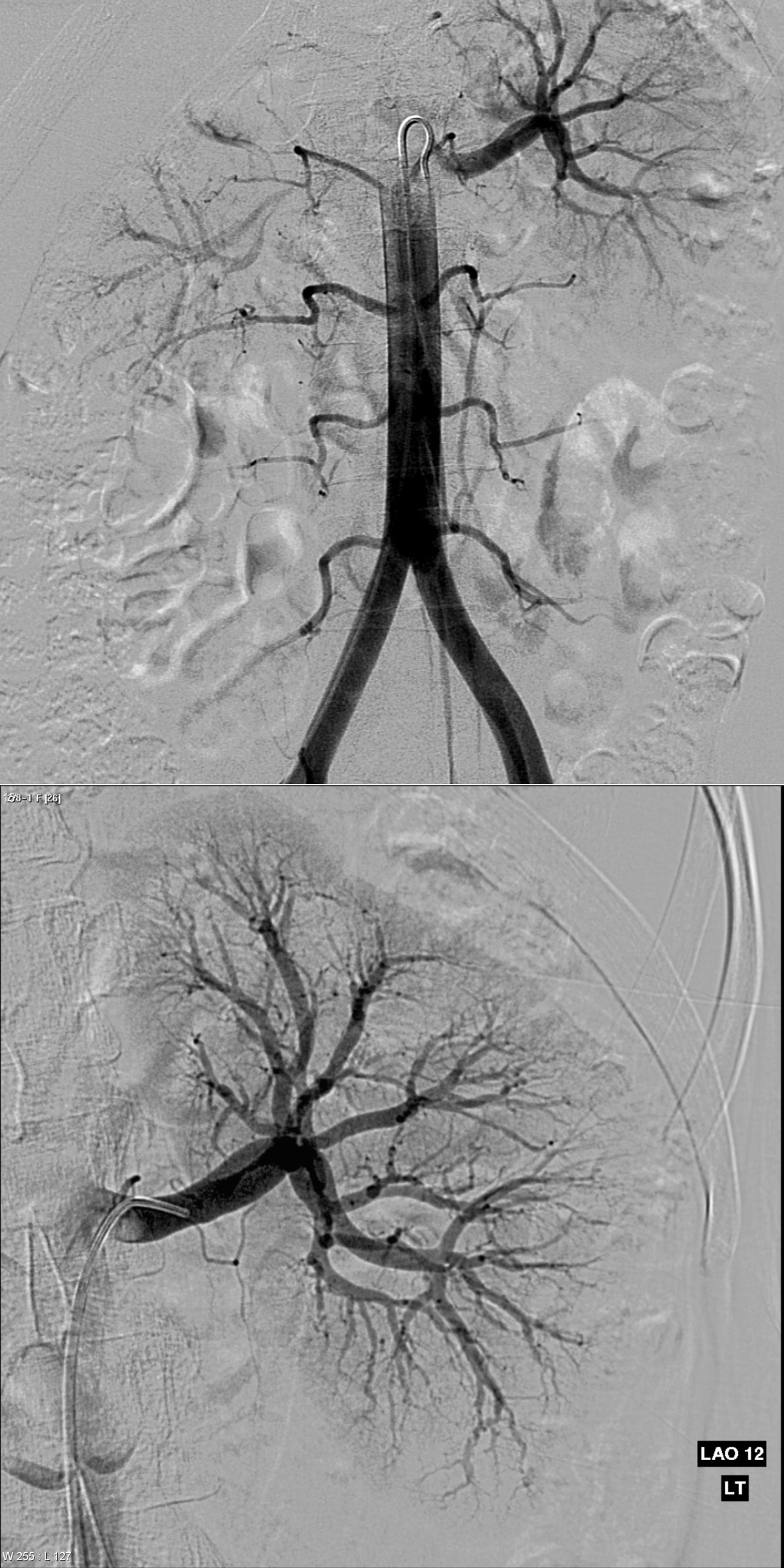

Angiogram from a patient with polyarteritis nodosa. Both kidneys demonstrate beading and numerous microaneurysms affecting the intrarenal vessels. Similar changes are seen affecting the intrahepatic vessels with a few small microaneurysms noted. The proximal branches of the SMA appears normal; however there are no normal straight arteries from the jejunal arteries and lack of normal anastomotic arcades and loops. This is associated with multiple microaneurysms.
+PassMedicine Notes
Polyarteritis nodosa (PAN) is a vasculitis affecting medium-sized arteries with necrotizing inflammation leading to aneurysm formation. PAN is more common in middle-aged men and is associated with hepatitis B infection.
Features- fever, malaise, arthralgia
- weight loss
- hypertension
- mononeuritis multiplex, sensorimotor polyneuropathy
- testicular pain
- due to arterial narrowing or occlusion --> testicular ischaemia
- livedo reticularis
- haematuria, renal failure
- perinuclear-antineutrophil cytoplasmic antibodies (ANCA) are found in around 20% of patients with 'classic' PAN
- hepatitis B serology positive in 30% of patients