Highlighter is on. Drag to highlight text. Click a highlight to remove it.
ALL / Respiratory Medicine
Allergic bronchopulmonary aspergillosis
Allergic bronchopulmonary aspergillosis
Allergic bronchopulmonary aspergillosis results from an allergy to Aspergillus spores. In the exam questions often give a history of bronchiectasis and eosinophilia.Features
- bronchoconstriction: wheeze, cough, dyspnoea. Patients may have a previous label of asthma
- bronchiectasis (proximal)
Investigations
- eosinophilia
- flitting CXR changes
- positive radioallergosorbent (RAST) test to Aspergillus
- positive IgG precipitins (not as positive as in aspergilloma)
- raised IgE
Management
- oral glucocorticoids
- itraconazole is sometimes introduced as a second-line agent
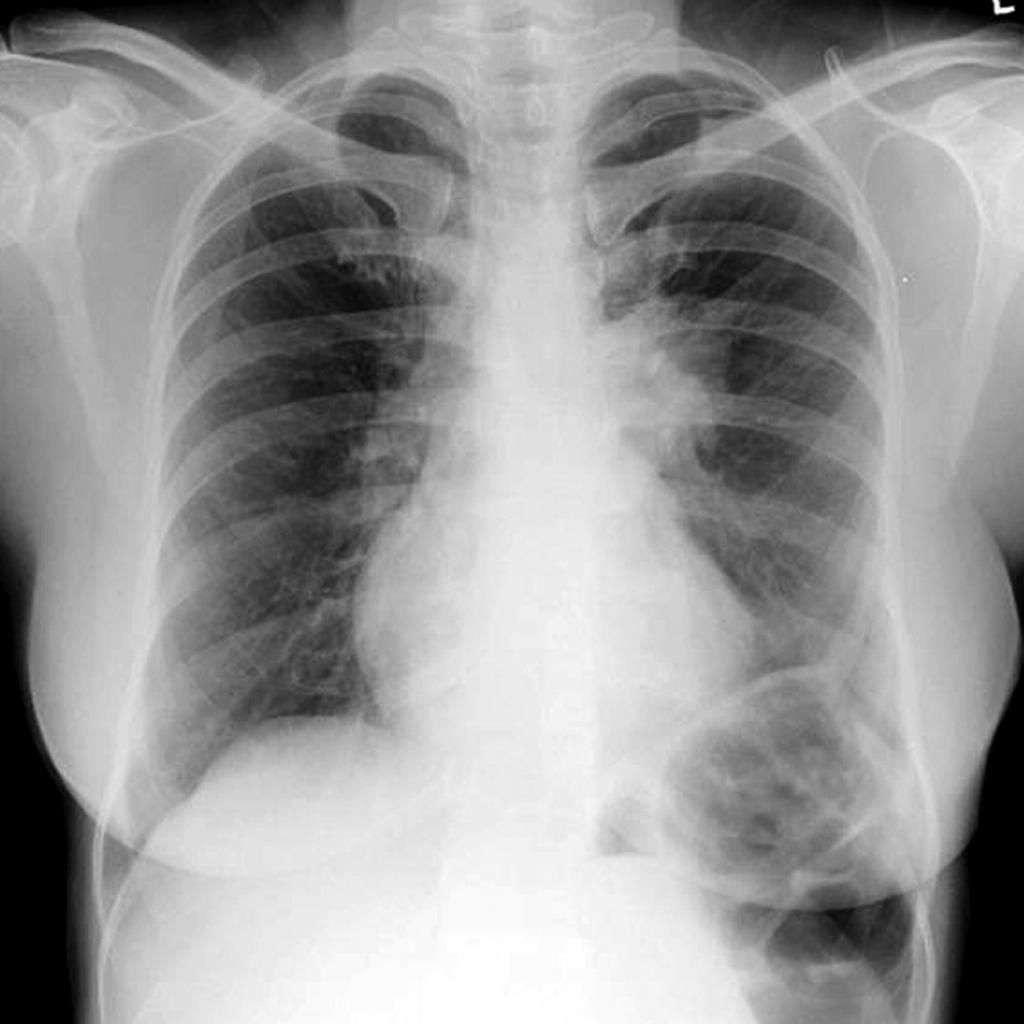
Chest x-ray of a 40-year-old woman with ABPA demonstrating a mass overlying the left hilum. In the right upper parahilar region a few ring shadow / tram track opacities are also noted, suggestive of bronchiectasis
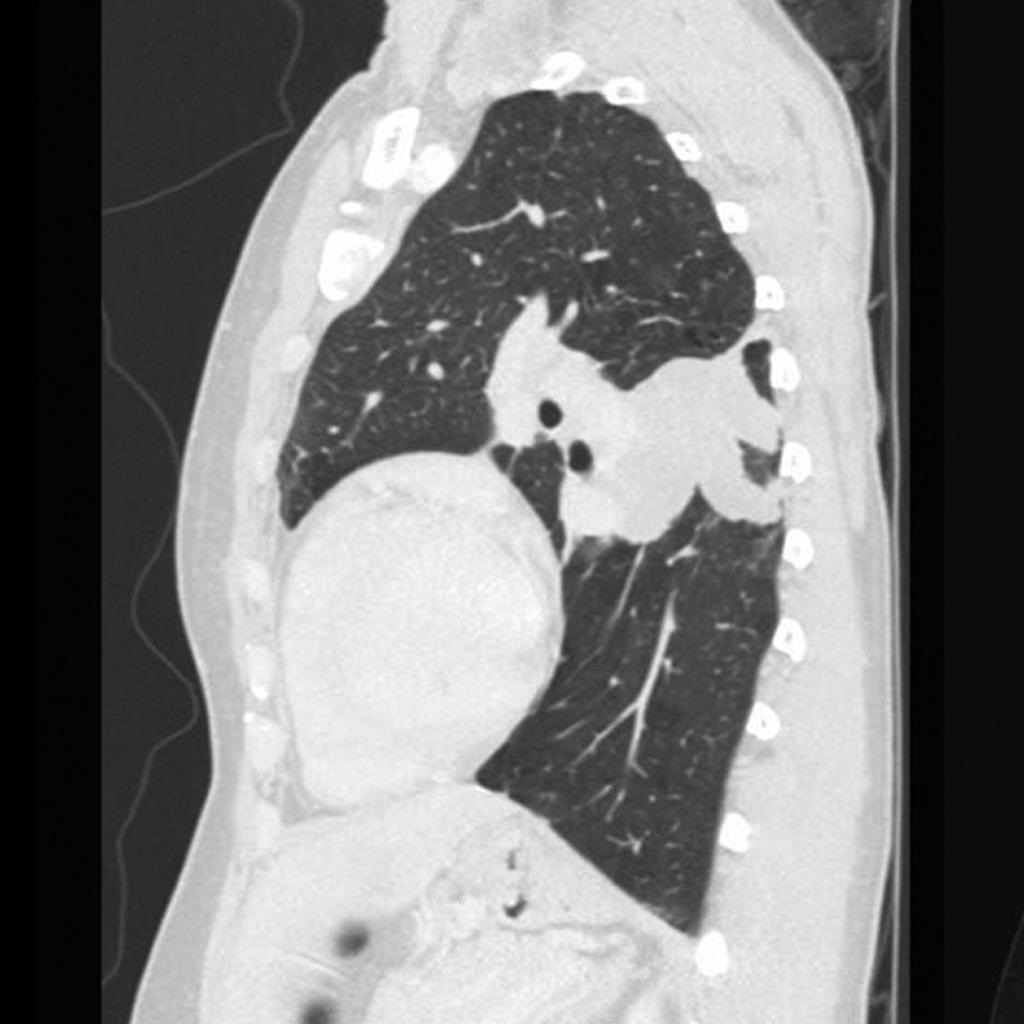
CT scan from the same patient. CT reveals a branching lesion in the superior segment of the left lower lobe with classic finger in glove appearance which represents of mucous filling dilated bronchi (i.e. bronchocoeles). Bronchocoeles are a common feature of allergic bronchopulmonary aspergillosis (ABPA)
+PassMedicine Notes
Allergic bronchopulmonary aspergillosis results from an allergy to Aspergillus spores. In the exam questions often give a history of bronchiectasis and eosinophilia.
Features- bronchoconstriction: wheeze, cough, dyspnoea. Patients may have a previous label of asthma
- bronchiectasis (proximal)
- eosinophilia
- flitting CXR changes
- positive radioallergosorbent (RAST) test to Aspergillus
- positive IgG precipitins (not as positive as in aspergilloma)
- raised IgE
- oral glucocorticoids
- itraconazole is sometimes introduced as a second-line agent