Highlighter is on. Drag to highlight text. Click a highlight to remove it.
ALL / Dermatology
Bullous pemphigoid
Bullous pemphigoid
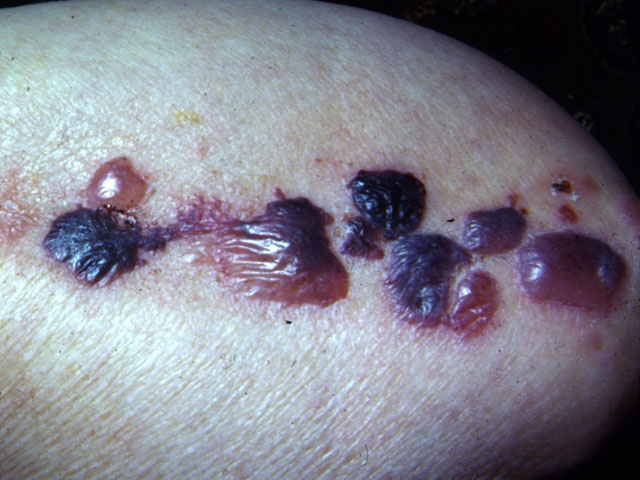
Bullous pemphigoid is an autoimmune condition causing sub-epidermal blistering of the skin. This is secondary to the development of antibodies against hemidesmosomal proteins BP180 and BP230.Bullous pemphigoid is more common in elderly patients. Features include
- itchy, tense blisters typically around flexures
- the blisters usually heal without scarring
- there is stereotypically no mucosal involvement (i.e. the mouth is spared)
- in reality around 10-50% of patients have a degree of mucosal involvement. It would, however, be unusual for an exam question to mention mucosal involvement as it is seen as a classic differentiating feature between pemphigoid and pemphigus.
Bullous pemphigoid
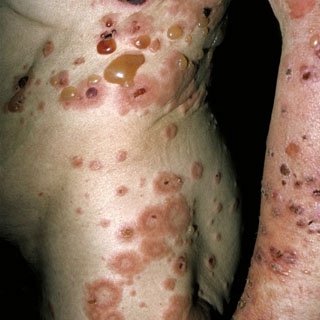
Image used on license from DermNet NZ and with the kind permission of Prof Raimo Suhonen
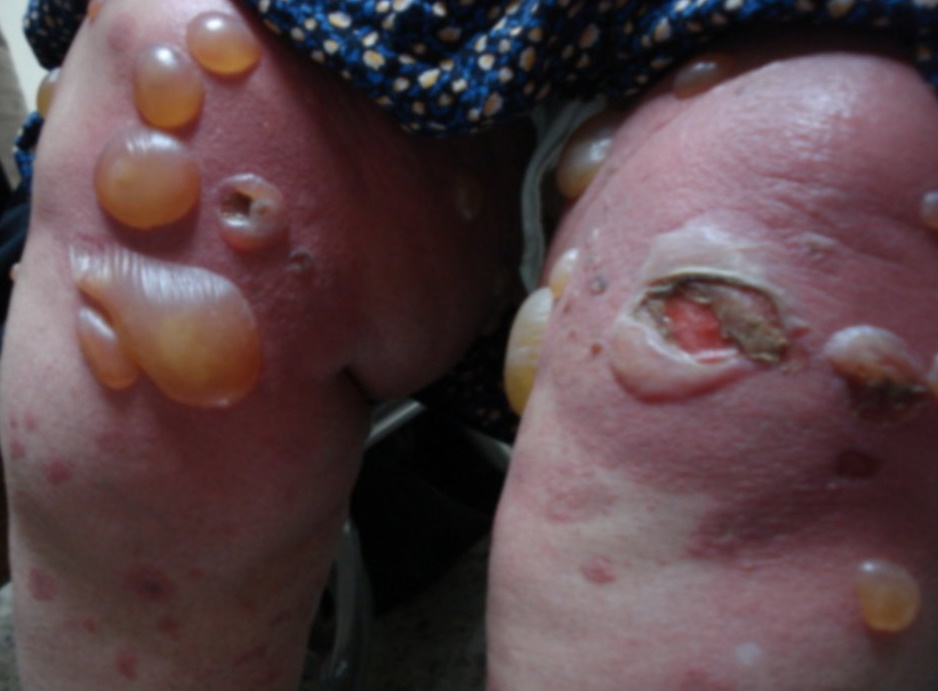
Bullous pemphigoid. The image shows tense bullae with surrounding erythema on the legs of a wheelchair-bound elderly woman. there was no mucosal involvement.
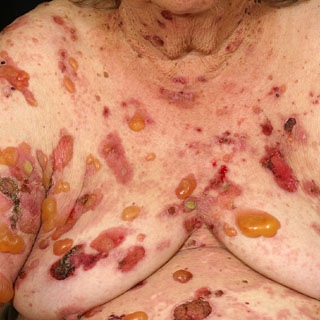
Image used on license from DermNet NZ and with the kind permission of Prof Raimo Suhonen
Skin biopsy
- immunofluorescence shows IgG and C3 at the dermoepidermal junction
Management
- referral to a dermatologist for biopsy and confirmation of diagnosis
- oral corticosteroids are the mainstay of treatment
- topical corticosteroids, immunosuppressants and antibiotics are also used
+PassMedicine Notes
Bullous pemphigoid is an autoimmune condition causing sub-epidermal blistering of the skin. This is secondary to the development of antibodies against hemidesmosomal proteins BP180 and BP230.
Bullous pemphigoid is more common in elderly patients. Features include- itchy, tense blisters typically around flexures
- the blisters usually heal without scarring
- there is stereotypically no mucosal involvement (i.e. the mouth is spared)
- in reality around 10-50% of patients have a degree of mucosal involvement. It would, however, be unusual for an exam question to mention mucosal involvement as it is seen as a classic differentiating feature between pemphigoid and pemphigus.
- immunofluorescence shows IgG and C3 at the dermoepidermal junction
- referral to a dermatologist for biopsy and confirmation of diagnosis
- oral corticosteroids are the mainstay of treatment
- topical corticosteroids, immunosuppressants and antibiotics are also used