Highlighter is on. Drag to highlight text. Click a highlight to remove it.
ALL / Cardiology
Heparin
Heparin
There are two main types of heparin - unfractionated, 'standard' heparin or low molecular weight heparin (LMWH). Heparins generally act by activating antithrombin III. Unfractionated heparin forms a complex which inhibits thrombin, factors Xa, IXa, XIa and XIIa. LMWH however only increases the action of antithrombin III on factor Xa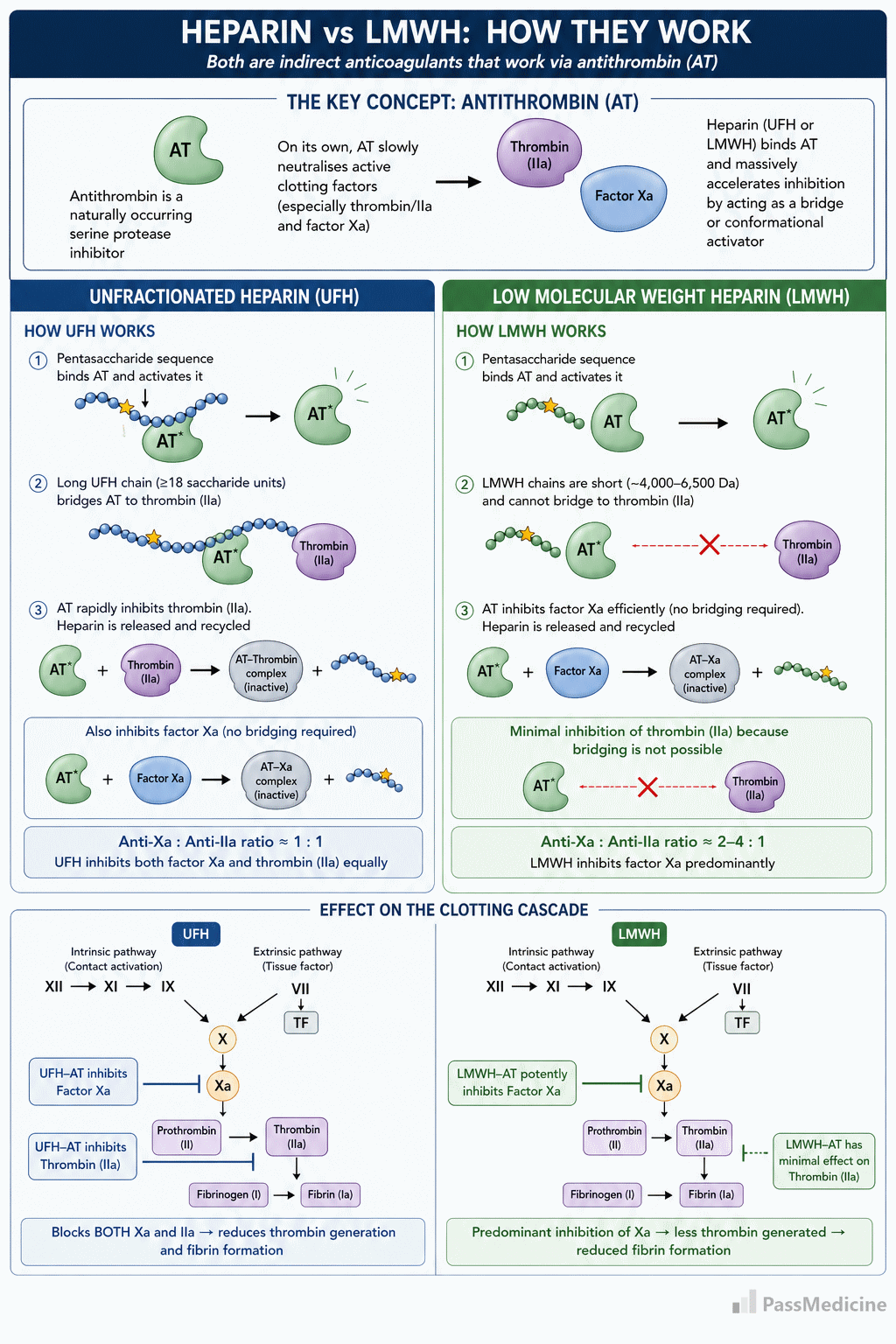
Mechanism of action of heparin and LMWH
Adverse effects of heparins include:
- bleeding
- thrombocytopenia - see below
- osteoporosis and an increased risk of fractures
- hyperkalaemia - this is thought to be caused by inhibition of aldosterone secretion
The table below shows the differences between standard heparin and LMWH:
| Standard heparin | Low molecular weight heparin (LMWH) | |
|---|---|---|
| Administration | Intravenous | Subcutaneous |
| Duration of action | Short | Long |
| Mechanism of action | Activates antithrombin III. Forms a complex that inhibits thrombin, factors Xa, IXa, Xia and XIIa | Activates antithrombin III. Forms a complex that inhibits factor Xa |
| Side-effects | Bleeding Heparin-induced thrombocytopaenia (HIT) Osteoporosis | Bleeding Lower risk of HIT and osteoporosis with LMWH |
| Monitoring | Activated partial thromboplastin time (APTT) | Anti-Factor Xa (although routine monitoring is not required) |
| Notes | Useful in situations where there is a high risk of bleeding as anticoagulation can be terminated rapidly. Also useful in renal failure | Now standard in the management of venous thromboembolism treatment and prophylaxis and acute coronary syndromes |
Heparin-induced thrombocytopaenia (HIT)
Immune-mediated adverse reaction to heparin causing thrombocytopenia and paradoxical thrombosis.
Pathophysiology
- IgG antibodies form against platelet factor 4 (PF4)–heparin complexes
- Antibody binding activates platelets by by cross-linking FcγIIA receptors → thrombosis and platelet consumption.
Types
- Type I: mild, non-immune, early (within 1–2 days), transient, not clinically significant.
- Type II: immune-mediated, typically 5–14 days after exposure, associated with thrombosis.
Clinical features
- Platelet count fall >50% from baseline.
- Occurs 5–14 days after starting heparin (earlier if previously exposed).
- Venous and arterial thromboses (DVT, PE, limb ischaemia, MI, stroke).
- Skin necrosis at injection sites.
Investigations
- 4T score to assess probability.
- Confirm with HIT antibody (anti-PF4 ELISA) ± functional assays (serotonin release assay).
Management
- Stop all heparin immediately (including flushes).
- Avoid LMWH as cross-reactivity occurs.
- Start alternative anticoagulant. Options include:
- Direct thrombin inhibitors: e.g. argatroban, bivalirudin (particularly useful if renal impairment or rapid reversal needed)
- Danaparoid
- Direct oral anticoagulants (DOACs)
- Do not transfuse platelets unless life-threatening bleeding.
- Document allergy and avoid future heparin exposure.
Heparin overdose
Heparin overdose may be reversed by protamine sulphate, although this only partially reverses the effect of LMWH.
+PassMedicine Notes
There are two main types of heparin - unfractionated, 'standard' heparin or low molecular weight heparin (LMWH). Heparins generally act by activating antithrombin III. Unfractionated heparin forms a complex which inhibits thrombin, factors Xa, IXa, XIa and XIIa. LMWH however only increases the action of antithrombin III on factor Xa
Adverse effects of heparins include:- bleeding
- thrombocytopenia - see below
- osteoporosis and an increased risk of fractures
- hyperkalaemia - this is thought to be caused by inhibition of aldosterone secretion
The table below shows the differences between standard heparin and LMWH:
_Standard heparin _ Low molecular weight heparin (LMWH)| Administration _ Intravenous _ Subcutaneous| Duration of action _ Short _ Long| Mechanism of action _ Activates antithrombin III. Forms a complex that inhibits thrombin, factors Xa, IXa, Xia and XIIa _ Activates antithrombin III. Forms a complex that inhibits factor Xa| Side-effects _ Bleeding Heparin-induced thrombocytopaenia (HIT) Osteoporosis _ Bleeding Lower risk of HIT and osteoporosis with LMWH| Monitoring_ Activated partial thromboplastin time (APTT) _ Anti-Factor Xa (although routine monitoring is not required)| Notes _ Useful in situations where there is a high risk of bleeding as anticoagulation can be terminated rapidly. Also useful in renal failure _ Now standard in the management of venous thromboembolism treatment and prophylaxis and acute coronary syndromes|Heparin-induced thrombocytopaenia (HIT)
Immune-mediated adverse reaction to heparin causing thrombocytopenia and paradoxical thrombosis.
Pathophysiology- IgG antibodies form against platelet factor 4 (PF4)–heparin complexes
- Antibody binding activates platelets by by cross-linking Fc#gamma#IIA receptors → thrombosis and platelet consumption.
- Type I: mild, non-immune, early (within 1–2 days), transient, not clinically significant.
- Type II: immune-mediated, typically 5–14 days after exposure, associated with thrombosis.
- Platelet count fall >50% from baseline.
- Occurs 5–14 days after starting heparin (earlier if previously exposed).
- Venous and arterial thromboses (DVT, PE, limb ischaemia, MI, stroke).
- Skin necrosis at injection sites.
- 4T score to assess probability.
- Confirm with HIT antibody (anti-PF4 ELISA) ± functional assays (serotonin release assay).
- Stop all heparin immediately (including flushes).
- Avoid LMWH as cross-reactivity occurs.
- Start alternative anticoagulant. Options include:
- Direct thrombin inhibitors: e.g. argatroban, bivalirudin (particularly useful if renal impairment or rapid reversal needed)
- Danaparoid
- Direct oral anticoagulants (DOACs)
- Do not transfuse platelets unless life-threatening bleeding.
- Document allergy and avoid future heparin exposure.
Heparin overdose
Heparin overdose may be reversed by protamine sulphate, although this only partially reverses the effect of LMWH.