Diabetic ketoacidosis
Diabetic ketoacidosis
Diabetic ketoacidosis (DKA) may be a complication of existing type 1 diabetes mellitus or be the first presentation, accounting for around 6% of cases. Rarely, under conditions of extreme stress, patients with type 2 diabetes mellitus may also develop DKA.Whilst DKA remains a serious condition, mortality rates have decreased from 8% to under 1% in the past 20 years.
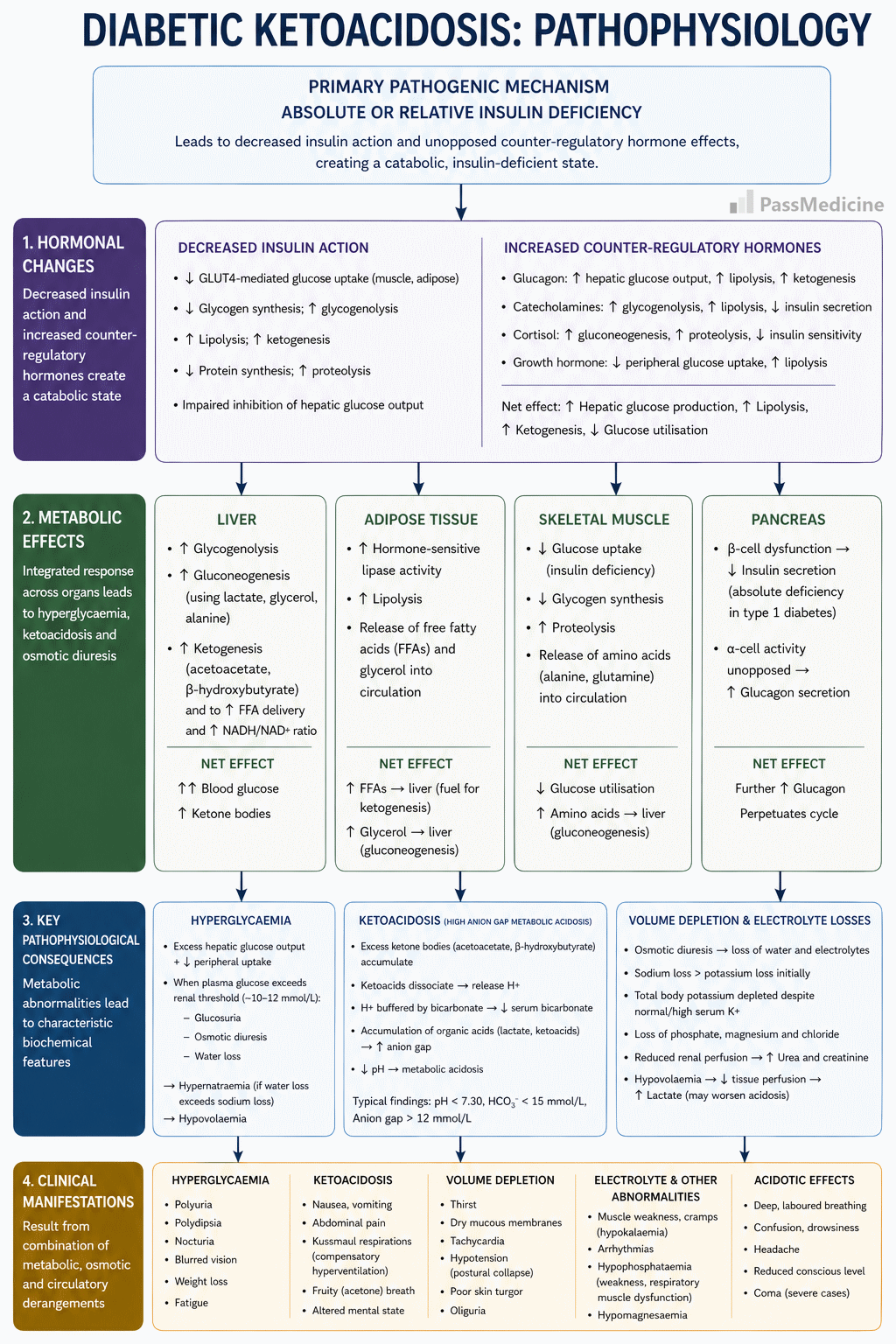
Pathophysiology
- DKA is caused by uncontrolled lipolysis (not proteolysis) which results in an excess of free fatty acids that are ultimately converted to ketone bodies
- Absolute or relative insulin deficiency, together with increased counter-regulatory hormones (especially glucagon), drives hepatic gluconeogenesis and glycogenolysis → hyperglycaemia
- Hyperglycaemia exceeds the renal threshold → glycosuria → osmotic diuresis
- Leads to loss of water and electrolytes (including potassium), explaining the dehydration, tachycardia, and hypotension seen clinically
- Uncontrolled lipolysis releases free fatty acids → hepatic ketogenesis
- Produces 3-beta-hydroxybutyrate, acetoacetate, and acetone (responsible for fruity breath)
- Accumulation of ketones → metabolic acidosis
- Drives Kussmaul respiration and contributes to nausea, vomiting, and abdominal pain
- Potassium imbalance:
- Total body potassium is depleted due to urinary losses from osmotic diuresis and vomiting
- Serum potassium may initially be normal or raised due to acidosis and insulin deficiency shifting potassium out of cells
- Potassium levels often fall rapidly with treatment (especially insulin), creating a risk of arrhythmias
The most common precipitating factors of DKA are infection, missed insulin doses and myocardial infarction.
Features
- abdominal pain
- polyuria, polydipsia, dehydration
- Kussmaul respiration (deep hyperventilation)
- Acetone-smelling breath ('pear drops' smell)
Diagnostic criteria
| American Diabetes Association (2009) | Joint British Diabetes Societies (2013) |
|---|---|
Key points
| Key points
|
Management
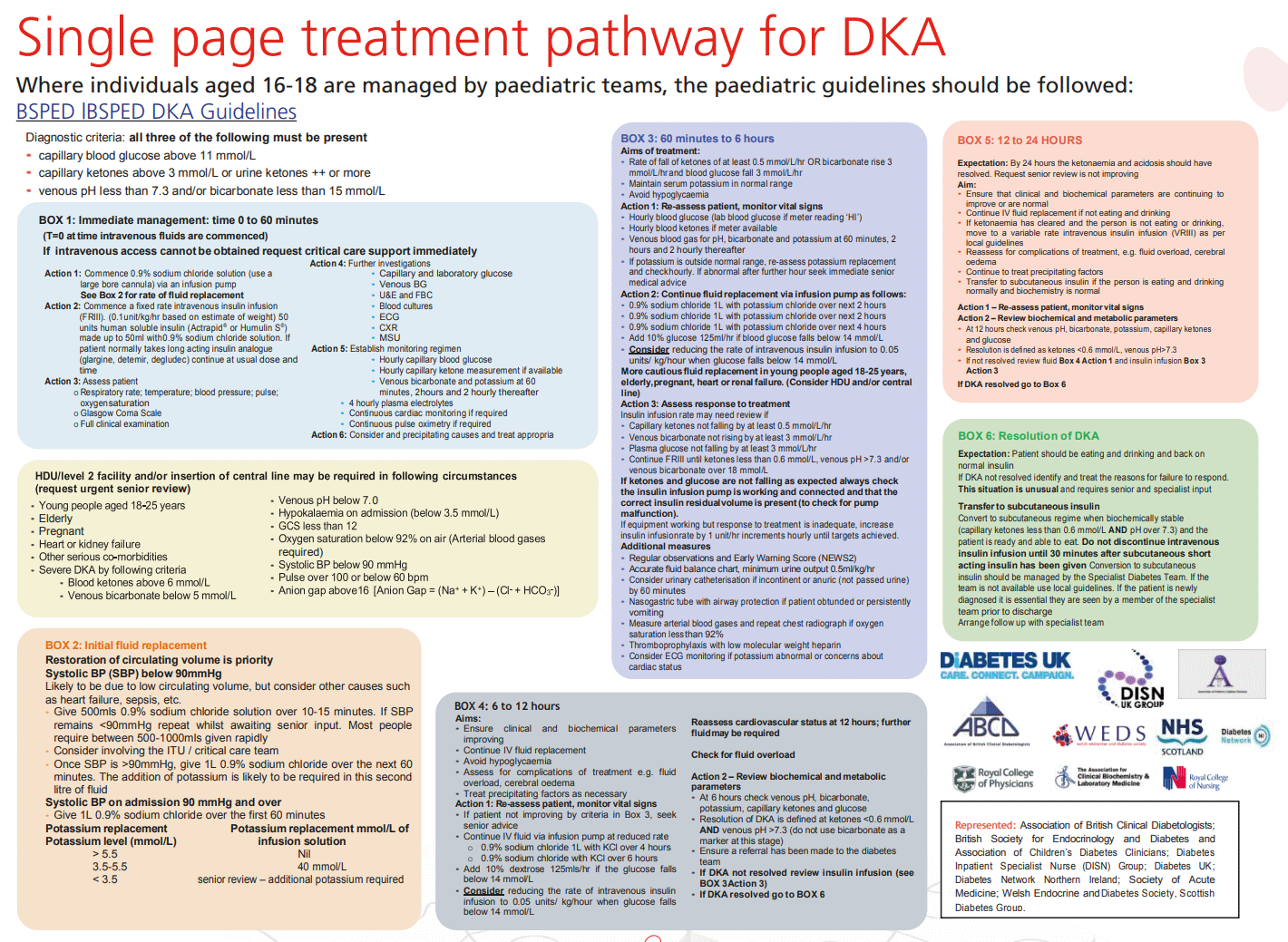
Main principles of management
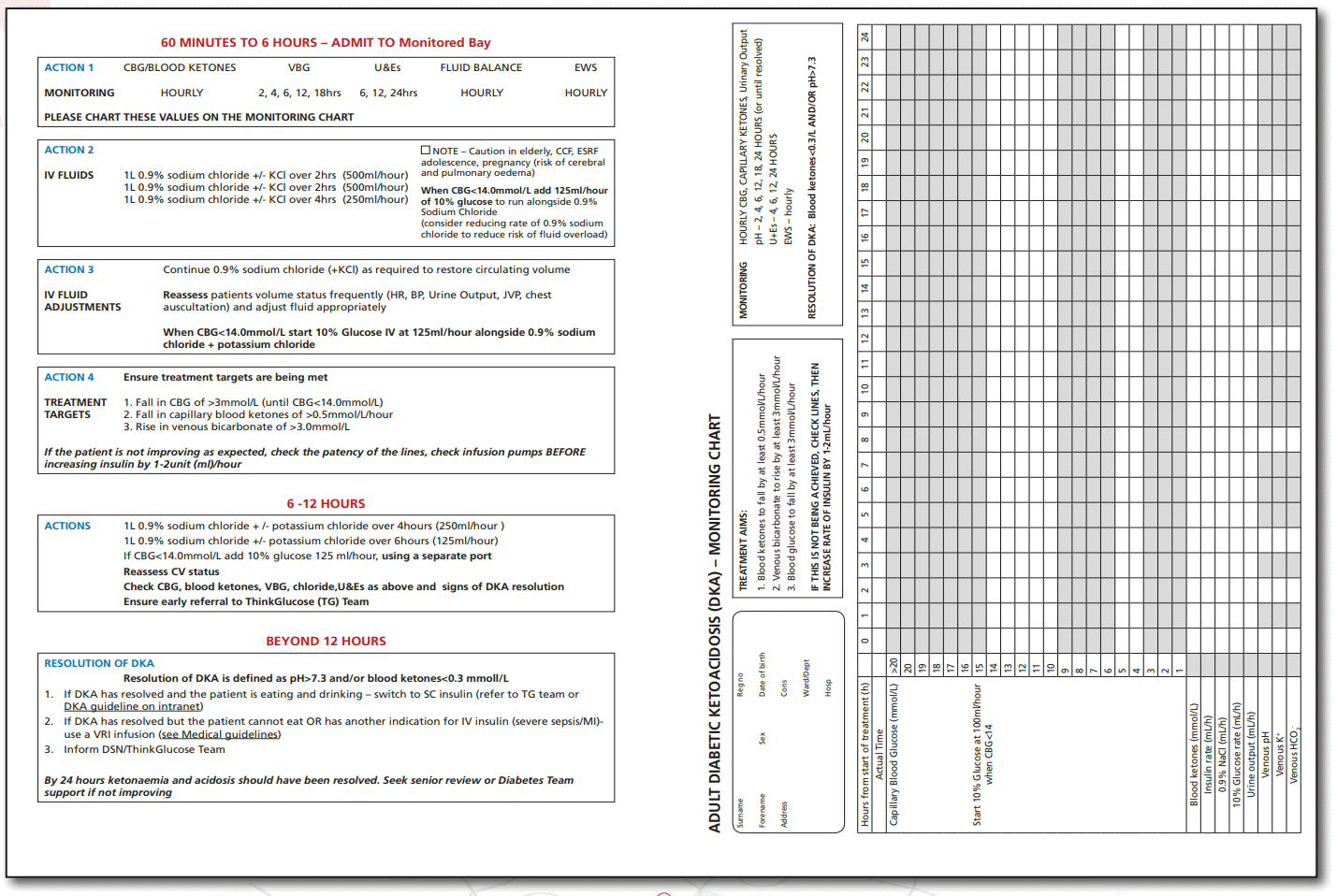
- fluid replacement
- most patients with DKA are deplete around 5-8 litres
- isotonic saline is used initially, even if the patient is severely acidotic
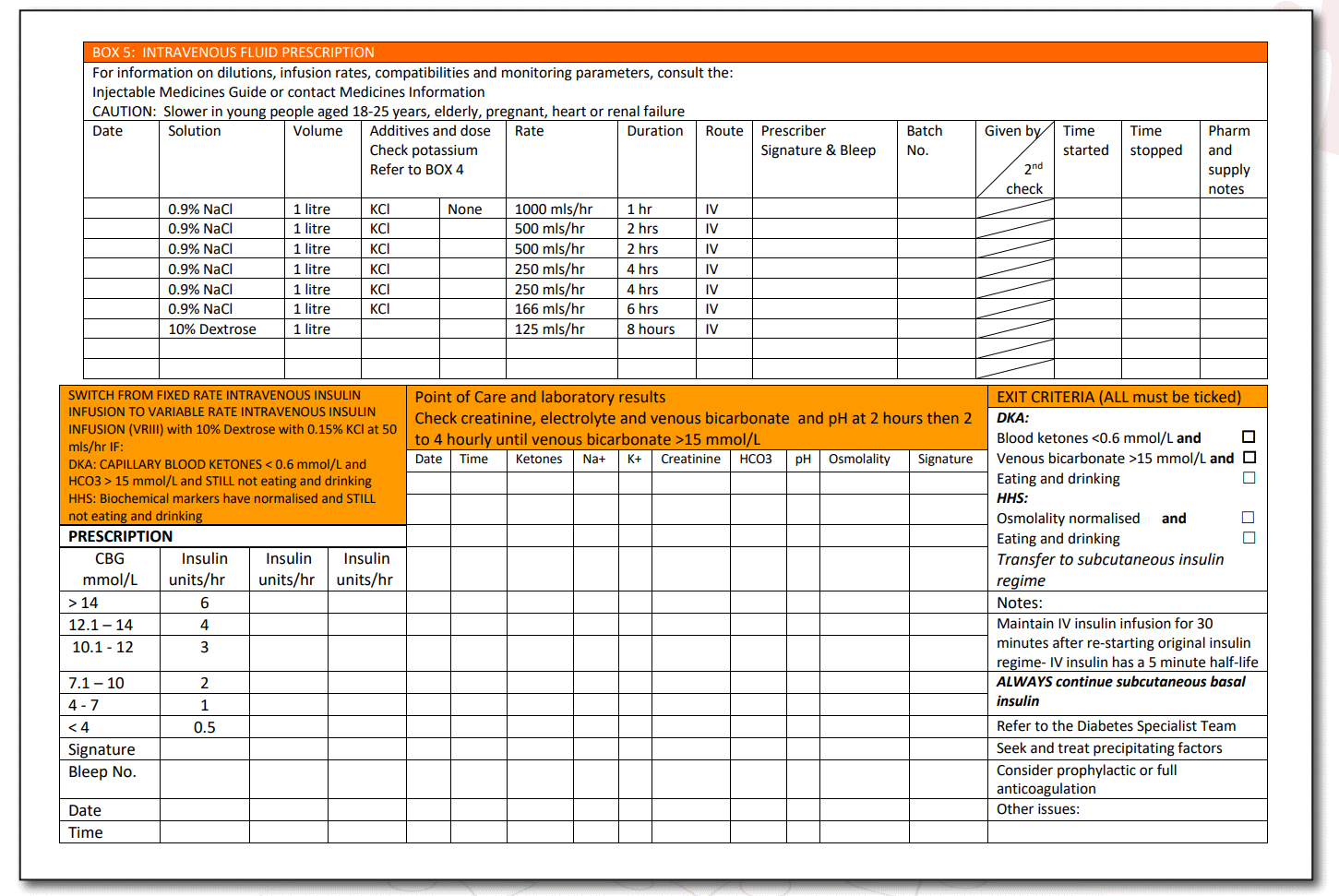
- please see an example fluid regime below.
- insulin
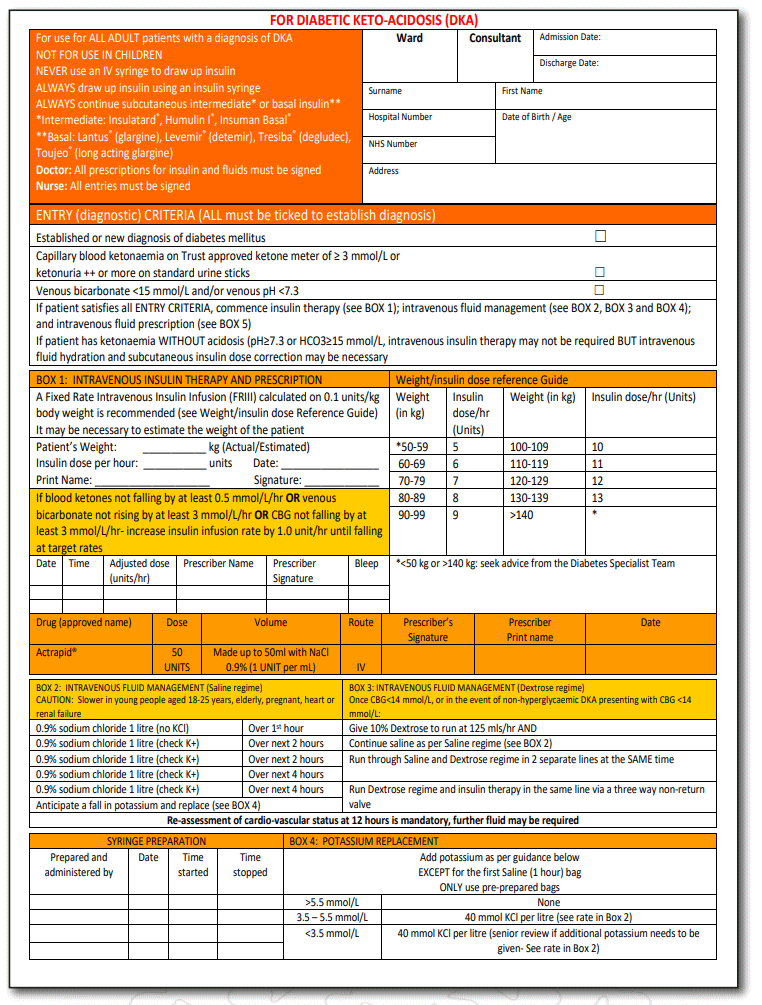
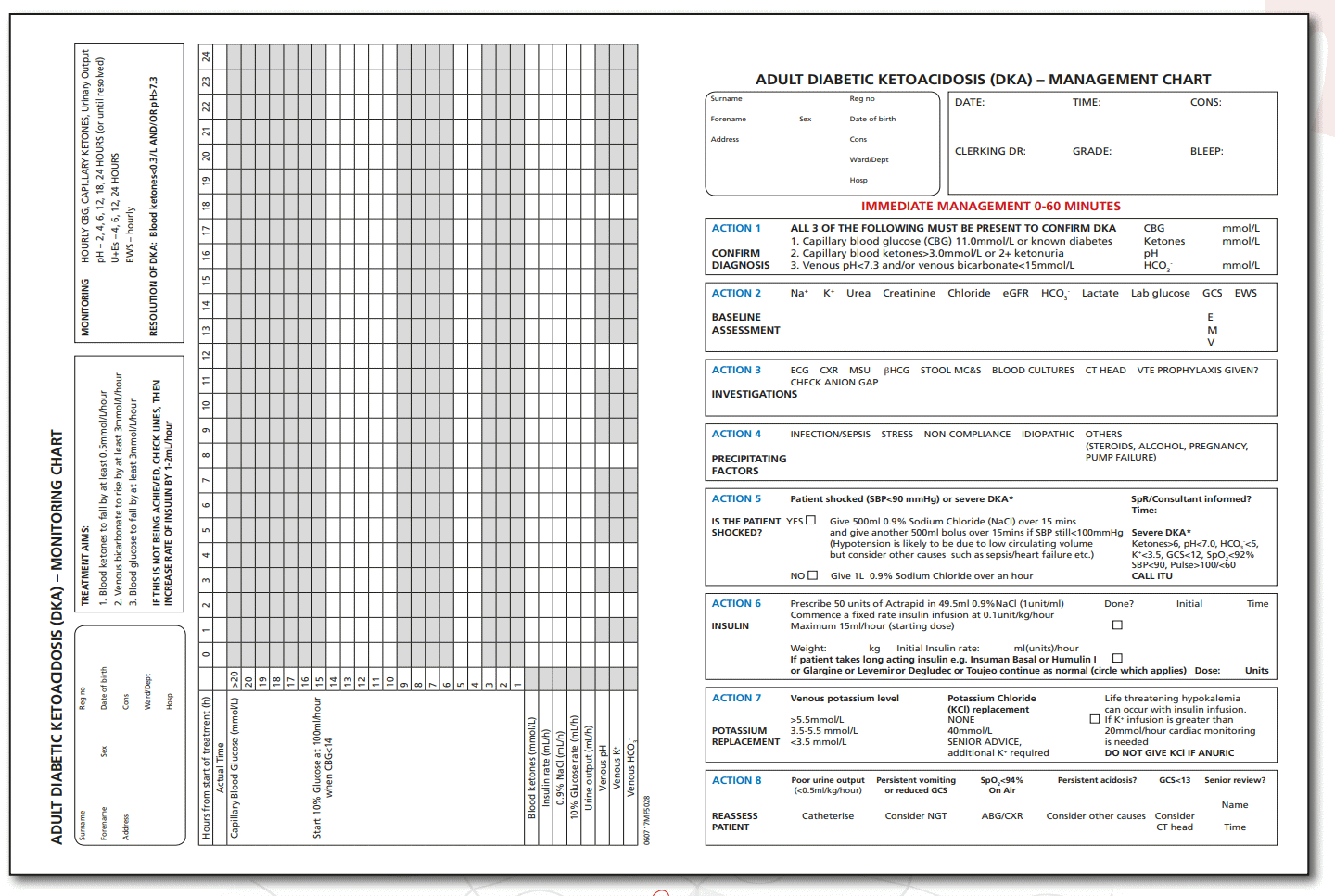
- an intravenous infusion should be started at 0.1 unit/kg/hour
- once blood glucose is < 14 mmol/l an infusion of 10% dextrose should be started at 125 mls/hr in addition to the 0.9% sodium chloride regime
- correction of electrolyte disturbance
- serum potassium is often high on admission despite total body potassium being low
- this often falls quickly following treatment with insulin resulting in hypokalaemia
- potassium may therefore need to be added to the replacement fluids
- if the rate of potassium infusion is greater than 20 mmol/hour then cardiac monitoring may be required
- long-acting insulin should be continued, short-acting insulin should be stopped
JBDS example of fluid replacement regime for patient with a systolic BP on admission 90mmHg and over
| Fluid | Volume |
|---|---|
| 0.9% sodium chloride 1L | 1000ml over 1st hour |
| 0.9% sodium chloride 1L with potassium chloride | 1000ml over next 2 hours |
| 0.9% sodium chloride 1L with potassium chloride | 1000ml over next 2 hours |
| 0.9% sodium chloride 1L with potassium chloride | 1000ml over next 4 hours |
| 0.9% sodium chloride 1L with potassium chloride | 1000ml over next 4 hours |
| 0.9% sodium chloride 1L with potassium chloride | 1000ml over next 6 hours |
Please note that slower infusion may be indicated in young adults (aged 18-25 years) as they are at greater risk of cerebral oedema.
JBDS potassium guidelines
| Potassium level in first 24 hours (mmol/L) | Potassium replacement in mmol/L of infusion solution |
|---|---|
| Over 5.5 | Nil |
| 3.5-5.5 | 40 |
| Below 3.5 | Senior review as additional potassium needs to be given |
Resolution
DKA resolution is defined as:
- pH >7.3 and
- blood ketones < 0.6 mmol/L and
- bicarbonate > 15.0mmol/L
Further points
- both the ketonaemia and acidosis should have been resolved within 24 hours. If this hasn't happened the patient requires senior review from an endocrinologist
- if the above criteria are met and the patient is eating and drinking switch to subcutaneous insulin
- the patient should be reviewed by the diabetes specialist nurse prior to discharge
Complications
Complications may occur from DKA itself or the treatment:
- gastric stasis
- thromboembolism
- arrhythmias secondary to hyperkalaemia/iatrogenic hypokalaemia
- iatrogenic due to incorrect fluid therapy: cerebral oedema*, hypokalaemia, hypoglycaemia
- acute respiratory distress syndrome
- acute kidney injury
* children/young adults are particularly vulnerable to cerebral oedema following fluid resuscitation in DKA and often need 1:1 nursing to monitor neuro-observations, headache, irritability, visual disturbance, focal neurology etc. It usually occurs 4-12 hours following commencement of treatment but can present at any time. If there is any suspicion a CT head and senior review should be sought
+PassMedicine Notes
Diabetic ketoacidosis (DKA) may be a complication of existing type 1 diabetes mellitus or be the first presentation, accounting for around 6% of cases. Rarely, under conditions of extreme stress, patients with type 2 diabetes mellitus may also develop DKA.
Whilst DKA remains a serious condition, mortality rates have decreased from 8% to under 1% in the past 20 years.
Pathophysiology- DKA is caused by uncontrolled lipolysis (not proteolysis) which results in an excess of free fatty acids that are ultimately converted to ketone bodies
- Absolute or relative insulin deficiency, together with increased counter-regulatory hormones (especially glucagon), drives hepatic gluconeogenesis and glycogenolysis → hyperglycaemia
- Hyperglycaemia exceeds the renal threshold → glycosuria → osmotic diuresis
- Leads to loss of water and electrolytes (including potassium), explaining the dehydration, tachycardia, and hypotension seen clinically
- Uncontrolled lipolysis releases free fatty acids → hepatic ketogenesis
- Produces 3-beta-hydroxybutyrate, acetoacetate, and acetone (responsible for fruity breath)
- Accumulation of ketones → metabolic acidosis
- Drives Kussmaul respiration and contributes to nausea, vomiting, and abdominal pain
- Potassium imbalance:
- Total body potassium is depleted due to urinary losses from osmotic diuresis and vomiting
- Serum potassium may initially be normal or raised due to acidosis and insulin deficiency shifting potassium out of cells
- Potassium levels often fall rapidly with treatment (especially insulin), creating a risk of arrhythmias
The most common precipitating factors of DKA are infection, missed insulin doses and myocardial infarction.
Features- abdominal pain
- polyuria, polydipsia, dehydration
- Kussmaul respiration (deep hyperventilation)
- Acetone-smelling breath ('pear drops' smell)
Diagnostic criteria
American Diabetes Association (2009) _ Joint British Diabetes Societies (2013)| Key points- glucose > 13.8 mmol/l
- pH < 7.30
- serum bicarbonate 10
- ketonaemia_
- glucose > 11 mmol/l or known diabetes mellitus
- pH < 7.3
- bicarbonate < 15 mmol/l
- ketones > 3 mmol/l or urine ketones ++ on dipstick |
Management
Main principles of management- fluid replacement
- most patients with DKA are deplete around 5-8 litres
- isotonic saline is used initially, even if the patient is severely acidotic
- please see an example fluid regime below.
- insulin
- an intravenous infusion should be started at 0.1 unit/kg/hour
- once blood glucose is < 14 mmol/l an infusion of 10% dextrose should be started at 125 mls/hr in addition to the 0.9% sodium chloride regime
- correction of electrolyte disturbance
- serum potassium is often high on admission despite total body potassium being low
- this often falls quickly following treatment with insulin resulting in hypokalaemia
- potassium may therefore need to be added to the replacement fluids
- if the rate of potassium infusion is greater than 20 mmol/hour then cardiac monitoring may be required
- long-acting insulin should be continued, short-acting insulin should be stopped
JBDS example of fluid replacement regime for patient with a systolic BP on admission 90mmHg and over
Fluid _ Volume | 0.9% sodium chloride 1L _ 1000ml over 1st hour | 0.9% sodium chloride 1L with potassium chloride _ 1000ml over next 2 hours | 0.9% sodium chloride 1L with potassium chloride _ 1000ml over next 2 hours | 0.9% sodium chloride 1L with potassium chloride _ 1000ml over next 4 hours | 0.9% sodium chloride 1L with potassium chloride _ 1000ml over next 4 hours | 0.9% sodium chloride 1L with potassium chloride _ 1000ml over next 6 hours |Please note that slower infusion may be indicated in young adults (aged 18-25 years) as they are at greater risk of cerebral oedema.
JBDS potassium guidelines
Potassium level in first 24 hours (mmol/L) _ Potassium replacement in mmol/L of infusion solution| Over 5.5 _Nil| 3.5-5.5 _ 40| Below 3.5 _Senior review as additional potassium needs to be given|Resolution
DKA resolution is defined as:- pH >7.3 and
- blood ketones < 0.6 mmol/L and
- bicarbonate > 15.0mmol/L
- both the ketonaemia and acidosis should have been resolved within 24 hours. If this hasn't happened the patient requires senior review from an endocrinologist
- if the above criteria are met and the patient is eating and drinking switch to subcutaneous insulin
- the patient should be reviewed by the diabetes specialist nurse prior to discharge
Complications
Complications may occur from DKA itself or the treatment:- gastric stasis
- thromboembolism
- arrhythmias secondary to hyperkalaemia/iatrogenic hypokalaemia
- iatrogenic due to incorrect fluid therapy: cerebral oedema*, hypokalaemia, hypoglycaemia
- acute respiratory distress syndrome
- acute kidney injury
* children/young adults are particularly vulnerable to cerebral oedema following fluid resuscitation in DKA and often need 1:1 nursing to monitor neuro-observations, headache, irritability, visual disturbance, focal neurology etc. It usually occurs 4-12 hours following commencement of treatment but can present at any time. If there is any suspicion a CT head and senior review should be sought