Highlighter is on. Drag to highlight text. Click a highlight to remove it.
ALL / Infectious Diseases
MRSA
MRSA
Methicillin-resistant Staphylococcus aureus (MRSA) was one of the first organisms which highlighted the dangers of hospital-acquired infections.Who should be screened for MRSA?
- all patients awaiting elective admissions (exceptions include day patients having terminations of pregnancy and ophthalmic surgery. Patients admitted to mental health trusts are also excluded)
- from 2011 all emergency admissions will be screened
How should a patient be screened for MRSA?
- nasal swab and skin lesions or wounds
- the swab should be wiped around the inside rim of a patient's nose for 5 seconds
- the microbiology form must be labelled 'MRSA screen'
Suppression of MRSA from a carrier once identified
- nose: mupirocin 2% in white soft paraffin, tds for 5 days
- skin: chlorhexidine gluconate, od for 5 days. Apply all over but particularly to the axilla, groin and perineum
The following antibiotics are commonly used in the treatment of MRSA infections:
- vancomycin
- teicoplanin
- linezolid
Some strains may be sensitive to the antibiotics listed below but they should not generally be used alone because resistance may develop:
- rifampicin
- macrolides
- tetracyclines
- aminoglycosides
- clindamycin
Relatively new antibiotics such as linezolid, quinupristin/dalfopristin combinations and tigecycline have activity against MRSA but should be reserved for resistant cases
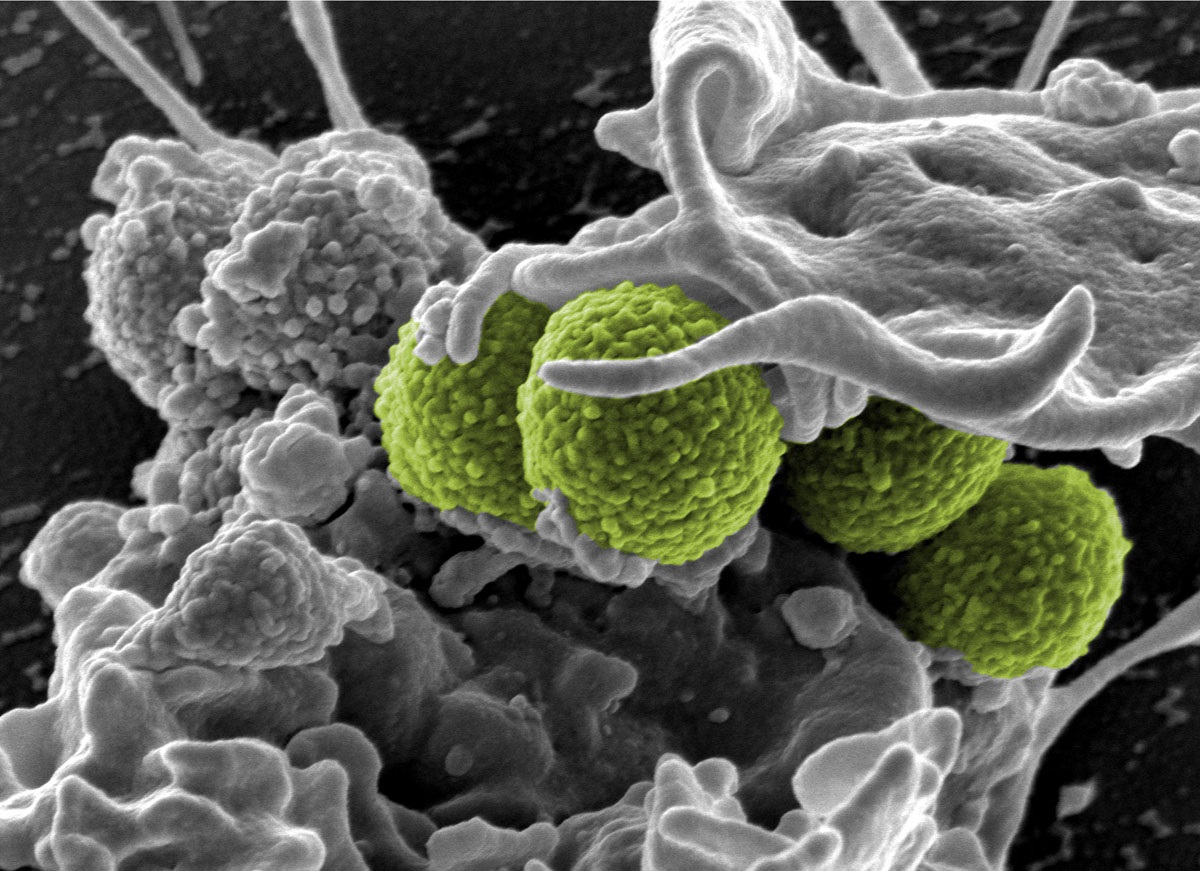
Interaction of MRSA (green bacteria) with a human white cell. The bacteria shown is strain MRSA252, a leading cause of hospital-associated infections in the United States and United Kingdom. Credit: NIAID
+PassMedicine Notes
Methicillin-resistant Staphylococcus aureus (MRSA) was one of the first organisms which highlighted the dangers of hospital-acquired infections.
Who should be screened for MRSA?- all patients awaiting elective admissions (exceptions include day patients having terminations of pregnancy and ophthalmic surgery. Patients admitted to mental health trusts are also excluded)
- from 2011 all emergency admissions will be screened
- nasal swab and skin lesions or wounds
- the swab should be wiped around the inside rim of a patient's nose for 5 seconds
- the microbiology form must be labelled 'MRSA screen'
- nose: mupirocin 2% in white soft paraffin, tds for 5 days
- skin: chlorhexidine gluconate, od for 5 days. Apply all over but particularly to the axilla, groin and perineum
- vancomycin
- teicoplanin
- linezolid
- rifampicin
- macrolides
- tetracyclines
- aminoglycosides
- clindamycin
Relatively new antibiotics such as linezolid, quinupristin/dalfopristin combinations and tigecycline have activity against MRSA but should be reserved for resistant cases
pdd128.jpg Interaction of MRSA (green bacteria) with a human white cell. The bacteria shown is strain MRSA252, a leading cause of hospital-associated infections in the United States and United Kingdom. Credit: NIAID