Highlighter is on. Drag to highlight text. Click a highlight to remove it.
ALL / Pharmacology
Paracetamol overdose: metabolic pathways
Paracetamol overdose: metabolic pathways
The liver normally metabolises paracetamol predominantly via conjugation with glucuronic acid and sulphate to form non-toxic metabolites. A small proportion is oxidised by cytochrome P450 enzymes (particularly CYP2E1) to produce a highly reactive toxic metabolite, N-acetyl-p-benzoquinone imine (NAPQI).Under normal conditions:
- NAPQI is rapidly detoxified by conjugation with glutathione
- This forms non-toxic cysteine and mercapturic acid metabolites
In overdose:
- Glucuronidation and sulphation pathways become saturated
- A greater proportion is metabolised via the P450 system
- This leads to excessive production of NAPQI
When glutathione stores are depleted (typically <30% of normal):
- NAPQI accumulates
- It binds covalently to cellular proteins
- This causes oxidative stress, mitochondrial dysfunction, and hepatocellular necrosis
- Renal tubular injury may also occur
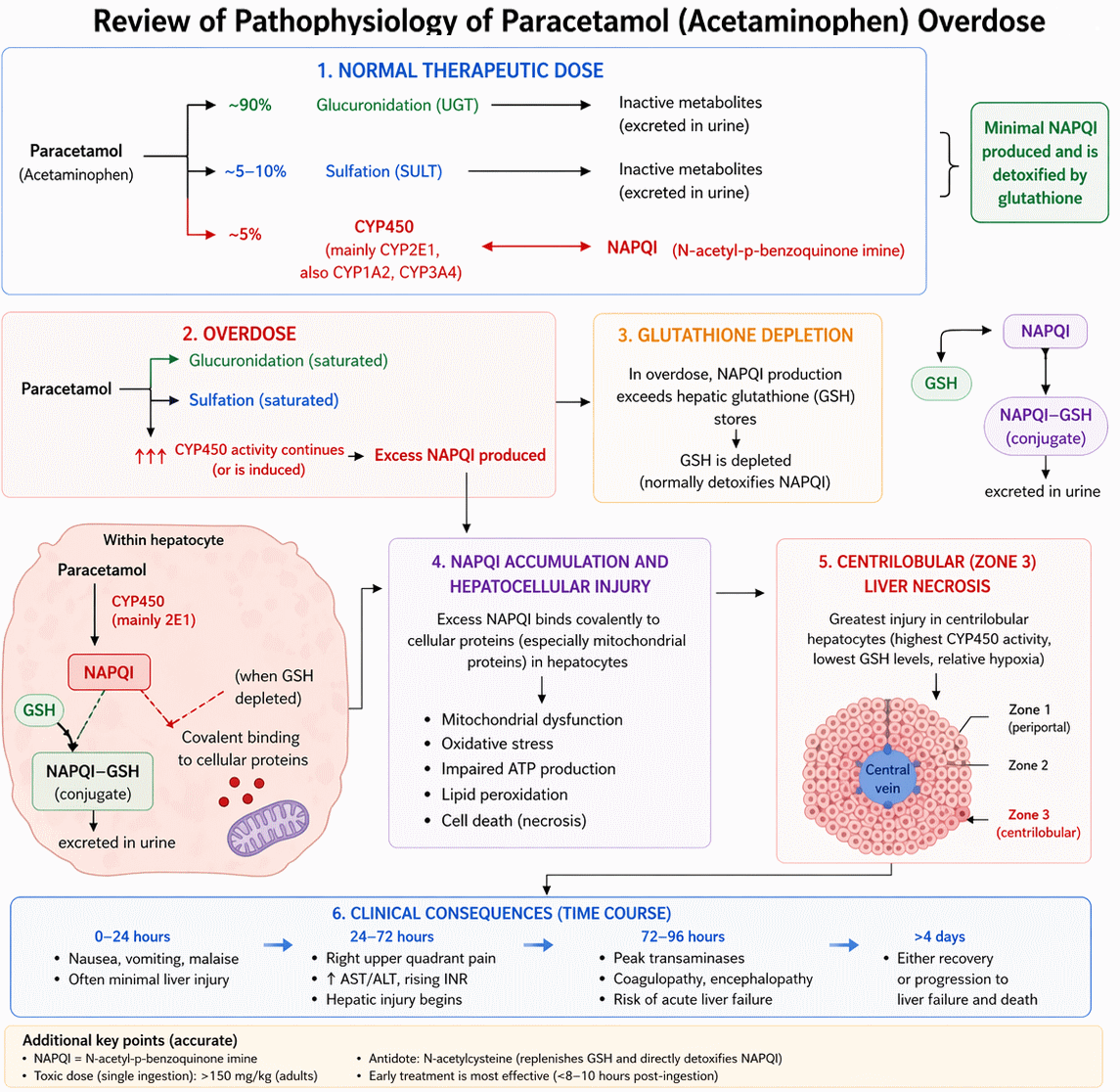
Pathophysiology of paracetamol overdose
N-acetylcysteine is used in the management of paracetamol overdose as it is a precursor of glutathione, replenishing hepatic glutathione stores and enhancing detoxification of NAPQI. It may also have additional antioxidant and cytoprotective effects.
Clinical implication:
- Patients taking cytochrome P450 enzyme inducers (e.g. phenytoin, carbamazepine, rifampicin) or with chronic alcohol use produce more NAPQI
- Therefore, a lower threshold is used for initiating treatment in these patients
+PassMedicine Notes
The liver normally metabolises paracetamol predominantly via conjugation with glucuronic acid and sulphate to form non-toxic metabolites. A small proportion is oxidised by cytochrome P450 enzymes (particularly CYP2E1) to produce a highly reactive toxic metabolite, N-acetyl-p-benzoquinone imine (NAPQI).
Under normal conditions:- NAPQI is rapidly detoxified by conjugation with glutathione
- This forms non-toxic cysteine and mercapturic acid metabolites
- Glucuronidation and sulphation pathways become saturated
- A greater proportion is metabolised via the P450 system
- This leads to excessive production of NAPQI
When glutathione stores are depleted (typically