Highlighter is on. Drag to highlight text. Click a highlight to remove it.
ALL / Pharmacology
Monoclonal antibodies
Monoclonal antibodies
Monoclonal antibodies have an increasing role in medicine. They are manufactured by a technique called somatic cell hybridization. This involves the fusion of myeloma cells with spleen cells from a mouse that has been immunized with the desired antigen. The resulting fused cells are termed a hybridoma and act as a 'factory' for producing monoclonal antibodies.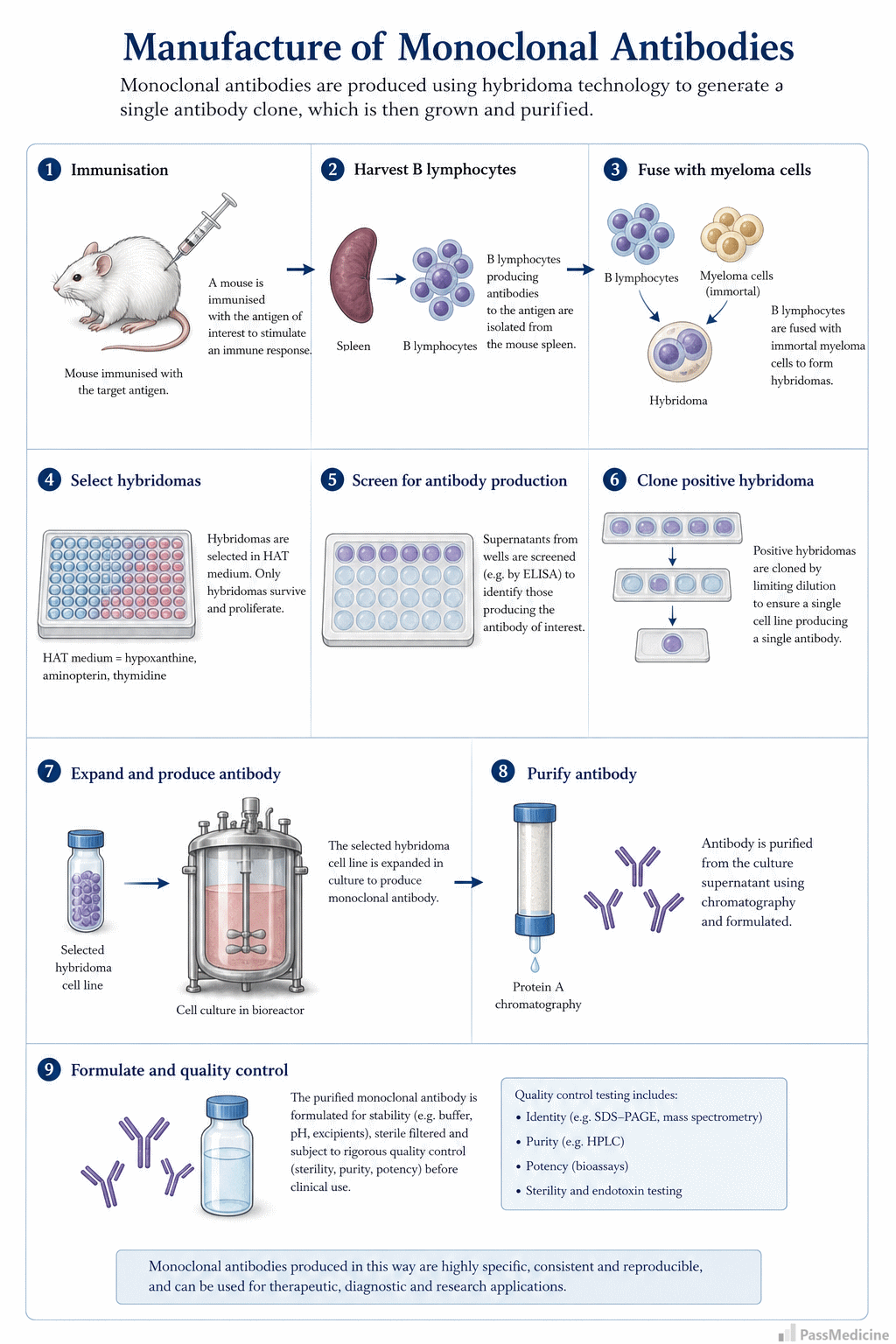
Manufacture of monoclonal antibodies
The main limitation to this is that mouse antibodies are immunogenic leading to the formation of human anti-mouse antibodies. This problem is overcome by a process known as humanising. One method involves combining the variable region from the mouse body with the constant region from a human antibody.
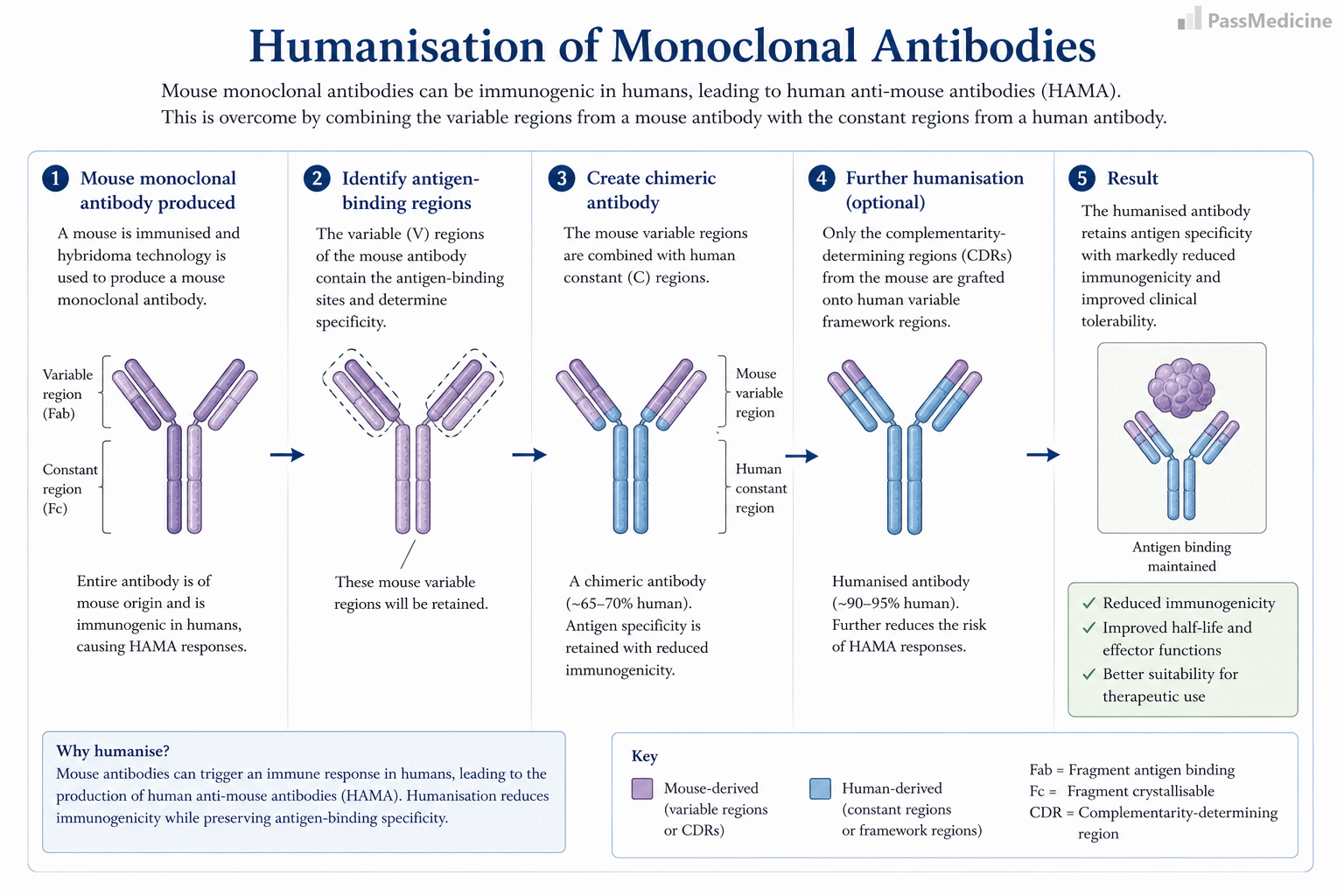
Humanisiation of monoclonal antibodies
Clinical examples of monoclonal antibodies:
- infliximab (anti-TNF): used in rheumatoid arthritis and Crohn's
- rituximab (anti-CD20): used in non-Hodgkin's lymphoma and rheumatoid arthritis
- cetuximab (epidermal growth factor receptor antagonist): used in metastatic colorectal cancer and head and neck cancer
- trastuzumab (HER2/neu receptor antagonist): used in metastatic breast cancer
- alemtuzumab (anti-CD52): used in chronic lymphocytic leukaemia
- abciximab (glycoprotein IIb/IIIa receptor antagonist): prevention of ischaemic events in patients undergoing percutaneous coronary interventions
- OKT3 (anti-CD3): used to prevent organ rejection
Monoclonal antibodies are also used for:
- medical imaging when combined with a radioisotope
- identification of cell surface markers in biopsied tissue
- diagnosis of viral infections
+PassMedicine Notes
Monoclonal antibodies have an increasing role in medicine. They are manufactured by a technique called somatic cell hybridization. This involves the fusion of myeloma cells with spleen cells from a mouse that has been immunized with the desired antigen. The resulting fused cells are termed a hybridoma and act as a 'factory' for producing monoclonal antibodies.
The main limitation to this is that mouse antibodies are immunogenic leading to the formation of human anti-mouse antibodies. This problem is overcome by a process known as humanising. One method involves combining the variable region from the mouse body with the constant region from a human antibody.
Clinical examples of monoclonal antibodies:- infliximab (anti-TNF): used in rheumatoid arthritis and Crohn's
- rituximab (anti-CD20): used in non-Hodgkin's lymphoma and rheumatoid arthritis
- cetuximab (epidermal growth factor receptor antagonist): used in metastatic colorectal cancer and head and neck cancer
- trastuzumab (HER2/neu receptor antagonist): used in metastatic breast cancer
- alemtuzumab (anti-CD52): used in chronic lymphocytic leukaemia
- abciximab (glycoprotein IIb/IIIa receptor antagonist): prevention of ischaemic events in patients undergoing percutaneous coronary interventions
- OKT3 (anti-CD3): used to prevent organ rejection
- medical imaging when combined with a radioisotope
- identification of cell surface markers in biopsied tissue
- diagnosis of viral infections