Highlighter is on. Drag to highlight text. Click a highlight to remove it.
ALL / Infectious Diseases
Measles
Measles
Measles is now rarely seen in the developed world following the adoption of immunisation programmes. Outbreaks are occasionally seen, particularly when vaccinations rates drop, for example after the MMR controversy of the early 2000s.Overview
- RNA paramyxovirus
- one of the most infectious known viruses
- spread by aerosol transmission
- infective from prodrome until 4 days after rash starts
- incubation period = 10-14 days
Features
- prodromal phase
- irritable
- conjunctivitis
- fever
- Koplik spots
- typically develop before the rash
- white spots ('grain of salt') on the buccal mucosa
- rash
- starts behind ears then to the whole body
- discrete maculopapular rash becoming blotchy & confluent
- desquamation that typically spares the palms and soles may occur after a week
- diarrhoea occurs in around 10% of patients
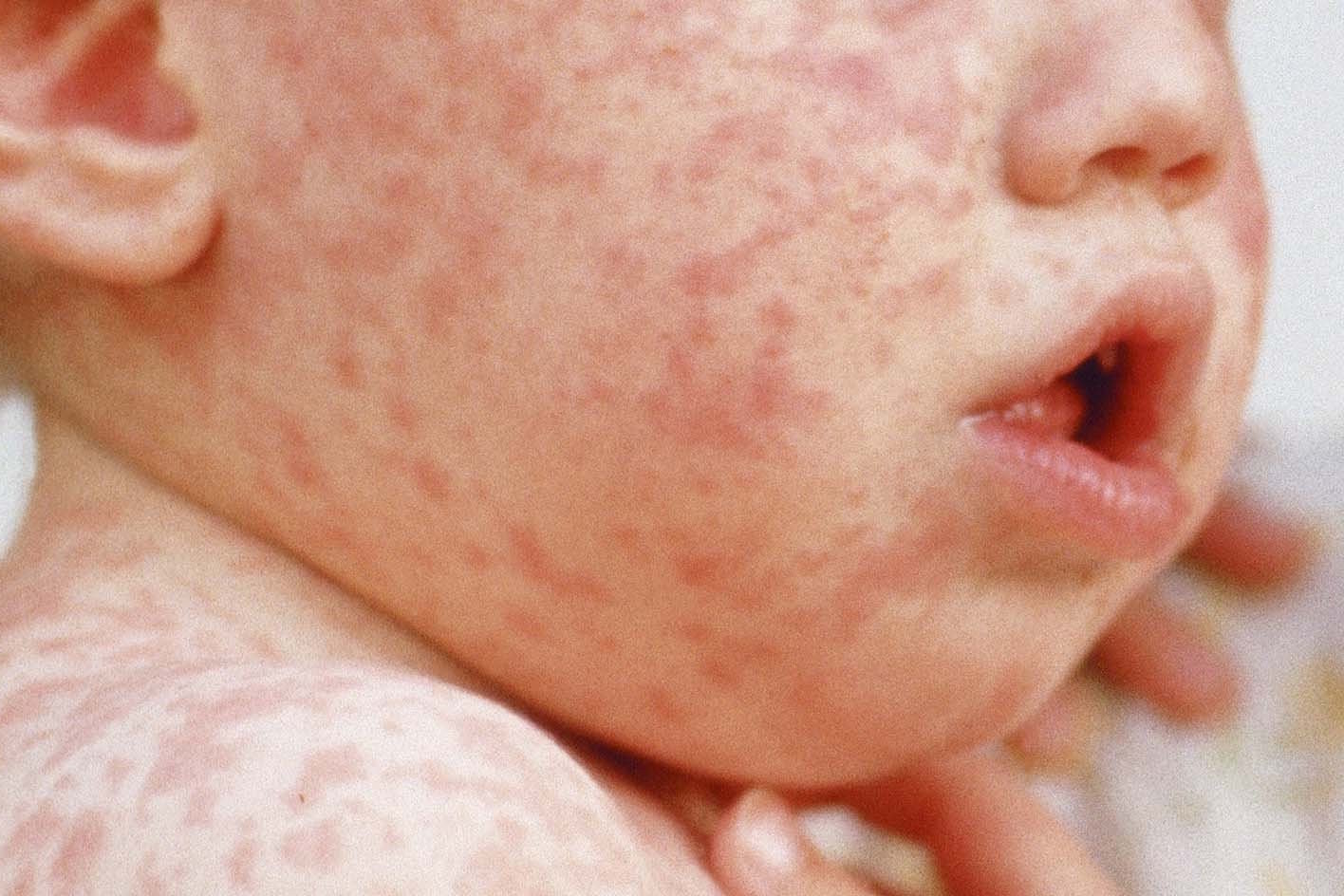
This image shows a child with a widespread erythematous, morbilliform (maculopapular) rash involving the face, neck, and upper trunk. The rash appears confluent in places, particularly around the cheeks, and is characteristic of measles (rubeola). Typically, this exanthem begins on the face and behind the ears, then spreads downward over the body. The rash often appears around day 3–4 of illness, following a prodrome of fever, cough,
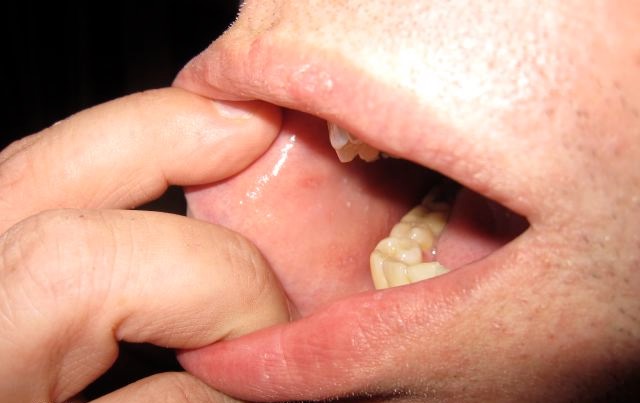
Koplik spots
Investigations
- IgM antibodies can be detected within a few days of rash onset
Management
- mainly supportive
- admission may be considered in immunosuppressed or pregnant patients
- notifiable disease → inform public health
Complications
- otitis media: the most common complication
- pneumonia: the most common cause of death
- encephalitis: typically occurs 1-2 weeks following the onset of the illness)
- subacute sclerosing panencephalitis: very rare, may present 5-10 years following the illness
- febrile convulsions
- keratoconjunctivitis, corneal ulceration
- diarrhoea
- increased incidence of appendicitis
- myocarditis
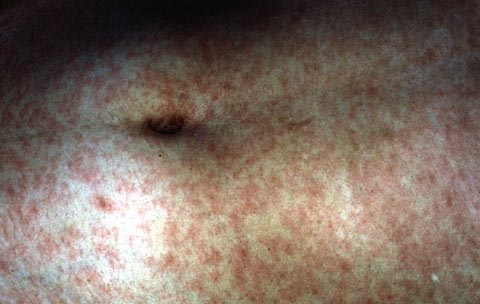

The rash typically starts behind the ears and then spreads to the whole body
Management of contacts
- if a child not immunized against measles comes into contact with measles then MMR should be offered (vaccine-induced measles antibody develops more rapidly than that following natural infection)
- this should be given within 72 hours
+PassMedicine Notes
Measles is now rarely seen in the developed world following the adoption of immunisation programmes. Outbreaks are occasionally seen, particularly when vaccinations rates drop, for example after the MMR controversy of the early 2000s.
Overview- RNA paramyxovirus
- one of the most infectious known viruses
- spread by aerosol transmission
- infective from prodrome until 4 days after rash starts
- incubation period = 10-14 days
- prodromal phase
- irritable
- conjunctivitis
- fever
- Koplik spots
- typically develop before the rash
- white spots ('grain of salt') on the buccal mucosa
- rash
- starts behind ears then to the whole body
- discrete maculopapular rash becoming blotchy & confluent
- desquamation that typically spares the palms and soles may occur after a week
- diarrhoea occurs in around 10% of patients
- IgM antibodies can be detected within a few days of rash onset
- mainly supportive
- admission may be considered in immunosuppressed or pregnant patients
- notifiable disease --> inform public health
- otitis media: the most common complication
- pneumonia: the most common cause of death
- encephalitis: typically occurs 1-2 weeks following the onset of the illness)
- subacute sclerosing panencephalitis: very rare, may present 5-10 years following the illness
- febrile convulsions
- keratoconjunctivitis, corneal ulceration
- diarrhoea
- increased incidence of appendicitis
- myocarditis
- if a child not immunized against measles comes into contact with measles then MMR should be offered (vaccine-induced measles antibody develops more rapidly than that following natural infection)
- this should be given within 72 hours